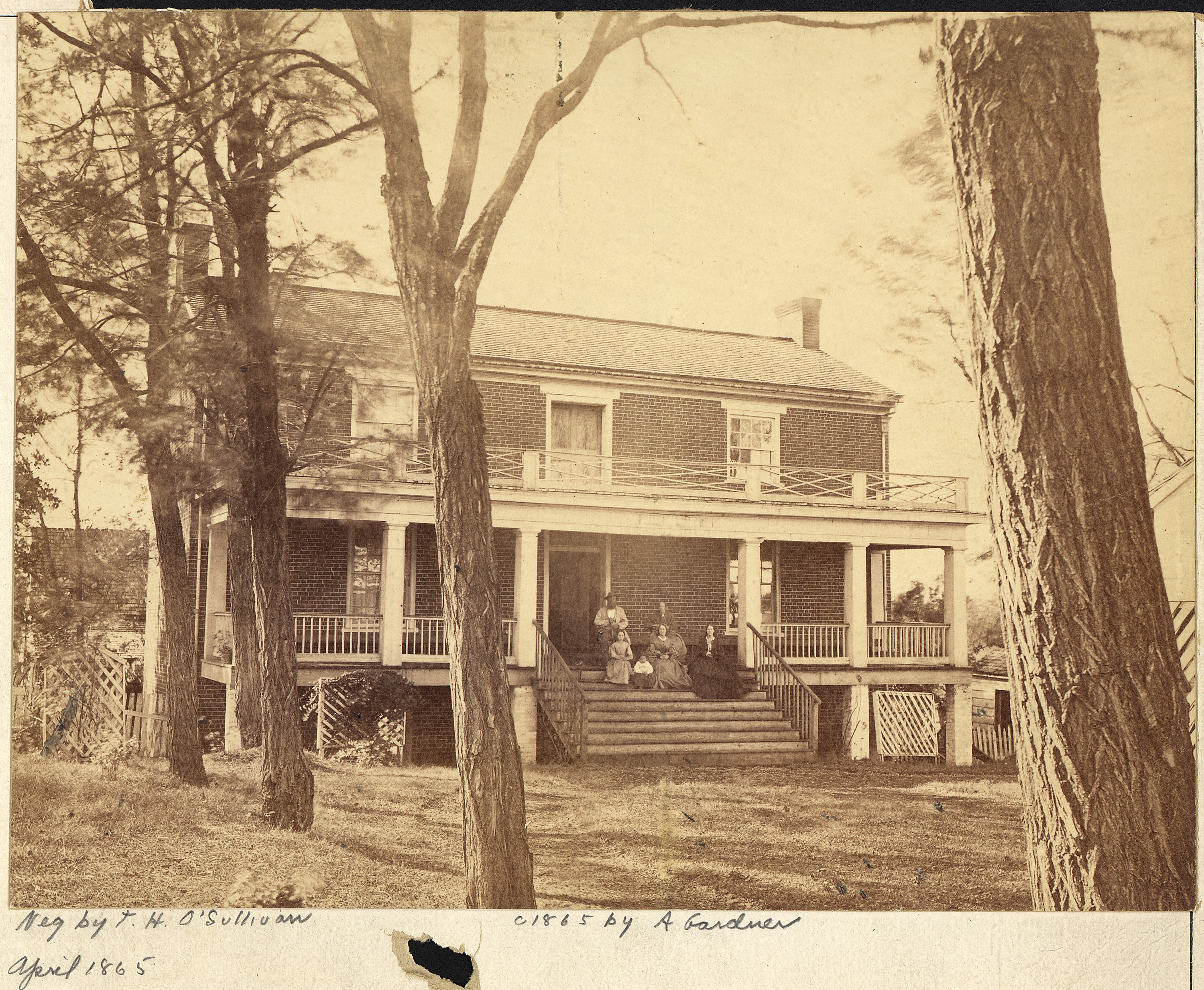
Appomattox Court House
On April 9, 1865, in the parlor of Wilmer McLean's house in the village of Appomattox Court House, Virginia, General Robert E. Lee surrendered the Army of Northern Virginia to General Ulysses S. Grant. The meeting lasted about ninety minutes. The terms were generous: Confederate soldiers could go home with their horses and personal possessions; officers could keep their sidearms; no one would be prosecuted for treason. Lee emerged from the McLean house, mounted his horse Traveller, and rode through lines of weeping soldiers. The Civil War was effectively over. Other Confederate armies would surrender in the following weeks, but Lee's capitulation ended any realistic hope of Southern independence. Four years of war had killed approximately 620,000 Americans - more than all other American wars combined. The nation that emerged from Appomattox was fundamentally different from the one that had gone to war at Fort Sumter.
The Final Days
By April 1865, the Confederacy was collapsing. Grant's army had besieged Petersburg for nine months; when the lines finally broke, Lee's army fled westward, hoping to reach supplies at Lynchburg and continue the fight. But Union cavalry blocked every route. The Army of Northern Virginia, reduced to fewer than 30,000 starving men, was surrounded. Lee considered one final attack but realized it was hopeless. 'There is nothing left for me to do but go and see General Grant,' he told his staff, 'and I would rather die a thousand deaths.' On April 9, he sent a message requesting a meeting to discuss surrender.
The McLean House
The surrender took place in the home of Wilmer McLean, a civilian who had moved to Appomattox Court House specifically to escape the war. His previous home in Manassas had been damaged during the First Battle of Bull Run. Now, four years later, the war found him again. The front parlor was modest - chairs, a table, some furniture. Lee arrived first, resplendent in his best uniform and ceremonial sword. Grant arrived in a mud-spattered field uniform, having ridden hard to reach the meeting. The contrast was striking and symbolic: the aristocratic South, impoverished but proud; the pragmatic North, disheveled but victorious.
The Terms
Grant's surrender terms were remarkably generous. Confederate soldiers would be paroled - released on their promise not to take up arms again. Officers could keep their sidearms, horses, and personal property. Enlisted men who owned their horses could keep them too - Grant understood they would need them for spring planting. There would be no mass imprisonments, no treason trials, no executions. Lee was allowed to return to civilian life. The terms set the tone for Reconstruction: reconciliation rather than retribution, at least initially. When Union soldiers began firing celebratory cannons, Grant ordered them stopped. 'The war is over,' he said. 'The rebels are our countrymen again.'
The Aftermath
Lee's surrender didn't end all fighting - other Confederate forces remained in the field. General Joseph Johnston surrendered to William Sherman in North Carolina on April 26. Jefferson Davis was captured in Georgia on May 10. The last significant surrender came on June 2, when Confederate forces in the Trans-Mississippi Department laid down arms. But Appomattox was the symbolic end. Five days after the surrender, Abraham Lincoln was assassinated, dying on April 15. The hopes for a lenient Reconstruction died with him. Lee spent his remaining years as president of Washington College, urging reconciliation. He died in 1870 and was buried in Lexington, Virginia, forever the Lost Cause's most dignified symbol.
Visiting Appomattox
Appomattox Court House National Historical Park preserves the village where the surrender occurred. The McLean House, disassembled after the war and reassembled in the 1940s, stands where Lee and Grant met; the parlor is furnished to recreate that April afternoon. The surrounding village has been restored to its 1865 appearance: the courthouse, the tavern, the law offices, and other buildings. Living history programs bring the period to life, particularly around the April 9 anniversary. A walking trail connects key sites; exhibits in the visitor center explain the final campaign and the surrender's significance. Lynchburg Regional Airport (LYH) is 25 miles west; Charlottesville-Albemarle Airport (CHO) is 55 miles northeast. The experience is one of unexpected intimacy - the great war ending in a small parlor, two generals alone with the fate of nations.
From the Air
Located at 37.38°N, 78.80°W in central Virginia, about 25 miles east of Lynchburg. From altitude, Appomattox Court House appears as a small cluster of restored buildings surrounded by rural Virginia landscape. The village is distinct from the modern town of Appomattox three miles to the southwest. The terrain is rolling piedmont, a mix of forest and farmland.