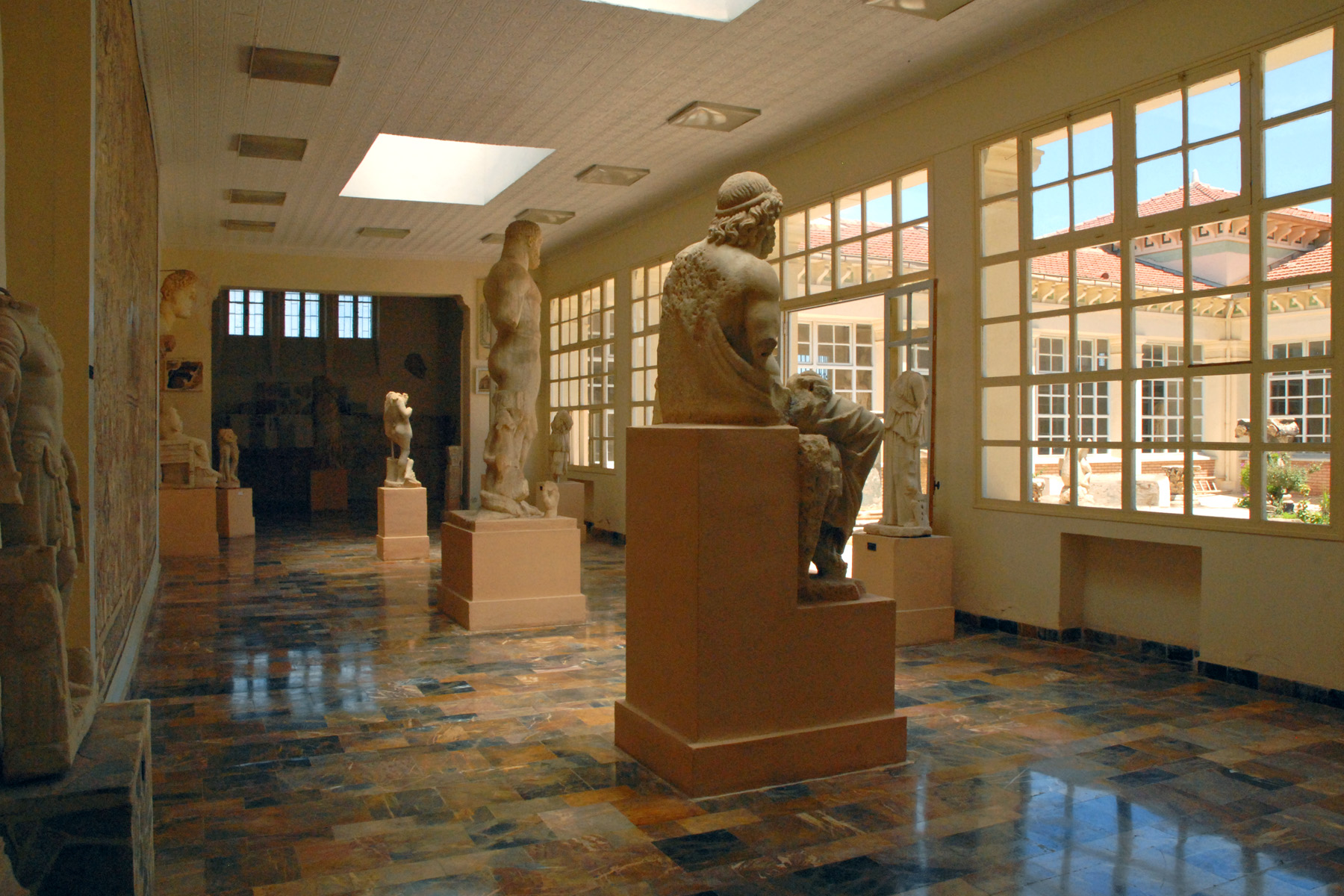
Archaeological Museum of Cherchell
Juba II collected art the way other kings collected enemies. The Berber monarch who ruled Mauretania as a Roman client king from 25 BC assembled marble sculptures, commissioned public buildings, and founded a library in his capital, Caesarea -- the city now known as Cherchell, a quiet seaport on Algeria's Tipaza coast. Much of what he gathered has scattered across the world's museums over the centuries, but an extraordinary concentration remains right here, in the town where it all began, housed in the Archaeological Museum of Cherchell.
A Scholar-King's Capital
Juba II was no ordinary ruler. Raised in Rome after his father Juba I of Numidia died in defeat, he received a thorough classical education and developed refined tastes. When Augustus placed him on the throne of Mauretania in 25 BC, Juba transformed Caesarea into a cultural capital. He built a theater and a library, filled his court with Greek and Roman artworks, and married Cleopatra Selene II -- the daughter of Cleopatra VII and Mark Antony. Together they turned a North African port town into one of the ancient Mediterranean's most cosmopolitan cities. The museum preserves a sculpted head believed to represent Cleopatra Selene herself, a marble portrait staring across two thousand years of North African history.
Treasures from Three Civilizations
The collection ranges across centuries and cultures. Byzantine silversmiths contributed ornately decorated paterae -- the shallow vessels used for drinking and ritual libation. Roman mosaic artists left behind intricate floor panels that survived burial under centuries of rubble. Greek marble sculptures, either original pieces or high-quality Roman copies commissioned by Juba's court, display a technical sophistication that art historians consider among the finest examples on the African continent. The museum does not overwhelm with scale. It overwhelms with quality, each piece a reminder that this stretch of coastline was once the administrative and cultural heart of an empire's westernmost province.
Ruins Beyond the Walls
The museum building sits in the center of modern Cherchell, but the city's Roman past extends well beyond its doors. On the outskirts, partial ruins of the Roman theater where Juba's court once gathered entertainment still mark the landscape. The remains of Roman baths speak to the public life of Caesarea's citizens -- the rituals of bathing, socializing, and political conversation that defined Roman urban culture across the Mediterranean. Fragments of a civic basilica, the administrative heart of the colony, emerge from the ground nearby. Walking from the museum into these ruins collapses the distance between curated artifact and living archaeology; the pieces inside the glass cases came from the ground just outside.
Caesarea's Long Shadow
Cherchell's ancient importance is easy to overlook. The modern town is modest, a coastal settlement that gives little outward hint of its former status as the capital of Mauretania Caesariensis -- a Roman province that stretched across much of what is now northern Algeria and Morocco. The museum exists as a corrective to that modesty, a concentrated argument that geography is destiny. The same harbor that attracted Phoenician traders, Numidian kings, and Roman governors still shapes the town's orientation toward the Mediterranean. Paul Gauckler catalogued the museum's holdings as early as 1895, and a formal catalogue was published in 1902. More recent reorganization efforts, including a 2009 conference supported by the Goethe-Institut, have worked to present the Numidian kingdom's legacy alongside the Roman and Greek collections.
From the Air
Located at 36.61N, 2.19E on the Algerian Mediterranean coast, Tipaza Province. Cherchell is a small coastal town visible as a compact urban area with a harbor. Nearest major airport is Algiers Houari Boumediene (DAAG), approximately 90 km east. The town sits along the coastal road between Algiers and Oran. Best viewed at 3,000-5,000 feet AGL approaching from the sea. The Roman ruins on the outskirts are not individually distinguishable from altitude.