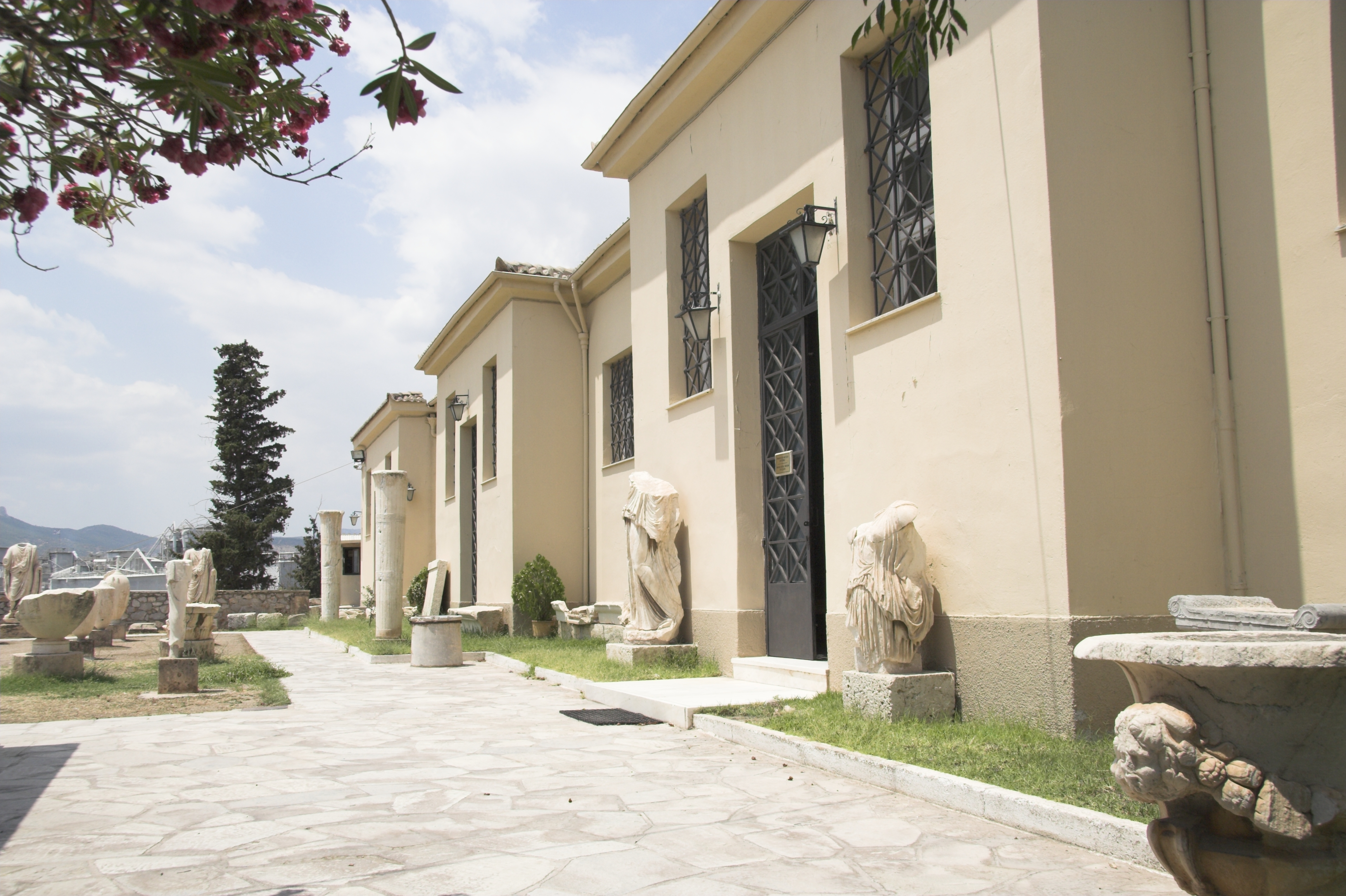
Archaeological Museum of Eleusis
For nearly two thousand years, anyone who walked the Sacred Way from Athens to Eleusis and entered the Telesterion took a vow not to speak of what they saw. Emperors took the vow. So did slaves. The Eleusinian Mysteries lasted longer than any other religious cult in the ancient Greek world, and somehow, against every modern instinct toward gossip, the secret held. The museum here at Eleusis exists to display what survived of the rite from the outside - the offerings, the carvings, the pieces of the buildings - while leaving the interior darkness intact.
The Sanctuary on the Bay
Modern Elefsina sits about twenty kilometers northwest of Athens, on a bay across from Salamis where the Persians lost their fleet in 480 BC. Long before any of that, the Mycenaeans had a sanctuary here, and by the fifth century BC the cult of Demeter and her daughter Persephone drew initiates from the entire Greek world. The myth is straightforward grief: Hades takes Persephone, Demeter wanders looking for her, the earth refuses to grow until the daughter returns. Eleusis was where Demeter was said to have stopped on her search and accepted hospitality from the local king, Triptolemos. In gratitude, she taught him agriculture, and he carried the knowledge of grain across the world on a winged chariot. Initiates believed the ceremonies here promised a better fate after death.
A German Architect, a Greek Successor
The museum was built into the sanctuary itself in 1890, designed by the German architect Georg Kawerau, and expanded two years later by the Greek architect J. Mousis. It reopened in February 2023 after a long restoration. There is something fitting about the modesty of the building - low, set among the ruins, never trying to compete with what it contains. You walk uphill past the ancient steps of the Greater Propylaea, past the stone where Demeter is said to have rested, and the museum appears almost as another excavation, a building among the buildings.
Objects of the Mystery
The exhibits gather what little the cult left visible. There is the votive piglet, used in purification rites at Phaleron - initiates bathed in the sea with a piglet they would later sacrifice. There is the kernos, a strange ceremonial vessel with multiple small cups attached to a single base, used in the procession that returned the sacred objects from Athens. The monumental protoattic amphora from the middle of the seventh century BC shows Perseus beheading Medusa; another shows the blinding of Polyphemus. There is the famous "fleeing kore," archaic and graceful, and a great headless statue of Demeter from the school of Agorakritos, who studied with Pheidias. And there is the Caryatid from the small Propylaea, who once carried a basket of cult symbols on her head: ears of grain, poppies, rosettes, and a kernos. Her face is gone but the basket survived.
The Two That Went to Athens
The two most famous finds from Eleusis are not at Eleusis. The great fifth-century BC relief showing Demeter, Kore, and Triptolemos - the moment before agriculture is taught to humanity - lives in the National Archaeological Museum in Athens. So does the Ninnion Tablet, a small painted clay panel from the fourth century BC that shows scenes from the ceremony itself. The Ninnion Tablet is the closest thing we have to a depiction of the Mysteries, dedicated by a woman named Ninnion who broke no oath in commissioning it because the images are partial, suggestive rather than explicit. In Eleusis you see the copies. Both are good copies, but you can feel the absence.
What Survived the Silence
By the late Roman period the cult had absorbed almost two thousand years of ritual continuity. Cicero described initiation as the moment one learned not just how to live but how to die with hope. Then in 396 AD, the Goths under Alaric sacked the sanctuary, the rites stopped, and the secret went with the last initiates. We have hints - the kernos, the basket on the Caryatid's head, the votive piglet - but nothing that reveals what happened in the windowless hall called the Telesterion when the lamps were lit. The museum at Eleusis preserves the silence honestly. It tells you what was given, what was carved, what was left behind, and lets the rest stay where it has been for sixteen centuries.
From the Air
38.04 N, 23.54 E. Eleusis sits on the Saronic Gulf, about 20 km west-northwest of central Athens, on the inner edge of the Bay of Eleusis opposite Salamis Island. Athens (LGAV) is 35 km east-southeast and dominates traffic in the area; the smaller Tatoi/Dekelia (LGTT) is 35 km north-northeast. From altitude, the Bay of Eleusis is unmistakable: a tight inland sea ringed by industrial Elefsina and the Salamis dockyards. Best clarity is morning before haze builds; afternoon thermals over the Saronic Gulf can produce mild turbulence.