Archdiocese of Mechelen-Brussels
Cardinal Desire-Joseph Mercier was the most famous Belgian alive when German troops occupied Belgium in 1914. As Archbishop of Mechelen, he refused to leave his diocese, refused to soften his sermons, and on Christmas Day 1914 issued a pastoral letter denouncing the occupation that German authorities tried and failed to suppress. They placed him under house arrest. He kept writing. By the end of the war, he had become one of the most recognizable faces of Belgian resistance, and the archdiocese he led - a 16th-century creation called Mechelen-Brussels - had become inseparable from the country's idea of itself.
Two Cathedrals, One Primate
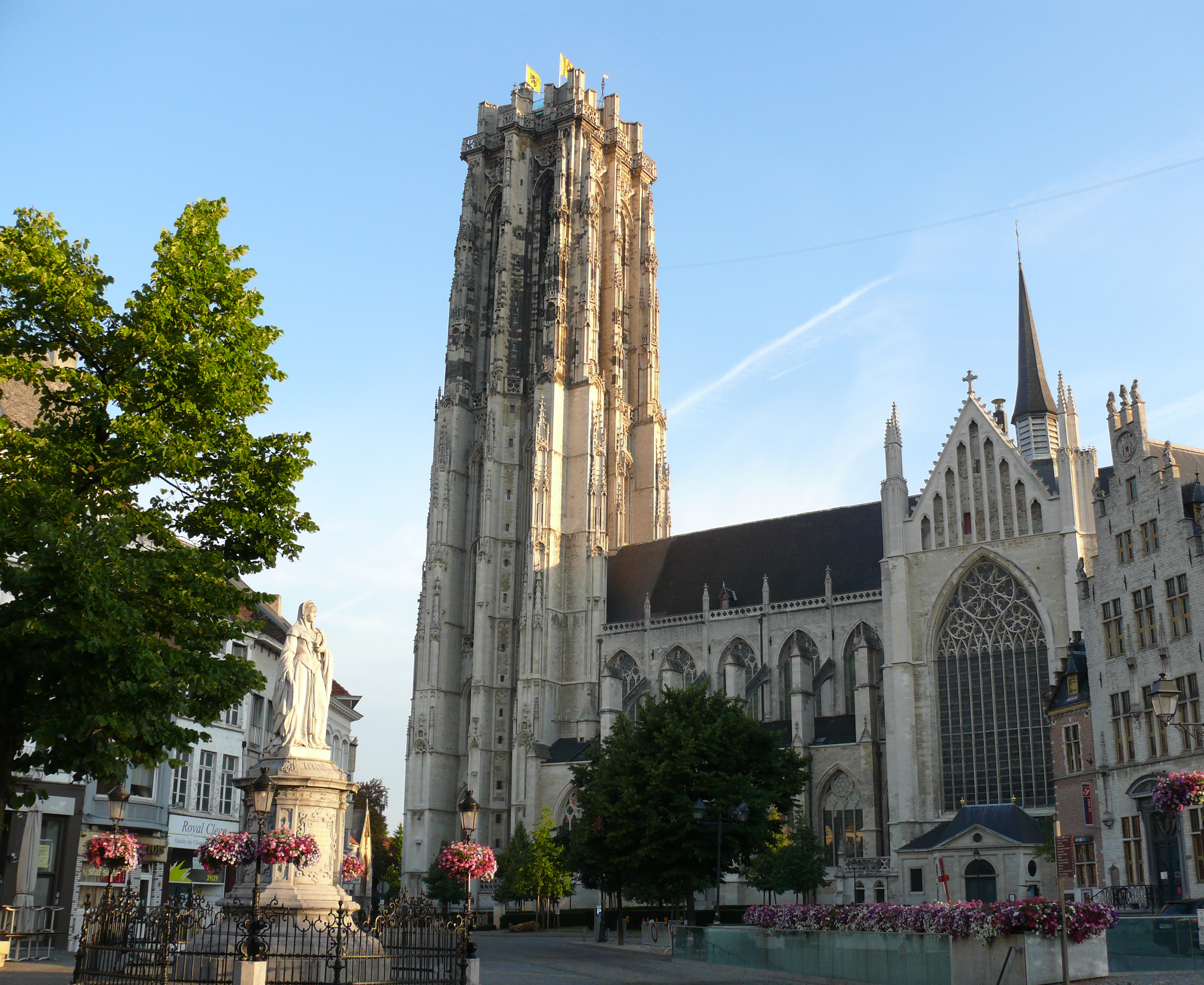
The Archdiocese of Mechelen-Brussels is unusual even among Catholic dioceses. It is the primatial see of Belgium, which means its archbishop holds a ceremonial first-among-equals status over every other Belgian bishop. And it has not one cathedral but two: Saint Rumbold's in Mechelen, the gothic giant whose unfinished tower has anchored the city's skyline since the 13th century, and the Cathedral of Saint Michael and Saint Gudula in Brussels, the brabantine gothic where Belgian royals are married and buried. The archdiocese was carved out in 1559 as part of a Catholic reorganization that came on the eve of religious war in the Low Countries. Its territory covers the former Province of Brabant, plus a handful of municipalities in Antwerp Province including Bonheiden, Duffel, Mechelen itself, and Sint-Katelijne-Waver.
Mercier's Christmas Letter
Cardinal Mercier was appointed archbishop in 1906 and made cardinal the following year. When the Germans invaded Belgium in August 1914, sweeping through Mechelen toward the Marne, Mercier stayed. His Christmas pastoral letter of 1914, titled Patriotism and Endurance, was read in churches across occupied Belgium despite German attempts to confiscate it. He wrote that loyalty to occupiers was not required of citizens, that resistance was a Christian duty, that the wounded were owed care without question. The German governor placed him under house arrest in his palace at Mechelen, then released him under international pressure, then arrested him again. Mercier survived the war. He died in 1926. His Christmas letter is still quoted in Belgian schoolbooks. The Cathedral of Saint Rumbold, where he is buried, became a kind of national shrine in the years after.
The 1995 Reshuffle
Belgian federalism is famously complex, and the Catholic Church had to keep up. In 1995, the Belgian state split the old Province of Brabant into three: the Dutch-speaking Flemish Brabant, the French-speaking Walloon Brabant, and the bilingual Brussels-Capital Region. The Church declined to follow exactly. Rather than create three new dioceses, it kept Mechelen-Brussels intact and instead established three vicariates general within it, each headed by an auxiliary bishop, each aligned with one of the new civil regions. On the same day, the Diocese of Antwerp was carved out from territory the archdiocese had previously administered. Six years later, the Diocese of Hasselt followed. The result was a Belgian Catholic map that loosely mirrored the secular provinces while preserving the medieval primacy of Mechelen.
Danneels, the Scandal, and the Reckoning
Cardinal Godfried Danneels led the archdiocese from 1979 to 2010, a thirty-one-year tenure that made him one of the most visible Catholic figures in Europe. He was named cardinal in 1983 and was considered papabile in two conclaves. His successors inherited a different church. In 2010, revelations of decades-long sexual abuse by Belgian clergy, including a bishop who had abused his own nephew, broke into open scandal. Investigators raided Danneels's residence; recordings emerged in which he had urged a victim to wait, to be discreet, to spare an aging abuser embarrassment. The damage to the archdiocese's moral authority was severe and lasting. Andre-Joseph Leonard took the chair in 2010 amid the crisis. Jozef De Kesel, named cardinal by Pope Francis in 2016, oversaw the slow work of rebuilding trust. Luc Terlinden, installed on 3 September 2023, is the current archbishop. The Belgian press has called his job, with some justice, an almost impossible mission.
A See in Decline, A Country Still Counting
The Catholic Church in Belgium has shrunk dramatically. Belgium was overwhelmingly Catholic into the 1960s; today only a minority of Belgians identify as practicing, and the cathedrals that Mercier once filled stand half-empty for ordinary Sunday Mass. The archdiocese has consolidated parishes, closed seminaries, and watched vocations dwindle. Yet the institutions endure. Saint Rumbold's still rings its 49-bell carillon over Mechelen. The royal weddings still happen at Saints Michael and Gudula. The line of archbishops since 1559, beginning with Cardinal Antoine Perrenot de Granvelle and stretching through fifteen Cardinals to Luc Terlinden, remains unbroken. A line of Belgian history that started before there was a Belgium continues, quieter now, in the same two cathedrals that began it.
From the Air
Geographic centre at approximately 51.03 degrees N, 4.48 degrees E, between Mechelen and Brussels in Flemish Brabant and southern Antwerp Province. Saint Rumbold's Cathedral in Mechelen (51.0283 N, 4.4794 E) and the Cathedral of Saint Michael and Saint Gudula in Brussels (50.8478 N, 4.3601 E) are roughly 25 km apart, both visible from altitude as prominent gothic spires above their respective city centres. Saint Rumbold's unfinished tower is especially distinctive at 97 meters. Nearest airport is Brussels Airport (EBBR / BRU), about 15 km from Mechelen and 10 km from central Brussels.