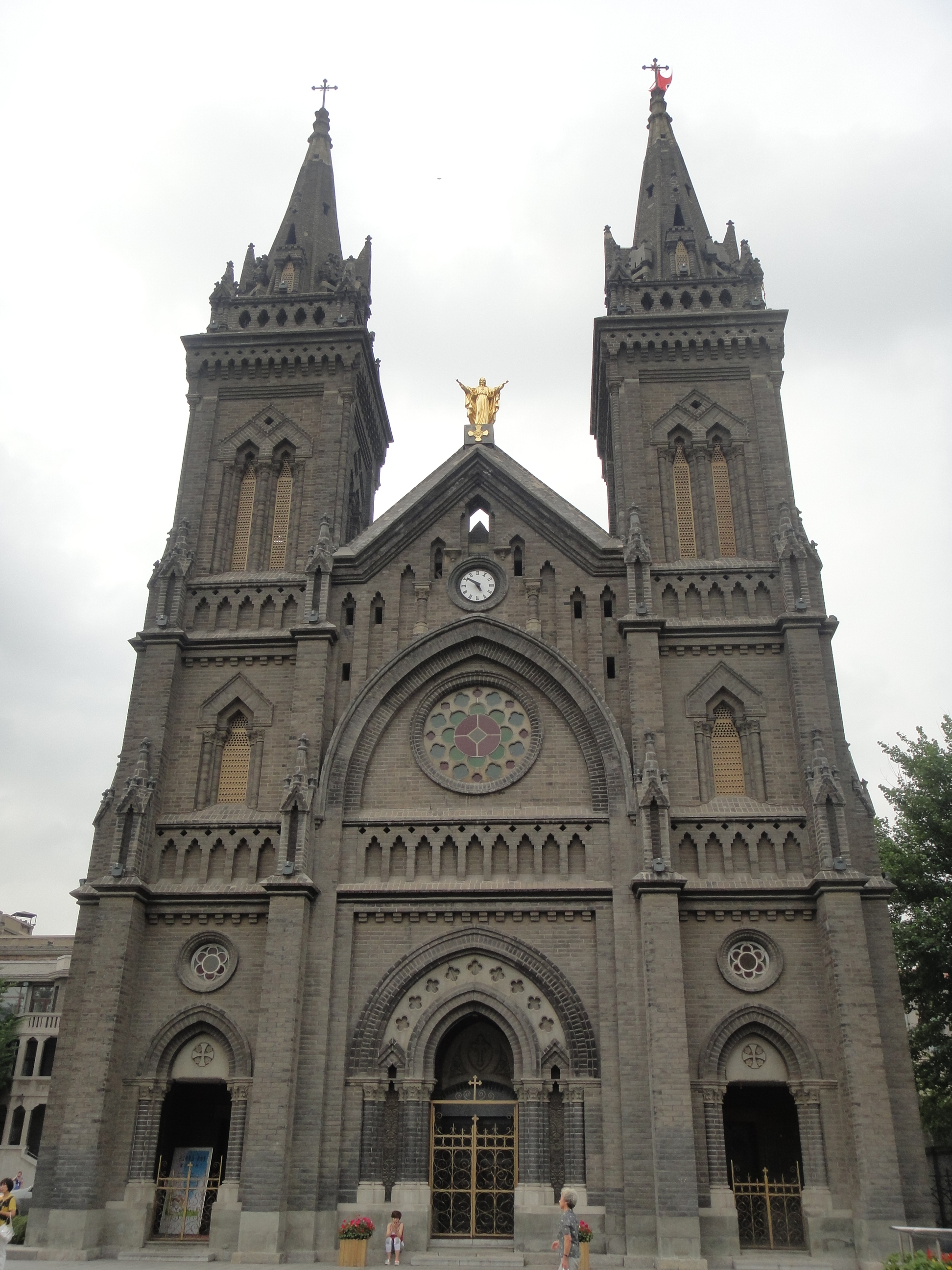
Archdiocese of Shenyang
In 1838, Pope Gregory XVI took a pen to the map of the Catholic world and carved out a new vicariate from the "vast Tartar province called Leao-Tung," stripping it from the Diocese of Beijing. The territory encompassed Manchuria and Mongolia -- an enormous swath of northeastern Asia where Catholic missionaries from the Paris Foreign Missions Society would spend the next century building churches, surviving wars, and navigating the collision between European faith and Chinese politics. That vicariate eventually became the Archdiocese of Shenyang, and its Cathedral of the Sacred Heart of Jesus still stands in the capital of Liaoning Province.
A Century of Renaming
The archdiocese's history reads like a record of Manchuria's own turbulent identity. Established as the Apostolic Vicariate of Liaotung in 1838, it was renamed to the Vicariate of Manchuria in 1840, then Southern Manchuria in 1898 when northern territories were split off. In 1924 it became the Vicariate of Shenyang -- also known as Fengtian, also known as Moukden, because the city itself kept changing names depending on who ruled it. Each renaming reflected a territorial cession, as the Vatican carved daughter dioceses from the original vast territory. Finally, in 1946, the vicariate was elevated to a full metropolitan archdiocese, ending its missionary status just as the Chinese Civil War was about to reshape the country entirely.
French Priests in a Distant Land
For nearly a century, the archdiocese was led by French missionaries from the Paris Foreign Missions Society. The first vicar apostolic, Emmanuel-Jean-Francois Verrolles, served from 1838 until his death in 1878, an extraordinary forty-year tenure in one of the most isolated Catholic outposts on Earth. His successors faced hazards that went far beyond the spiritual. Laurent Guillon died in 1900, the same year the Boxer Rebellion swept through northern China and missionaries across the region became targets. The coadjutor vicars who were appointed to assist the aging leaders often died before they could succeed them, a grim testament to the toll that Manchuria's climate and conflicts took on European clergy.
Between Beijing and Rome
After 1949, the archdiocese found itself caught between the Vatican and the new People's Republic. The last archbishop appointed with full papal approval, Ignatius Pi Shu-shi, served from 1949 until his death in 1978. The bishops who followed were consecrated without papal mandates, reflecting the Chinese government's insistence on controlling religious appointments. This tension between Rome and Beijing has defined the Catholic Church in China for decades, and the Archdiocese of Shenyang has been at the center of it. The current archbishop, Paul Pei Junmin, succeeded as former coadjutor in 2008, and the archdiocese oversees a province of seven suffragan dioceses stretching across Liaoning, Jilin, and into Inner Mongolia.
A Cathedral in the Industrial Capital
Shenyang today is a sprawling industrial metropolis of more than eight million people, the capital of Liaoning Province and the cultural center of northeastern China. The Cathedral of the Sacred Heart of Jesus sits in the city center, a physical reminder that Catholicism took root here when the city was still called Mukden and the Qing dynasty still ruled. The archdiocese's jurisdiction extends across a region that has been conquered, colonized, and reinvented multiple times over -- by the Manchus, the Japanese, the Nationalists, and the Communists. Through each upheaval, the cathedral has remained, its parish a continuous thread connecting the French missionaries of the nineteenth century to the Chinese faithful of the twenty-first.
From the Air
Located at 41.79°N, 123.45°E in Shenyang, the capital of Liaoning Province. The Cathedral of the Sacred Heart of Jesus is in the city center, though not easily distinguishable from the air amid the dense urban landscape. Shenyang Taoxian International Airport (ZYTX) is approximately 20 km to the south. The city's grid layout and major industrial districts are visible from altitude.