Arches: The Stone Windows That Frame the Desert
They are windows into time, stone shaped by absence. Arches National Park contains the highest concentration of natural stone arches on Earth - over 2,000 cataloged, from spans barely large enough to qualify (three feet or more) to Landscape Arch's impossible 306-foot reach. The formations are young in geological terms, perhaps a million years old; they are also dying, falling one by one as the same erosion that created them continues working. Wall Arch collapsed in 2008. Others have lost sections; more will follow. But the process that destroys also creates; new arches form as old ones fall. The park preserves a moment in ongoing transformation, red rock shaped by water, ice, and time into forms that seem designed but emerged from pure physics.
The Formation
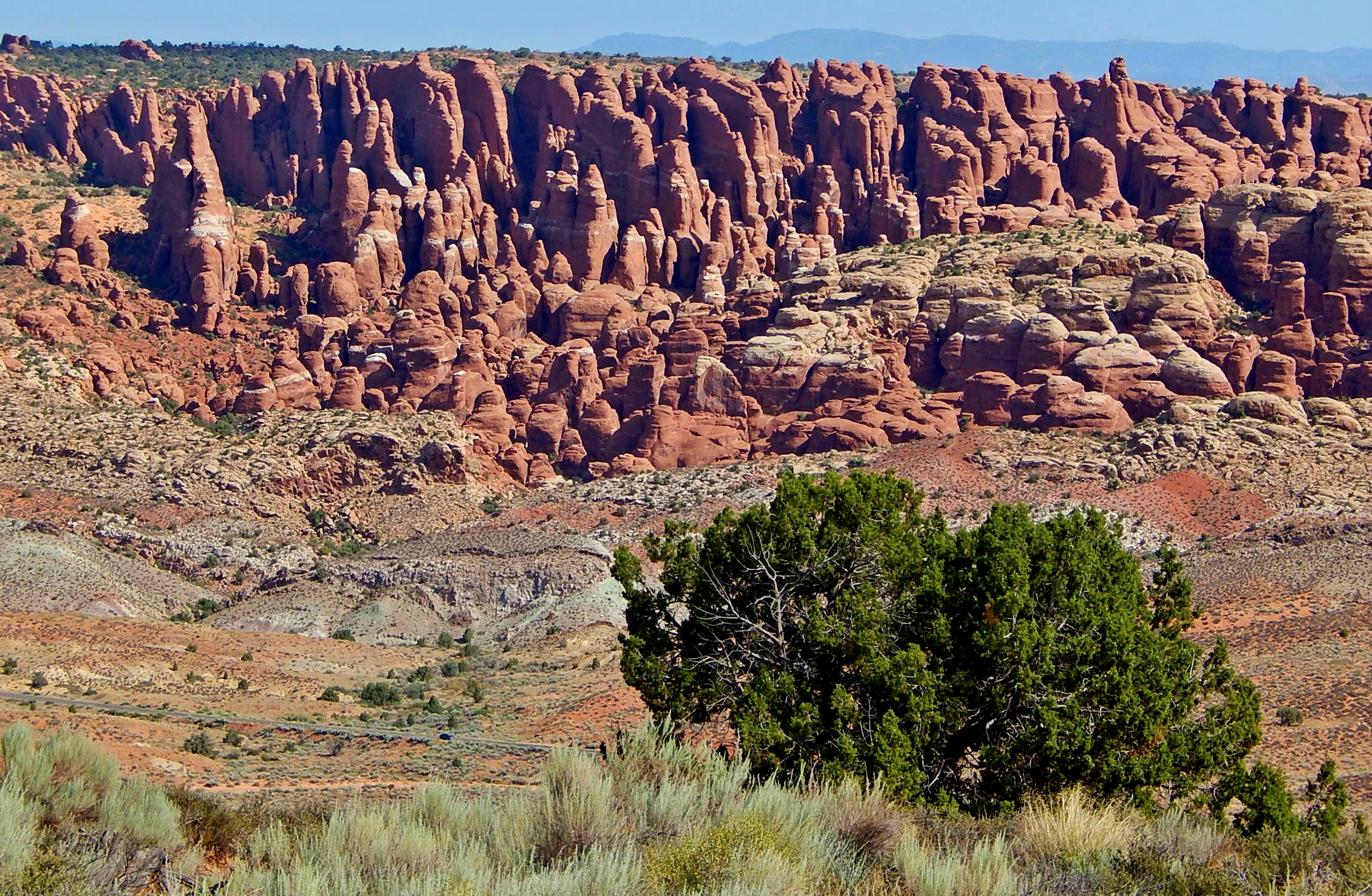
The arches began as sand dunes 300 million years ago, compressed into Entrada Sandstone, buried under younger rock, then exposed as the Colorado Plateau rose. Salt deposits beneath the sandstone dissolved and shifted, creating underground instability that fractured the rock into parallel fins. Water froze in cracks, expanding and breaking; wind carried away the fragments. The fins eroded from both sides, eventually punching through to create arches. The process continues: chemical weathering, freeze-thaw cycles, gravity, and occasional catastrophic collapse. Each arch exists on a timeline from creation to destruction, though that timeline extends beyond human observation.
Delicate Arch
Delicate Arch stands alone on a slickrock bowl, framed by the La Sal Mountains beyond. It appears on Utah license plates, the state's most recognizable symbol. The arch rises 52 feet, its span 46 feet, its form suggesting fragility that belies the tons of sandstone remaining. The hike to reach it - 1.5 miles each way, climbing 480 feet across exposed slickrock - serves as pilgrimage. Sunset brings crowds; the arch glows orange against darkening sky. Abbey described it as 'a freak of nature'; the freakishness is what draws visitors, the improbability of stone hanging in space, the apparent defiance of physics in a form that physics created.
The Others
Delicate Arch's fame overshadows the park's other formations. Landscape Arch, in the Devils Garden, stretches 306 feet - one of the longest natural spans on Earth - growing thinner as rock falls away. Double Arch creates a natural amphitheater. The Windows section concentrates large arches in a small area. Park Avenue suggests a canyon of skyscraper fins. Balanced Rock defies gravity on a pedestal that erosion is steadily narrowing. The density of formations is unique; nowhere else has such concentration of arches, and the variety of forms demonstrates how different erosion patterns produce different results from similar rock.
The Mortality
Wall Arch collapsed on August 4, 2008, leaving rubble where a span had stood. The event was not witnessed; hikers found the debris. Similar collapses occur regularly - rocks fall from Landscape Arch frequently enough that the area beneath it is closed to hiking. The arches that exist now are a snapshot; different arches existed a thousand years ago, and different ones will exist a thousand years hence. The preservation paradox is acute: the park preserves what it cannot prevent from changing. Climate change accelerates the cycles; more freeze-thaw events, different precipitation patterns. The arches are temporary; visiting them is witnessing the pause before the next collapse.
Visiting Arches
Arches National Park is located five miles north of Moab, Utah, accessible via Highway 191. Timed entry reservations are required April through October; book in advance. The scenic drive provides viewpoints for many formations; Delicate Arch requires a 3-mile round-trip hike. Devils Garden Trail offers multiple arch viewing options, from easy to strenuous. The Windows and Double Arch are accessible via short walks. Summer temperatures exceed 100°F; bring water for any hiking. Spring and fall provide better conditions. Sunrise and sunset light transforms the red rock. The experience combines accessible viewing (roadside pullouts) with earned perspectives (Delicate Arch hike). The formations reward any level of engagement, but the pilgrimage to Delicate Arch at sunset remains the park's defining experience.
From the Air
Located at 38.73°N, 109.59°W in southeastern Utah, immediately north of Moab. From altitude, Arches appears as a landscape of red rock fins and depressions, the parallel ridges that erode into arches visible as striped patterns. The park's formations are small against the landscape; individual arches are not visible from altitude. The Colorado River traces the park's southern boundary; Moab clusters where the river meets the highway. The La Sal Mountains rise to the east, snow-capped in contrast to red desert. Canyonlands National Park extends to the south. What appears from altitude as textured red terrain contains the highest concentration of natural stone arches on Earth - formations young enough to be forming and old enough to be falling, caught in the moment between emergence and collapse.