Arctic Village and the Gwich'in People
One hundred miles above the Arctic Circle, in a roadless valley that sees 67 days of winter darkness, the Gwich'in people of Arctic Village continue a way of life older than civilization. They hunt caribou - the Porcupine Caribou Herd, 200,000 animals that migrate between Canada and Alaska in one of Earth's last great wildlife spectacles. The Gwich'in call themselves 'Caribou People'; their culture, language, and survival are intertwined with the herd. For decades, they've fought to protect the Arctic National Wildlife Refuge's coastal plain - the herd's calving ground, which they call 'the sacred place where life begins' - from oil drilling that could disrupt the migration. It's a fight between ancient subsistence and modern energy, between 20,000 years of adaptation and quarterly profit reports.
The People
The Gwich'in have lived in the Arctic for at least 20,000 years - among the oldest continuous cultures in North America. Their villages stretch from northeastern Alaska into Canada's Yukon and Northwest Territories, following the caribou's range. Arctic Village, one of the most remote settlements in the United States, has about 150 residents, most of them Gwich'in who maintain traditional subsistence practices alongside modern life. They fish, trap, and above all, hunt caribou. The animals provide food, clothing, tools, and meaning. The Gwich'in language has dozens of words for caribou conditions, body parts, and behaviors. They don't just eat caribou; they are Caribou People.
The Herd
The Porcupine Caribou Herd - named for the Porcupine River, not the animal - numbers around 200,000 animals. Each spring, they migrate from winter range in Alaska and Canada to calving grounds on the Arctic coastal plain. Calves are born in June on the flat tundra near the Beaufort Sea, where ocean winds reduce mosquitoes and few predators can hide. The coastal plain is critical: cows heavy with calves need nutrition and safety; disruption during calving can devastate the herd. The Gwich'in have watched this migration for millennia. They hunt the herd during fall migration, taking what they need, letting the rest pass to calve again.
The Fight
The coastal plain of the Arctic National Wildlife Refuge sits atop estimated billions of barrels of oil. Since the 1980s, energy companies have sought permission to drill; environmentalists and the Gwich'in have fought to stop them. The Gwich'in Steering Committee, formed in 1988, has taken their case to Congress, the United Nations, and international media. They argue that drilling would disrupt calving, reduce calf survival, and ultimately threaten a herd that 7,000 Gwich'in people depend upon. In 2017, Congress authorized drilling; legal challenges and market conditions have delayed development. The fight continues, each administration bringing new threats or reprieves.
The Life
Living in Arctic Village means living differently. There are no roads - access is by small aircraft. Supplies arrive by plane; fuel is expensive; heating costs dominate budgets. The village has electricity (diesel generator), a school, a clinic, and satellite internet. Temperatures drop to -50°F; winter darkness lasts two months. Summer brings endless daylight and clouds of mosquitoes. People hunt, fish, gather berries, and maintain traditions that outsiders find either romantic or impossible. It's neither - it's simply how the Gwich'in live, adapted over millennia to conditions that would kill unprepared visitors in days.
Visiting Arctic Village
Arctic Village is not a tourist destination; it's a community that has resisted becoming one. There are no hotels, no restaurants, and no public facilities for visitors. Access is by charter aircraft from Fairbanks (about 290 air miles). The Gwich'in Niintsyaa (Gwich'in Gathering) occurs every two years, bringing Gwich'in from across Alaska and Canada together; outside visitors are sometimes welcomed. Those genuinely interested in Gwich'in culture should research appropriate ways to learn - through books, films, and Gwich'in-led organizations. The Arctic National Wildlife Refuge, which surrounds the village, is open to visitors with proper preparation. The caribou migration, visible in fall, is one of nature's great spectacles - best experienced with Indigenous guides when available.
From the Air
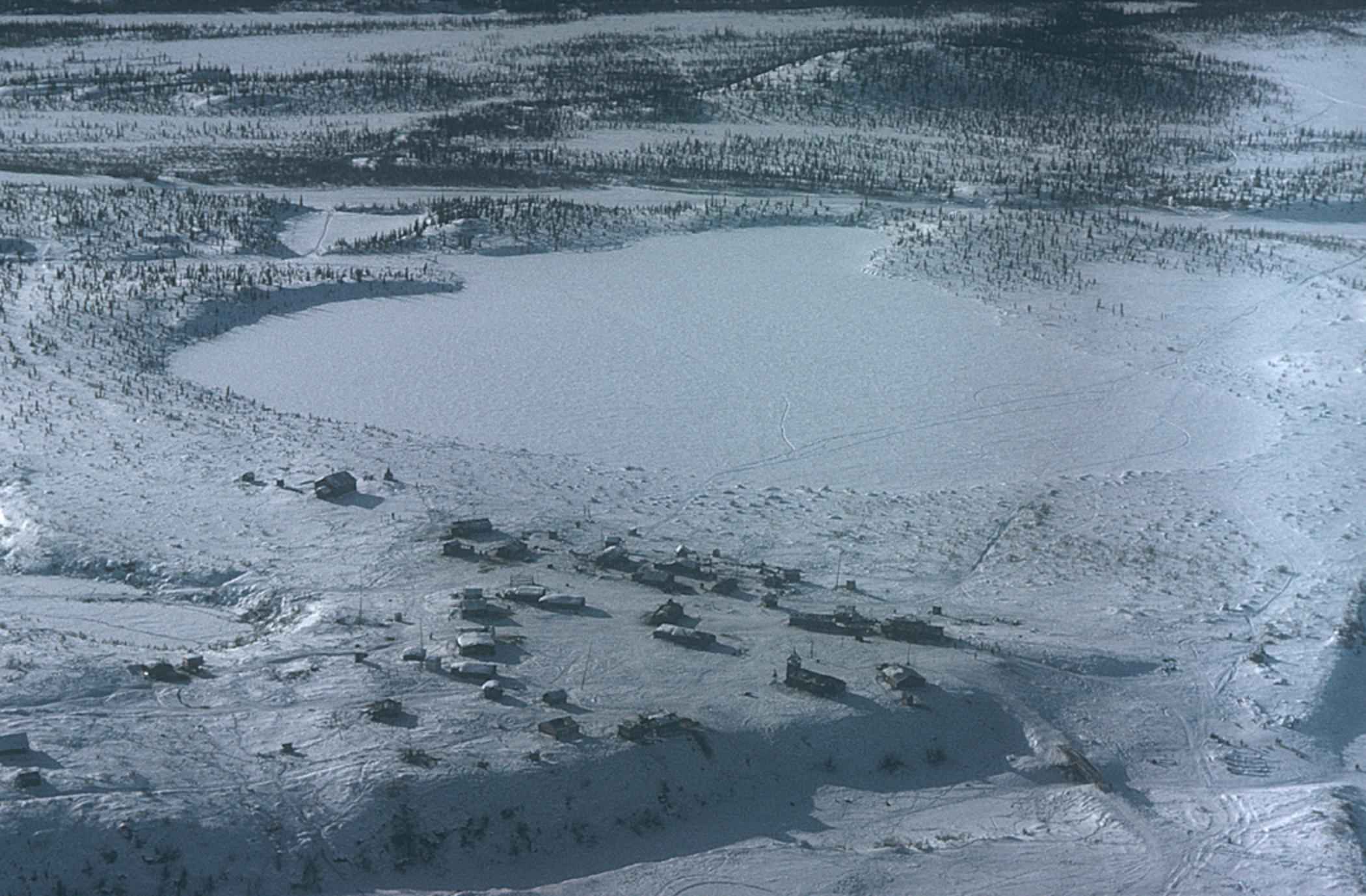
Located at 68.12°N, 145.53°W in northeastern Alaska, 100 miles above the Arctic Circle. From altitude, Arctic Village appears as a small cluster of buildings in a forested valley at the edge of treeline - the Brooks Range rises to the south, the Arctic coastal plain extends north. The village is entirely surrounded by Arctic National Wildlife Refuge. No roads approach; the airstrip is the only connection. The Porcupine Caribou Herd's range extends from here to the Beaufort Sea coast, visible to the north. The terrain is stark: mountains giving way to tundra, rivers braiding across permafrost, and a landscape that hasn't fundamentally changed since the Gwich'in first followed caribou here 20,000 years ago.