Arg, Kabul
Every ruler of Afghanistan for the past century and a half has walked through the same gates. The Arg -- Kabul's presidential palace -- sprawls across 83 acres between the Deh Afghanan district and the affluent neighborhood of Wazir Akbar Khan, a walled compound where the country's fate has been decided and redecided by emirs, kings, presidents, revolutionaries, and, most recently, the Taliban. Its name means "citadel," and the Arg has functioned as one in every sense: fortress, seat of government, and stage for some of Afghanistan's most violent political transitions.
Born from Destruction
The Arg exists because another fortress was destroyed. Until 1880, the ancient Bala Hissar -- Kabul's citadel since at least the 5th century -- served as the seat of Afghan rulers. During the Second Anglo-Afghan War (1878-1880), British forces of the Frontier Force Regiment razed it. Emir Abdur Rahman Khan, who had just assumed the throne, needed a new center of power. He laid the foundation of the Arg that same year, designing it as a castle surrounded by a water-filled trench. He named it Arg-e-Shahi -- the Citadel of the King -- and filled the compound with a royal residence, Afghan Army barracks, and the national treasury. From the beginning, the Arg was both a home and a declaration: whoever held it held Afghanistan.
Throne Room and Killing Floor
The palace's history reads like a chronicle of interrupted power. Every Afghan king and president has governed from within these walls, but few have left them peacefully. During the 1978 Saur Revolution, President Mohammad Daoud Khan and his family were assassinated inside the Arg by members of the People's Democratic Party of Afghanistan. The palace became both the symbol of state authority and the site of its most brutal ruptures. Hafizullah Amin, who came to power through the revolution's aftermath, chose to house his family at the nearby Tajbeg Palace instead -- perhaps sensing that the Arg's walls held too much history of sudden endings. The compound underwent modifications and revitalization under successive rulers, each reshaping the space to suit their vision of authority while inheriting the weight of what had happened there before them.
The Architecture of Power
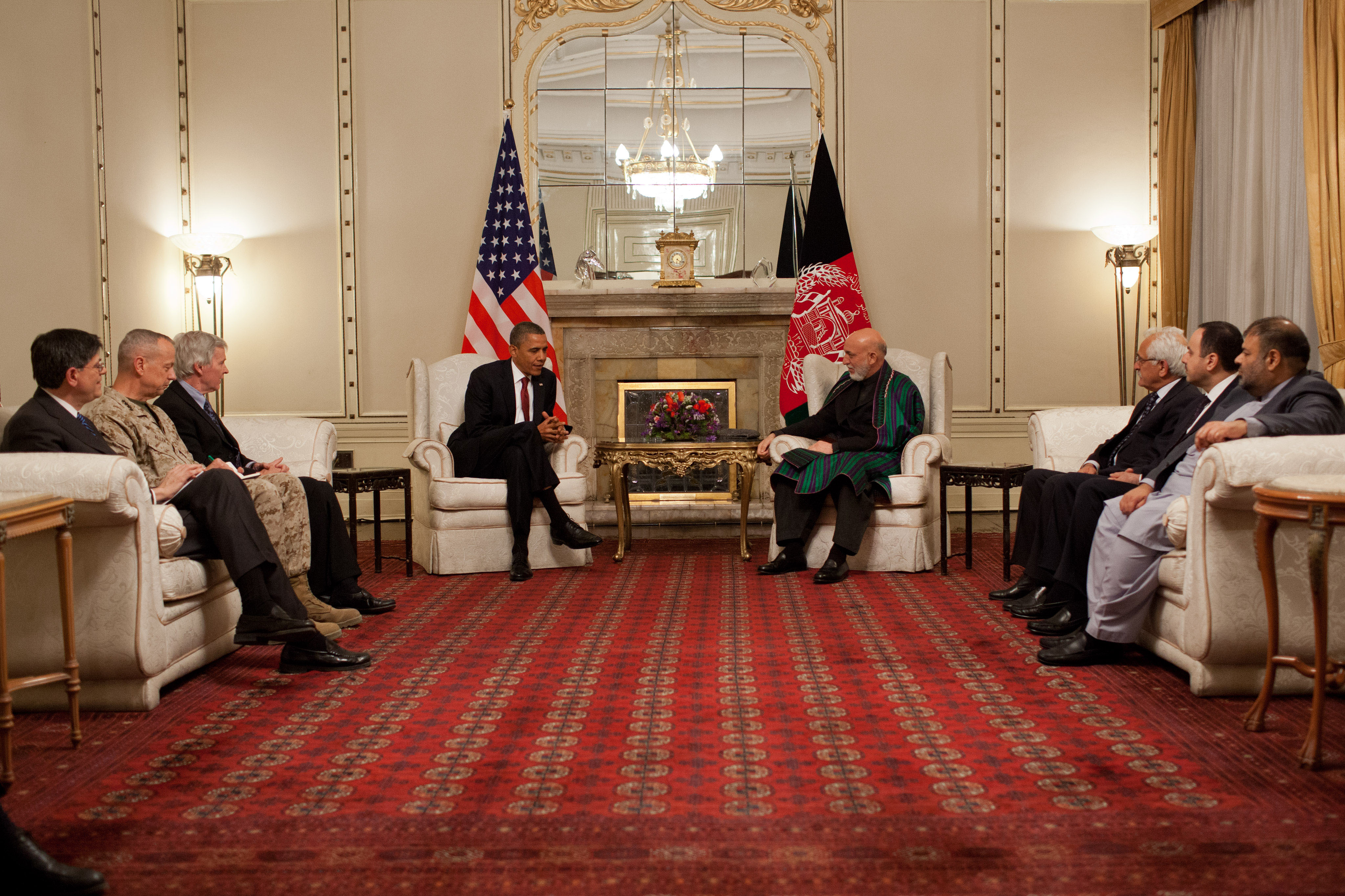
By the 21st century, the Arg had evolved into a sprawling governmental campus. The Gul Khana served as the office of President Ashraf Ghani and the Protocol Office. Separate buildings housed the Chief of Staff, the National Security Advisor, and the presidential spokesperson. The Afghan National Security Forces maintained their own offices within the compound, and purpose-built halls accommodated foreign delegations and large meetings. The complex became a frequent backdrop for international diplomacy -- U.S. presidents, defense secretaries, and NATO officials all passed through its gates. Barack Obama signed a strategic partnership agreement with Hamid Karzai there in May 2012. Lloyd Austin visited as recently as March 2021, just five months before the government the palace represented ceased to exist.
The Last President Leaves
On August 15, 2021, the Taliban's advance reached Kabul. President Ashraf Ghani fled the country, reportedly to avoid bloodshed. Taliban fighters walked into the Arg and seated themselves behind the presidential desk -- an image broadcast worldwide that crystallized the speed of the Afghan government's collapse. The compound that Abdur Rahman Khan had built as a citadel of kings became, 141 years later, the headquarters of a movement that had spent two decades fighting to recapture it. The Taliban now use the Arg for Cabinet meetings, though those chaired by the Supreme Leader are held in Kandahar, the movement's spiritual heartland. The shift says something about where power truly resides: the Arg remains the formal seat of government, but the decisions that matter most are made 500 kilometers to the south.
From the Air
Located at 34.52N, 69.18E in central Kabul, District 2. The 83-acre compound is visible from altitude as a large walled green space amid dense urban development, situated between Deh Afghanan and Wazir Akbar Khan. Nearest airport is Kabul International Airport (OAKB), approximately 5 km to the northeast. Elevation roughly 1,790 meters (5,870 feet). The compound's scale and landscaping make it identifiable from the air against Kabul's otherwise tightly packed cityscape.