Arima Onsen: Where Warlords Came to Soak
Sei Shonagon, the Heian-era court lady whose sharp wit filled The Pillow Book around the year 1000, named Arima among the three most celebrated springs in Japan. A thousand years later, commuters from Osaka and Kobe still ride a cable car up the slopes of Mount Rokko to reach this same cluster of ryokan and bathhouses, steam rising between narrow streets that smell of mineral water and grilled manju. What makes Arima remarkable is not age alone -- Dogo Onsen in Ehime and Nanki-Shirahama in Wakayama share that ancient pedigree -- but the peculiar chemistry of its waters, which bubble up from so deep underground that they carry the signature of prehistoric seawater trapped beneath the Earth's crust.
Gold Water, Silver Water
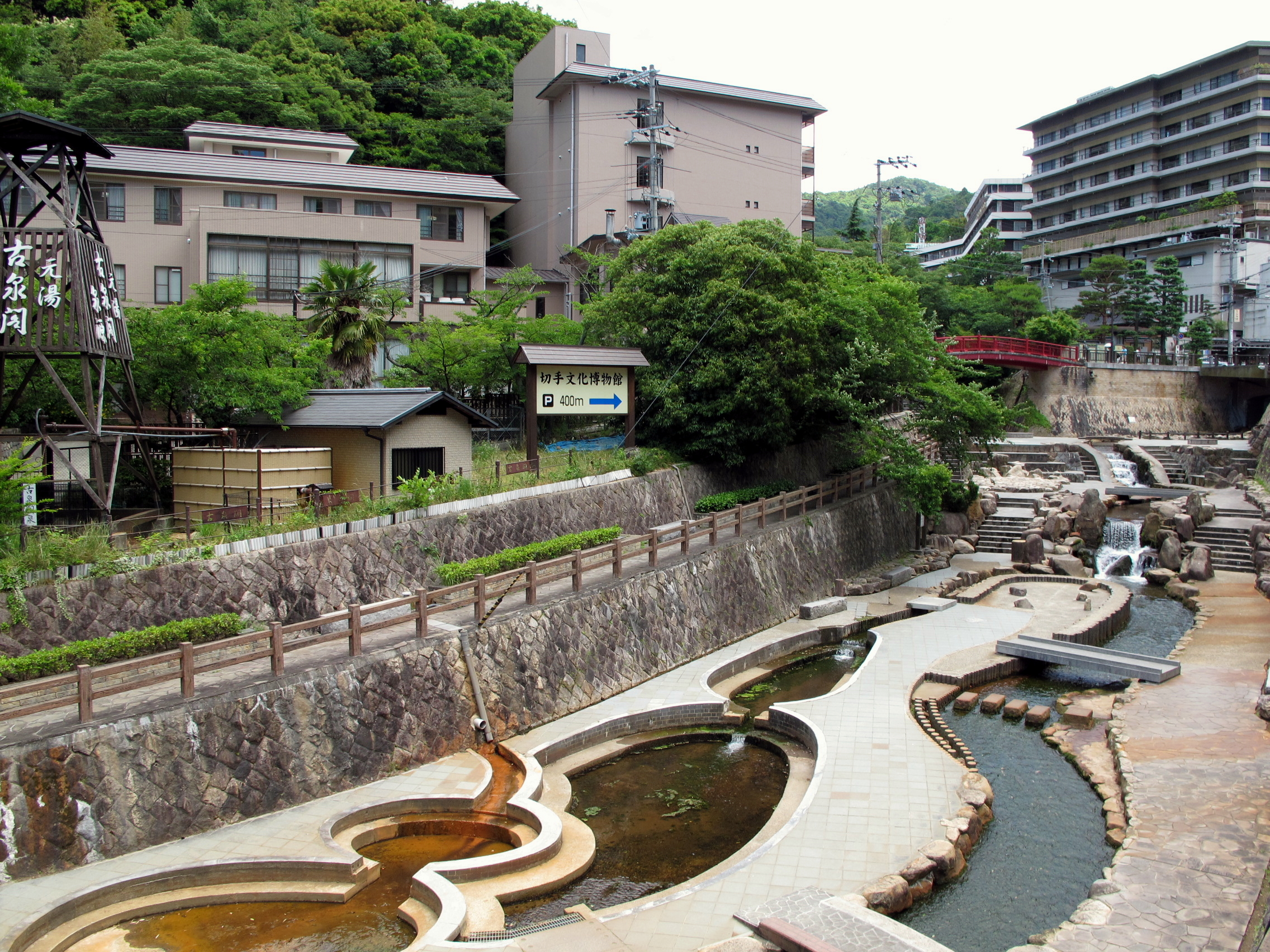
Two distinct springs define Arima Onsen. Kinsen, the golden spring, runs a striking yellow-brown, stained by dissolved iron and salt. The water is so mineral-laden that it leaves orange deposits on the stone basins where bathers soak. Ginsen, the silver spring, runs perfectly clear but carries dissolved radium and carbonate -- invisible chemistry that locals have attributed to healing properties for centuries. Before the Meiji era, only the Kinsen source was accessible. The clear Ginsen springs were excavated after World War II, when the town needed to attract visitors back to a country rebuilding from ruin. Today both springs feed public bathhouses -- Kin no Yu and Gin no Yu -- where visitors can soak for a few hundred yen, surrounded by the same steam that drew Buddhist monks here in the 7th century.
The Warlord's Retreat
Toyotomi Hideyoshi, the peasant-born general who unified Japan, made Arima his personal sanctuary. His first recorded visit came in 1583, just as his campaign to consolidate power was gaining momentum. He returned repeatedly over the following years, soaking in the Kinsen waters between military campaigns. In October 1590, fresh from unifying the country, Hideyoshi hosted a grand tea ceremony at Amida-do temple in Arima with the legendary tea master Sen no Rikyu. The event was part political theater, part genuine relaxation -- the most powerful man in Japan and the most refined aesthete of his age, sharing tea beside the steaming springs. Hideyoshi had bathhouses constructed for his visits, and excavations in the 1990s uncovered the ruins of these facilities along with tea ceremony implements. Kobe opened the Taiko-no-yudonokan museum in 1999 to exhibit these finds, preserving the connection between a conqueror and his favorite hot bath.
Monks and Medicine
Arima's recorded history begins with monks. In the 7th century, the Buddhist priest Gyoki is said to have discovered the therapeutic value of the springs and established the first bathing facilities. Five centuries later, in the 12th century, the monk Ninsai became Arima's great champion, admiringly developing the town's infrastructure around the hot springs. The religious connection was no accident -- in medieval Japan, hot springs were considered sacred places where the boundary between the physical and spiritual worlds grew thin. The mineral-rich waters were prescribed for ailments ranging from skin diseases to joint pain, and pilgrimage to the springs carried both medical and devotional meaning. This tradition of healing persists in modern Arima, where ryokan still advertise the therapeutic properties of their baths, and visitors follow prescribed soaking routines passed down through generations.
Mountain Retreat, Urban Doorstep
What sets Arima apart from Japan's remote mountain onsen is geography. The town sits on the northern slope of Mount Rokko, barely thirty minutes from downtown Kobe by rail and less than an hour from central Osaka. This proximity to the sprawling Kansai metropolis -- home to nearly twenty million people -- has made Arima the region's escape valve for centuries. The Rokko-Arima Ropeway swings visitors over the mountain's forested summit, delivering them from the urban fringe to a valley of steaming water and wooden inns. The town's narrow streets climb steeply between traditional ryokan, many of which have operated for generations. Tosen Goshobo, one of the oldest, traces its history back over seven hundred years. In autumn the maple trees lining the Arima River turn scarlet, and the town's Zuihoji Park -- named for Hideyoshi's memorial temple -- fills with visitors who have come as much for the scenery as the soak.
From the Air
Located at 34.80°N, 135.25°E on the northern slopes of Mount Rokko, behind the city of Kobe. From altitude, look for the mountainous terrain north of Kobe's coastal urban strip -- Arima sits in a valley on the mountain's back side. The Rokko-Arima Ropeway line crossing the summit ridge is a useful visual reference. Nearest major airport is Kobe Airport (RJBE) approximately 20 nautical miles south, or Osaka Itami (RJOO) roughly 15 nautical miles east. Best viewed at 3,000-5,000 feet AGL approaching from the south over Mount Rokko.