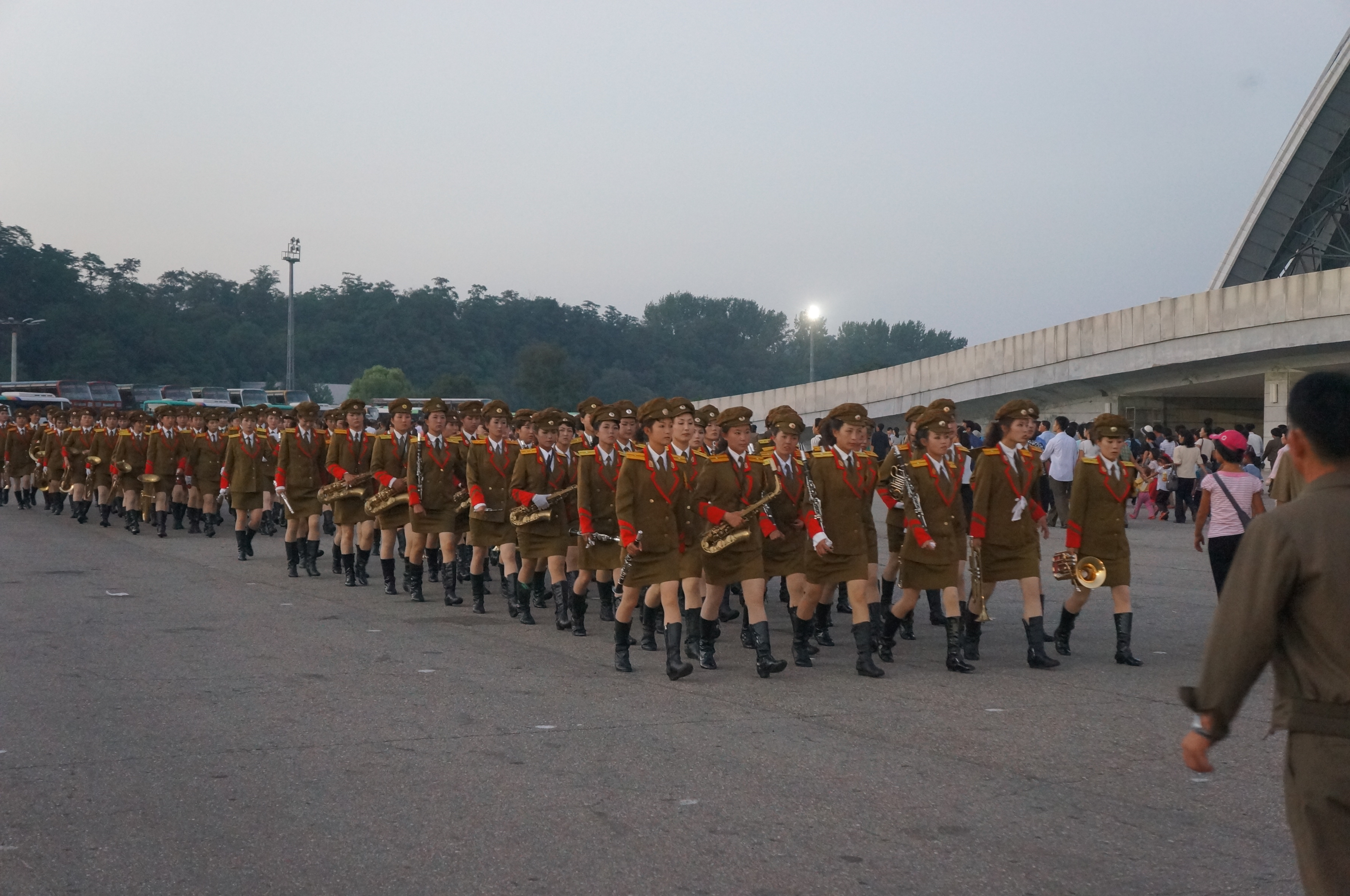
Arirang Mass Games
Imagine 30,000 schoolchildren sitting in the upper tiers of a stadium, each holding a colored card above their head. On a signal, every card flips in perfect unison, and the entire section becomes a pixel in a living screen -- a mountainscape, a national flag, the face of a leader -- shifting and reforming with the precision of a digital display but powered entirely by human discipline. Below them, tens of thousands of gymnasts and dancers execute choreography so synchronized it seems inhuman. This is Arirang, North Korea's mass games, and it is one of the most extraordinary and unsettling spectacles on Earth.
A Love Song for a Divided Nation
The name Arirang comes from one of Korea's most beloved folk songs, a ballad about a young couple torn apart -- a metaphor the organizers explicitly intended to represent the division of Korea. The mass games were first held in 2002 at the Rungrado 1st of May Stadium in Pyongyang, the largest stadium in the world by seating capacity. They ran annually through 2013, skipping only 2006, then returned intermittently. In 2007, South Korean President Roh Moo-hyun became the first leader from the South to attend. A decade later, in September 2018, President Moon Jae-in watched alongside Kim Jong-un and addressed a crowd of 150,000 -- a moment of inter-Korean diplomacy staged, literally, as performance.
The Human Mosaic
In August 2007, Guinness World Records recognized the Arirang Mass Games as the largest gymnastic display ever, with 100,090 participants. The opening spectacle relies on the 'card stunt' technique -- schoolchildren trained from as young as five years old holding and flipping colored cards to create enormous mosaic images. The effect is staggering: portraits, landscapes, slogans, and abstract patterns ripple across the stands like a slow-motion screen refresh. Below, performers execute gymnastics routines, folk dances, and military formations. For many participants, the mass games define their lives. Selected on the basis of skill, they rehearse for months and perform for years, sometimes from childhood through retirement. The spectacle demands a scale of collective human effort that few other events on earth can match.
Symbols Hidden in Plain Sight
Foreign spectators often miss the ideological grammar embedded in every scene. A rising sun represents Kim Il Sung. A gun signifies the weapon he legendarily passed to his son Kim Jong Il. Red flowers stand for the working class. Purple orchids reference Kimilsungia, the flower named after the founding leader, while red begonias evoke Kimjongilia, named for his successor. Each edition of the mass games carries a distinct title loaded with political meaning: 'The Glorious Country' in 2018 honored North Korea's 70th anniversary, 'People's Country' in 2019 emphasized collective identity, and 'Great Leadership' in 2020 was performed without foreign audiences due to COVID-19 border closures. The games returned again in October 2025 under the banner 'Long Live the Workers Party of Korea,' celebrating the party's 80th anniversary.
Spectacle and Its Cost
What does it take to orchestrate 100,000 people into a single performance? The answer involves years of training, immense logistical coordination, and the kind of centralized authority that can commandeer the lives of its citizens in ways democratic societies cannot. The children flipping cards miss months of schooling. The gymnasts rehearse under conditions that foreign observers have described as grueling. The beauty of the performance is real, and so is the coercion that makes it possible. Arirang occupies an uncomfortable space: undeniably impressive as a feat of human coordination, deeply troubling as an expression of state power over individual lives. The folk song it takes its name from is about separation and longing. Whether the performers experience anything of that original emotion, or simply execute their assigned movements, is something no foreign visitor can know for certain.
From the Air
The Arirang Mass Games are held at the Rungrado 1st of May Stadium, located at 39.05°N, 125.78°E on Rungra Island in the Taedong River, Pyongyang. The stadium, the world's largest by capacity (114,000 seats, with crowds reaching 150,000), is a distinctive scalloped structure visible from altitude. Nearest airport: Pyongyang Sunan International Airport (ZKPY/FNJ). North Korean airspace is heavily restricted.