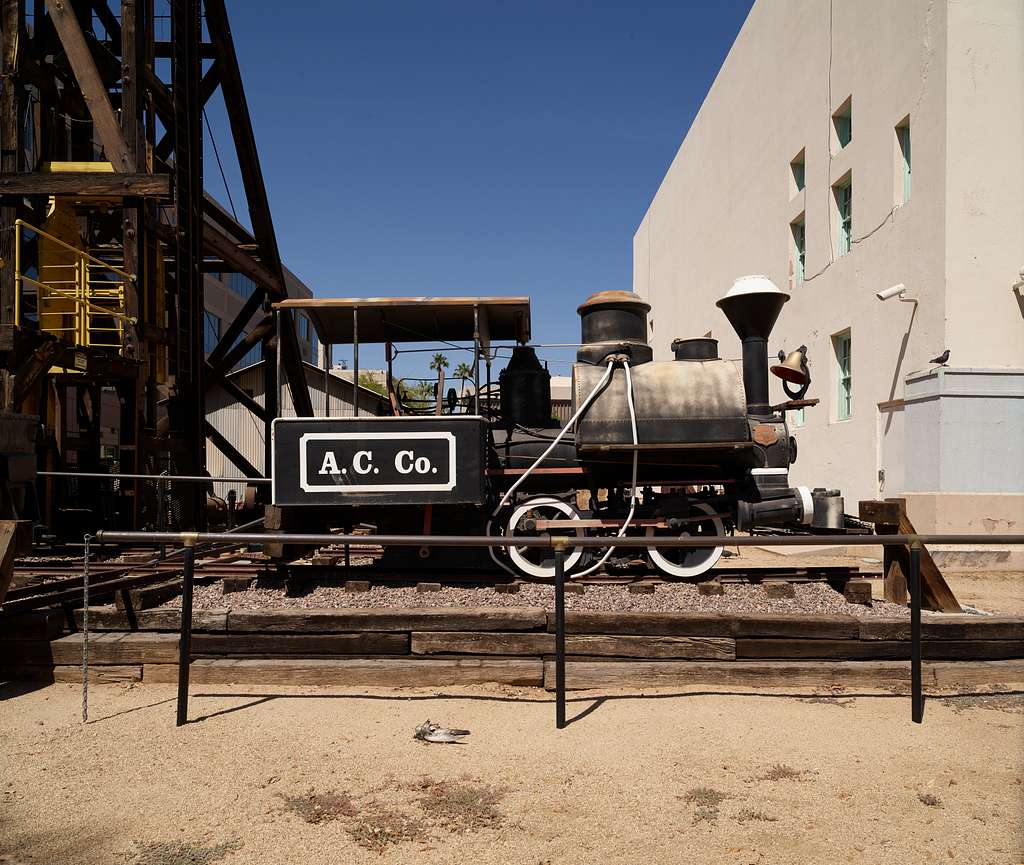
Arizona Mining and Mineral Museum
Rose Mofford, the former Arizona governor with the signature beehive hairdo, made her feelings clear: if the Arizona Mining and Mineral Museum ever closed, she would have her collection scattered to rural museums across the state rather than let it disappear into bureaucratic limbo. In May 2011, the museum did close. Mofford's mineral specimens, her kachina dolls, and more than 3,000 other rocks, fossils, and mining artifacts joined a collection that had been captivating Arizonans since 1884, now locked away in a building that sits largely empty. The story of this museum is the story of Arizona itself - born from copper and ambition, sustained by passionate advocates, and ultimately caught in the machinery of state politics.
From Territorial Fair to Institution
Arizona was still a territory when the collection began. In 1884, a temporary mineral exhibit at the first territorial fair proved so popular that organizers knew they had touched something essential about the land and its people. The exhibit moved into a permanent building on the state fairgrounds in 1919, though it remained open only during fair season. In 1953, six Arizona mining companies pooled funds to operate it year-round as a formal museum. For decades, the Arizona Department of Mines and Mineral Resources shared the fairgrounds building with the growing collection. By 1991, the facility had become dilapidated, its climate unsuitable for preserving archival documents. The museum needed a new home.
Polly's Building
Polly Rosenbaum served in the Arizona legislature for more than four decades, making her the state's longest-serving lawmaker. When the mineral museum needed a proper home, she championed the effort to secure the former El Zaribah Shrine Auditorium in downtown Phoenix. The historic building was renamed the Polly Rosenbaum Building in her honor that same year, 1991. Inside, visitors could see minerals from famous Arizona localities, specimens from the copper mines that built the state's economy, and a piece of native copper impressive enough to anchor any collection. Governor Mofford's donated minerals and kachinas occupied a room off the main gallery, personal treasures from a leader who understood what these rocks meant to her state.
Five Cs and a Closure
In 2010, the Arizona Historical Society took control of the museum under new state legislation. The plan was ambitious: convert the mineral museum into an Arizona Centennial Museum celebrating the state's Five Cs - cattle, copper, cotton, citrus, and climate - in time for the February 14, 2012 centennial of statehood. Governor Jan Brewer's office developed the concept. Supporters estimated they needed nine million dollars in private donations. The transfer proved more complex than anticipated. Loaned specimens worth tens of thousands of dollars created unexpected liability concerns. Fundraising stalled. In May 2011, the museum simply closed. The centennial came and went. The building sat empty.
A Collection in Limbo
Years passed with the museum's fate unresolved. The Arizona Republic published an opinion piece titled 'Top museum closed for nothing.' Supporters maintained a blog called Mineral Museum Madness, documenting the ongoing saga. Finally, in April 2017, legislation passed to reopen the museum under the University of Arizona's ownership. The collection that began at an 1884 territorial fair, sustained by mining companies in 1953, championed by Polly Rosenbaum in 1991, and beloved by Governor Mofford, would have another chapter. The rocks waited, patient as geology, for their public return.
From the Air
Located at 33.449°N, 112.092°W in downtown Phoenix near the State Capitol. The Polly Rosenbaum Building is part of the government complex visible west of downtown's high-rises. Best viewed below 3,000 feet AGL. Nearest airports: Phoenix Sky Harbor International (KPHX) 5nm east, Phoenix Deer Valley (KDVT) 12nm north, Phoenix Goodyear (KGYR) 18nm southwest.