Arizona Museum of Natural History
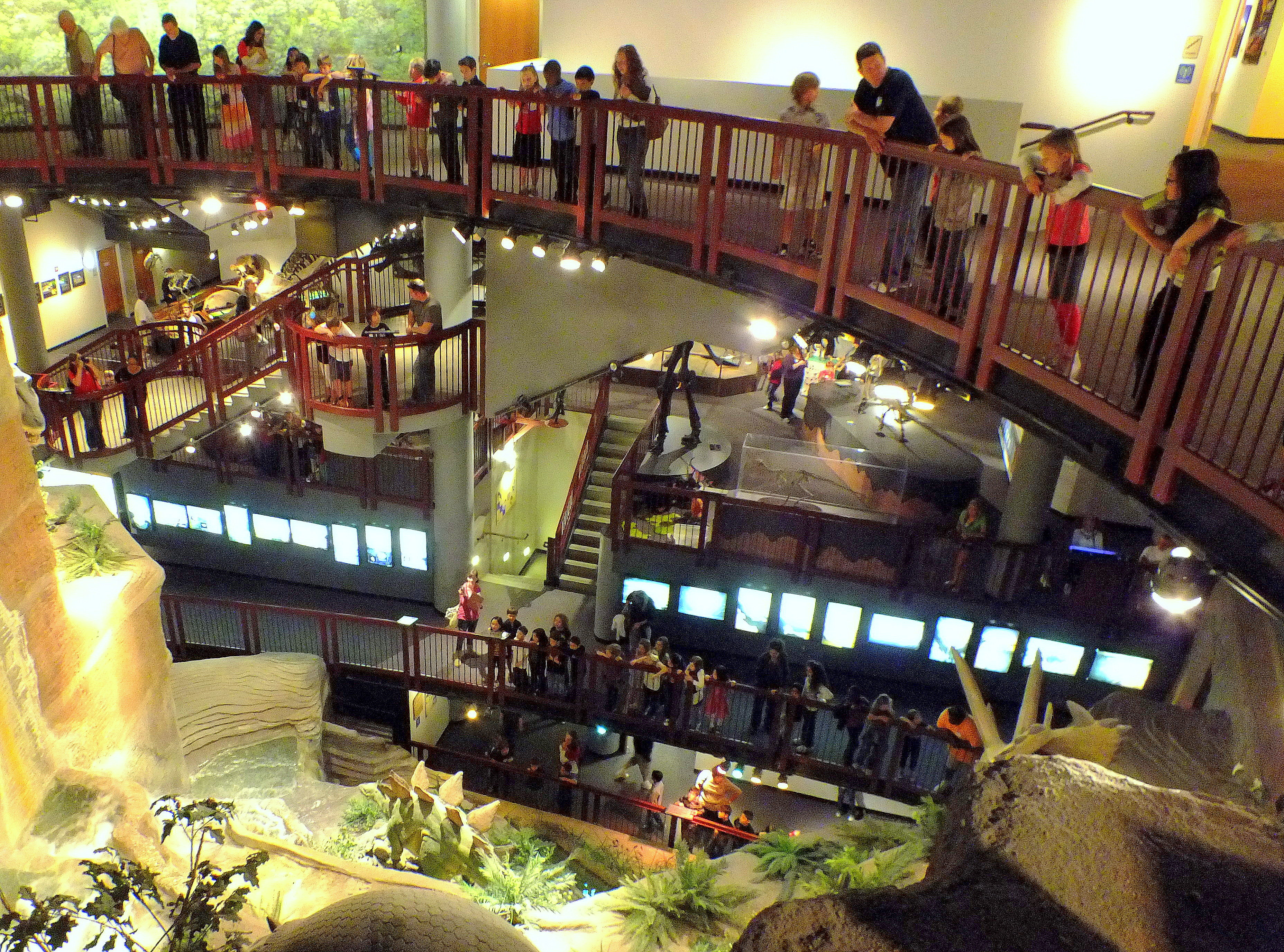
Every thirty minutes, a flash flood thunders through a three-story indoor mountain while animatronic dinosaurs roar overhead. The Arizona Museum of Natural History in Mesa delivers a sensory experience most museums can only dream of, combining theatrical spectacle with genuine scientific discovery. This is a museum that doesn't just display the ancient past - it brings it crashing back to life.
From City Hall to Dinosaur Hall
The museum's origins are almost comically humble. In 1977, a small collection of Arizona artifacts found shelter in Mesa's City Hall, a WPA-era building from 1937 that also housed the municipal courts, library, police, and fire departments. This cramped beginning gave no hint of the paleontological powerhouse to come. The building expanded in 1983 and 1987, then again in 2000 when a new wing transformed the modest Mesa Southwest Museum into a regional destination. The 2007 renaming to Arizona Museum of Natural History reflected its expanded ambition: the only natural history museum serving the entire Phoenix metropolitan area. Today, the main complex spans approximately 60,000 square feet, with collection holdings that include 60,000 objects and 10,000 historic photographs.
Dinosaur Mountain's Living Theater
The museum's crown jewel is Dinosaur Mountain, a three-story indoor structure complete with a cascading waterfall and a flash flood simulation that runs every half hour. Pterosaurs hang overhead in frozen flight, their membranous wings capturing the strange, angular grace of Earth's first flying vertebrates. The Dinosaur Hall houses an impressive collection: a Tarbosaurus skeleton, a Tyrannosaurus rex skull, and a parade of ceratopsians including Zuniceratops, Triceratops, and the aptly named Pentaceratops. A life-size Pteranodon sternbergi sculpture by artist Ed Mack surveys the scene from above, while a 4-foot mechanical pterosaur nicknamed 'Clam Digger' demonstrates the opening and closing of its wings. The museum serves as an official repository for fossils collected from Bureau of Land Management, National Forest, and Fish and Wildlife lands throughout Arizona.
Layers of Human Time
Beyond the prehistoric drama lies a nuanced exploration of Arizona's human story. The native peoples' gallery traces the journey from Paleoindian big game hunters to the desert cultures that flourished later. A meticulous recreation of a Hohokam village, complete with pithouses and above-ground structures outfitted with genuine artifacts, brings to life the civilization that thrived here from AD 600 to 1450. The museum sponsors ongoing excavation at Mesa Grande, a significant mound from the Hohokam Classic Period, making public education about the Hohokam and O'odham peoples a central mission. The Origins gallery takes visitors on a voyage through cosmic time, while the Ancient Cultures of Mexico exhibit expands the geographic frame to include Mesoamerican civilizations.
A Victorian Time Capsule
The museum also maintains the Sirrine House, a Queen Anne style home built in Mesa in 1896. According to the museum, it stands as the only fully restored Victorian-era home museum in the area - a reminder that Arizona's story extends beyond ancient cultures and prehistoric beasts to include the complex layers of its more recent settlement. Though open only for special events, the Sirrine House represents yet another dimension of the museum's commitment to preserving the region's diverse heritage, from the age of dinosaurs to the age of frontier expansion.
From the Air
Located at 33.4167°N, 111.8338°W in Mesa, Arizona, east of Phoenix. The museum sits in the urban grid of downtown Mesa, visible from lower altitudes. Phoenix Mesa Gateway Airport (KIWA) lies approximately 15 nautical miles to the southeast. Phoenix Sky Harbor International Airport (KPHX) is about 12 nautical miles to the west. Best viewed at altitudes below 5,000 feet in clear weather. The distinctive urban layout of Mesa's downtown area serves as the primary visual landmark.