Arizona State Museum
Twenty thousand pottery vessels rest in climate-controlled darkness, each one a message from hands that shaped clay centuries before Europeans arrived in the Americas. The Arizona State Museum was founded in 1893, just one year after the University of Arizona opened its doors, making it older than Arizona statehood itself. The Territorial Legislature recognized something profound: the desert around Tucson held evidence of civilizations stretching back ten thousand years, and someone needed to protect it before settlers destroyed what the Apache wars had not. Today, the museum holds the world's largest collection of Southwest Indian pottery, safeguarded in a state-of-the-art vault that maintains precise temperature and humidity levels to preserve fragile clay that survived centuries in the open ground.
Guardians of Deep Time
Emil W. Haury arrived at the museum in 1937 and would spend the next 27 years directing excavations that rewrote the prehistory of the Southwest. His work at Snaketown uncovered the Hohokam culture, irrigation farmers who built canals across the desert floor 1,500 years ago. Haury trained a generation of archaeologists in his meticulous methods, and his students spread across the region to continue his work. The museum still conducts excavations, with University of Arizona students learning to read the stories written in layers of ash and broken pottery. Every artifact in the collection carries documentation of where it was found, who found it, and what surrounded it underground.
Beyond the Dig
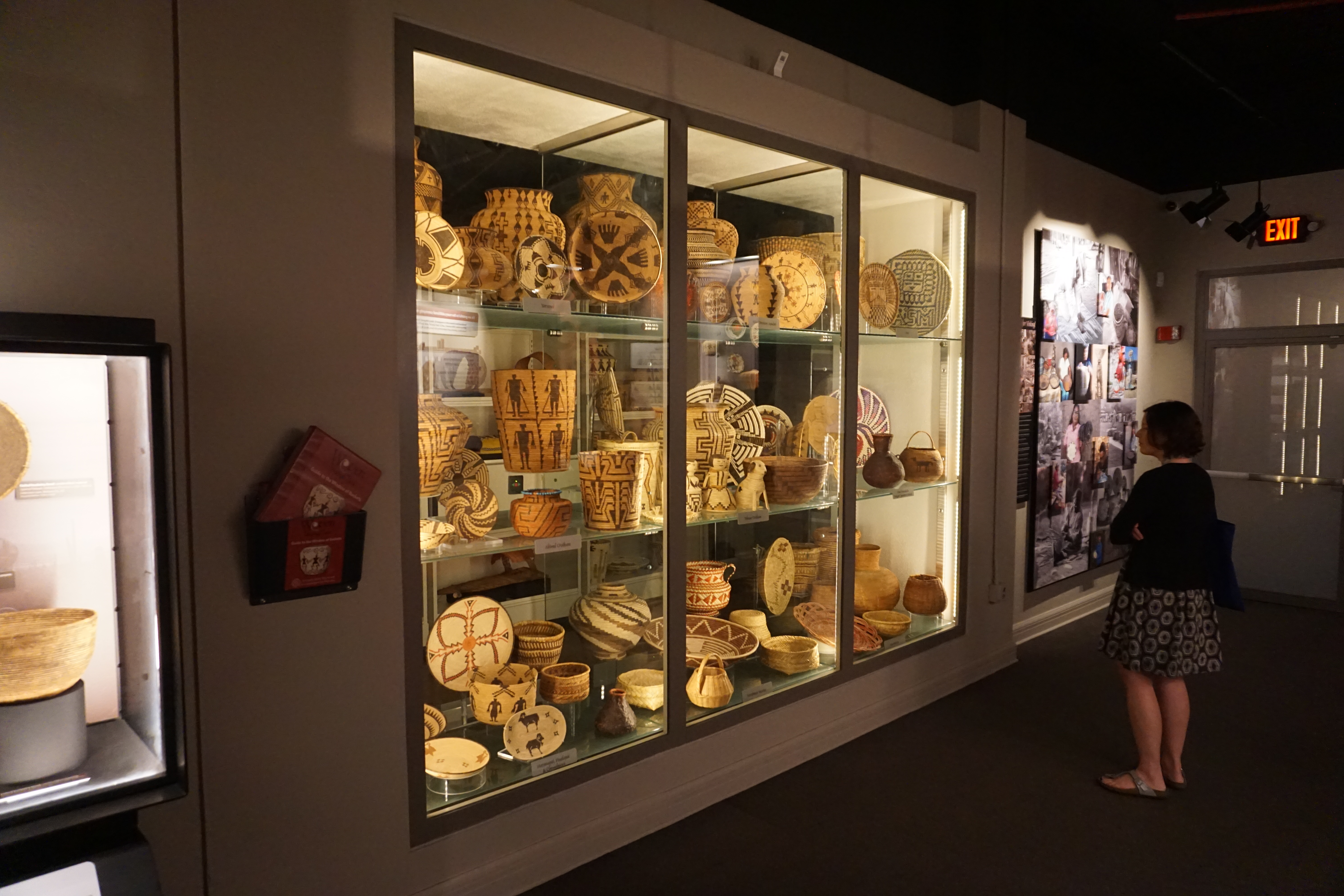
Not everything in the museum came from excavation. Tribal members have donated family treasures. Collectors have bequeathed lifetime accumulations. The result is a collection spanning both archaeology and ethnology, holding items from cultures that thrived and vanished alongside objects still made today. Baskets woven with techniques passed down through generations sit near jewelry incorporating turquoise from mines the Spanish never found. Textiles preserve patterns that carry meaning only tribal elders can still read. The photographic collection alone exceeds 350,000 images documenting everything from nineteenth-century ceremonials to mid-century archaeological digs, the faces of Southwest peoples across a century of change.
Paper Trails to the Past
The Office of Ethnohistorical Research maintains over 17,000 documents from the Spanish colonial period, records of missions and mines, military expeditions and failed settlements. The Documentary Relations of the Southwest database makes these records searchable, allowing researchers to track specific individuals, places, or events across centuries of colonial correspondence. The AZSITE database catalogs hundreds of archaeological sites across the state, letting investigators plan new work without duplicating old efforts. The library holds over 100,000 volumes, from rare first editions to unpublished field notes, oral histories recorded before memory faded, and sound recordings of languages with few remaining speakers.
Living Relationships
The museum maintains active relationships with tribes across the Southwest, not as subjects of study but as partners in preservation. Tribal members visit to evaluate objects and advise on display. Museum staff travel to tribal communities to consult on collections. When federal law requires the return of human remains and sacred objects, the museum handles repatriation with care built over decades of trust. The work acknowledges a difficult truth: some of what museums collected should never have left tribal hands. The conversations about what belongs where continue, mediated by people who understand both museum practice and tribal protocol.
A Smithsonian in the Desert
The Arizona State Museum became a Smithsonian affiliate, joining a network of institutions committed to the highest standards of collection care and public education. The museum administers the Arizona Antiquities Act, issuing permits for archaeological work on state lands and ensuring that new discoveries receive proper documentation and storage. It also responds to reports of human remains discovered during construction projects, a reminder that the ground beneath Tucson holds stories still waiting to be told. For over 130 years, the museum has stood as both repository and researcher, guardian of a past that grows richer with each season's excavation.
From the Air
The Arizona State Museum sits at 32.23°N, 110.96°W on the University of Arizona campus in central Tucson. The university's distinctive buildings and athletic facilities make identification easy from altitude. Tucson International (KTUS) is 7nm to the south. Davis-Monthan AFB (KDMA) is 5nm southeast. From 4,000-6,000 feet AGL, the campus is visible as a green oasis amid the urban grid. Best viewing in morning light when shadows define building forms.