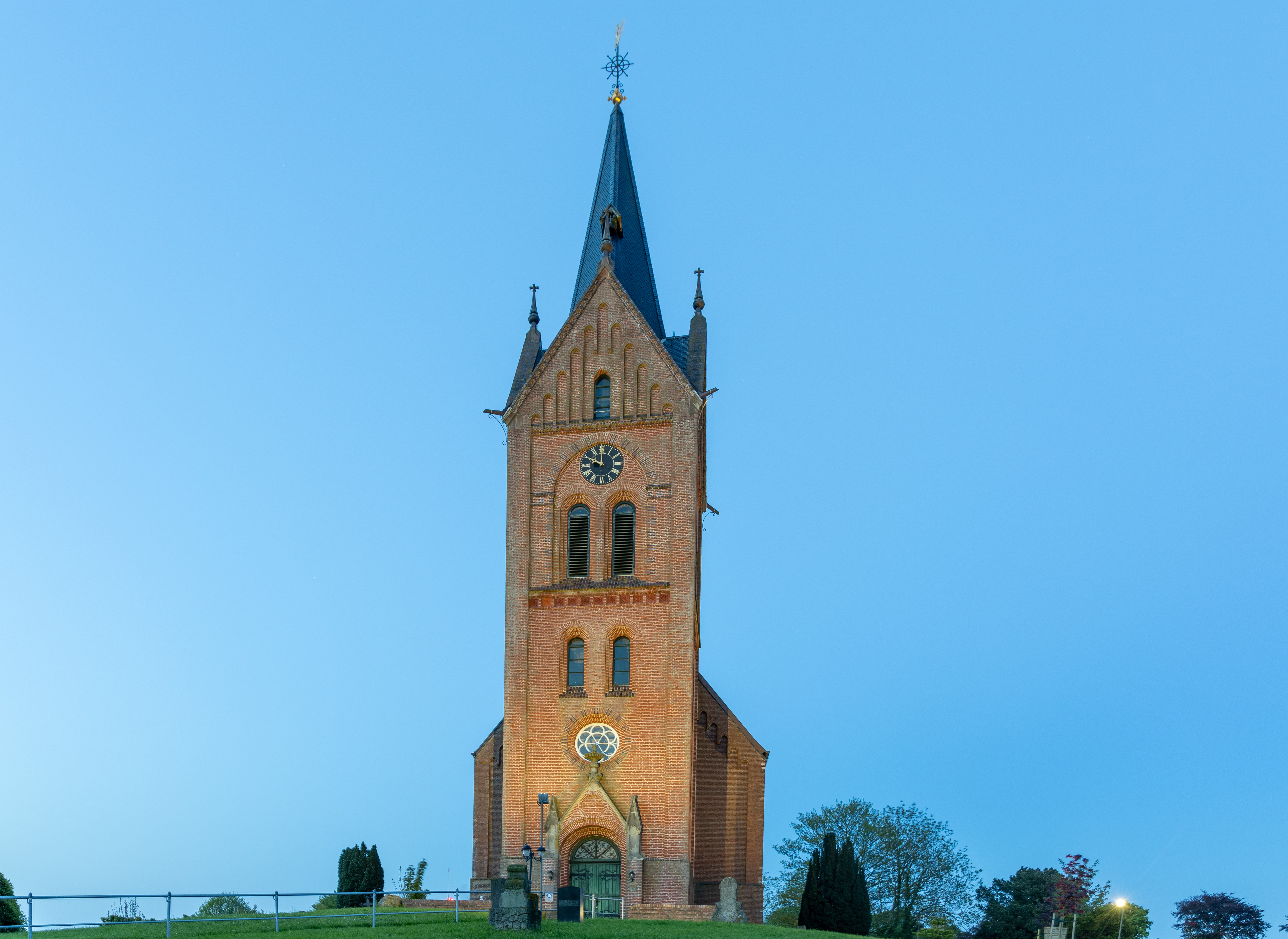
Arle, Großheide
Tuff is a volcanic rock - light, porous, surprisingly easy to cut - and it is not native to East Frisia. To build a church from tuff in 12th-century Lower Saxony, you had to ship the stone down the Rhine from Andernach, around the coast, and up some inland creek by barge. The fact that the village of Arle has a Romanesque tuff church on a mound near the edge of the geest tells you that, eight hundred years ago, someone here had the money and the inclination to build something that would last.
The Provostship on the Geest
Arle sits on the edge of a geest - a slightly raised band of older sandy soil that runs through the East Frisian marshes - and that geographic accident shaped its early history. By the 12th century, the village was a provostship under the archbishopric of Bremen, registered under the older spelling Erle. Unlike the more powerful provostships of the Münster area, Arle's provosts were not great noblemen but working clergymen - parish priests with extra responsibility for surrounding villages. The St. Boniface Church, built from tuff on a high artificial mound, dates to this period. Boniface was the 8th-century English missionary who Christianized much of Germany, and dedicating churches to him along the Frisian coast was a way of staking claim to a region that had been pagan within living memory.
A Castle Burnt and Inherited
In 1408, a tower at Arle appears in the historical record - not for being built, but for being captured. It was among the East Frisian castles taken by Hamburg's troops, who had marched into the region with the support of Keno tom Brok, the most powerful Frisian chieftain of his day. The Hamburgers were dismantling the network of fortified houses that small Frisian lords had used to harass shipping. After the campaign, the castle at Arle passed to Hebe - daughter of one Lütet Attenas - and her son Keno. Through Hebe's granddaughter Sophie, the property came to the Howerda family in 1545. In 1613, Focko Beninga bought the nearby hamlet of Dreesche. In 1717 the estate changed hands again, this time to the Barons of Wedel, and in 1786 to the House of Innhausen and Knyphausen of Lütetsburg. The small shield on the village's coat of arms still carries the mark of the Beninga family of Grimersum. Layered ownership over six centuries reads, when you trace it out, like a quietly conducted aristocratic relay race.
Three Names, One Village
Arle is now an Ortsteil - a constituent village - of the larger municipality of Großheide, in the Aurich district of Lower Saxony. It was incorporated into Großheide by the municipal reform law of 1 July 1972, which swept across West Germany in the early 1970s and consolidated thousands of small communes into larger administrative units. Before that, Arle had been independent for as long as it had been called Arle. The earlier name, Erle, simply meant alder - the tree that grows in wet places - and tracking the shift from Erle to Arle is a small linguistic puzzle that local historians enjoy. The village's coordinates - 53.61°N, 7.39°E - put it about fifteen kilometers north of Aurich proper and ten kilometers south of the Wadden Sea coast, well placed for a medieval clergy to keep an eye on both the inland and the sea trade.
What Stays and What Goes
The castle is gone. The tower mentioned in 1408 left no foundations that anyone has been able to find with confidence. The provostship, with its layered authority over parish priests, dissolved into ordinary diocesan administration. What remains is the church on its mound, a stretch of geest farmland, and the slow accumulation of family names on coats of arms. For most travelers, Arle is something you pass through on the way to somewhere else. For someone willing to stop, the tuff-stone church is one of the older standing structures in East Frisia, and it has been holding its mound up since before England had a single language and before Germany existed at all.
From the Air
Located at 53.61°N, 7.39°E in the Großheide municipality of Aurich district. Recommended viewing altitude 2,500-3,500 ft for the contrast between the geest band (slightly raised, with more woodland and older field patterns) and the surrounding marsh. The St. Boniface Church on its artificial mound is the only significant visual landmark from altitude - look for a small clustered village with the church tower offset to one side. Nearest aerodromes: Norden-Norddeich (EDWS) to the west and Norderney (EDWY) on the coast. Best light is morning when the low sun rakes across the geest boundary and emphasizes the mound on which the church sits.