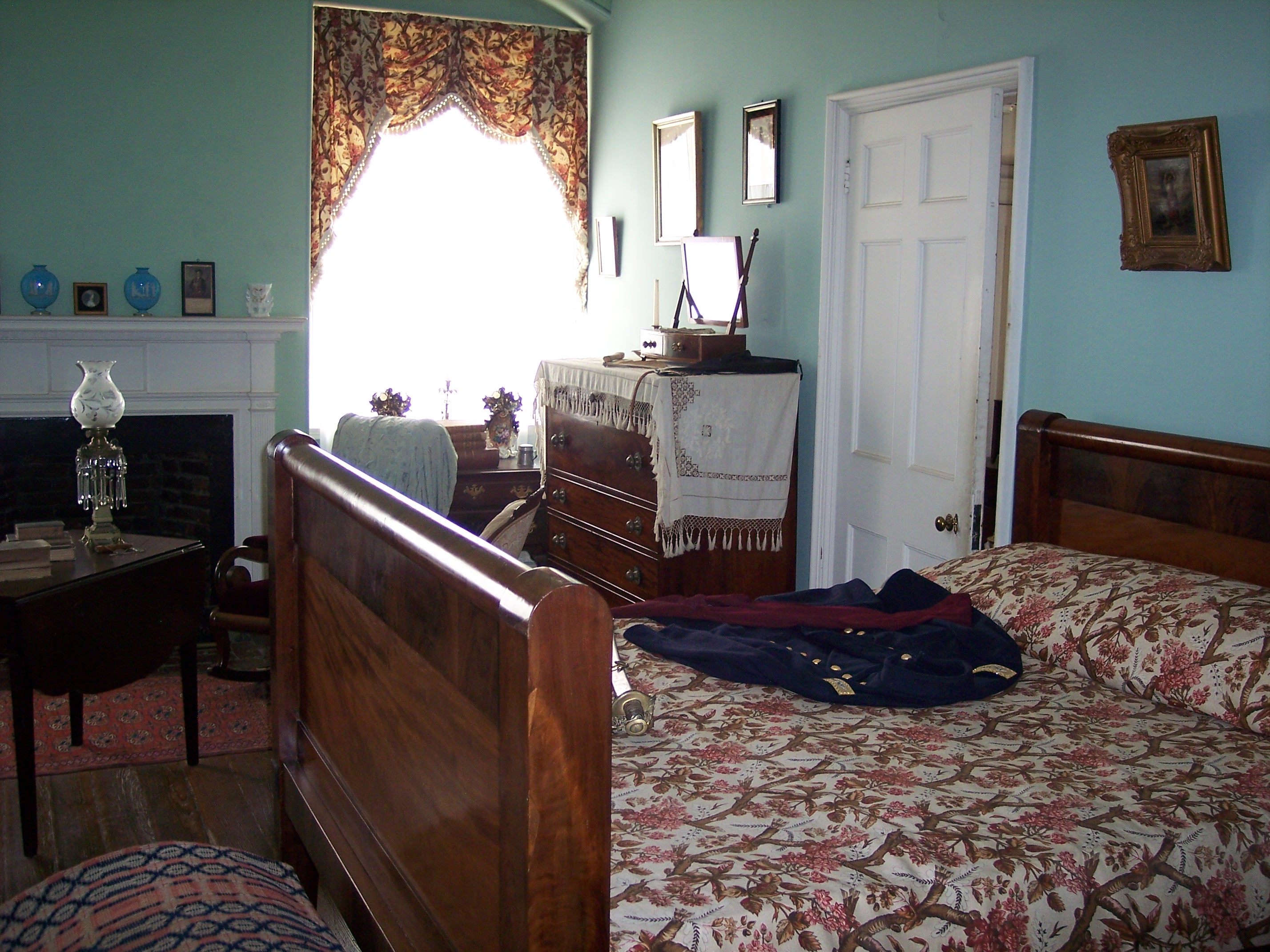
Arlington House, The Robert E. Lee Memorial
The eight massive columns are visible for miles, each five feet in diameter, holding up a portico that stretches 140 feet across the hilltop. George Washington Parke Custis built this mansion between 1803 and 1818 not as a private retreat but as a shrine -- a living memorial to his step-grandfather, George Washington, filled with Washington's personal artifacts and designed by English architect George Hadfield as the first example of Greek Revival architecture in America. The house sits on a 1,100-acre estate overlooking the Potomac River and the growing capital city on the opposite bank. Today, white headstones radiate outward from the mansion in every direction. Arlington House became the seed from which Arlington National Cemetery grew, and the story of how that transformation happened is one of war, confiscation, revenge, and reconciliation.
A Washington Legacy on the Potomac
Custis was the grandson of Martha Washington and the stepson's son of George Washington himself. Raised at Mount Vernon after his father John Parke Custis died at Yorktown following the British surrender in 1781, young Custis inherited the hilltop property his father had purchased in 1778 and originally named "Mount Washington." He renamed it "Arlington" after the Custis family's ancestral homestead on Virginia's Eastern Shore. The north and south wings were completed by 1804; the grand center section took thirteen more years. Notable guests included the Marquis de Lafayette, who visited in 1824. Custis experimented with agriculture on the estate and opened Arlington Spring, a picnic ground on the Potomac banks, to the public. His only surviving daughter, Mary Anna Randolph Custis, married Lieutenant Robert E. Lee at the house on June 30, 1831. For the next thirty years, Arlington House was the Lee family home, where six of their seven children were born.
The Decision That Changed Everything
In April 1861, Virginia seceded from the Union. Robert E. Lee, offered command of the entire United States Army, stood in this house and made the decision that would define him -- he resigned his commission and joined the Confederate States Army. Arlington House sat on high ground directly overlooking the capital, making it a military necessity for the federal government. Mary Custis Lee, warned by her cousin who served as aide to General Winfield Scott, reluctantly left on May 14, 1861. Before departing, she entrusted the house keys and the responsibility of protecting the Washington family heirlooms to Selina Norris Gray, an enslaved woman who had served as her personal maid. Ten days later, Union troops seized the estate without opposition.
Graves Among the Roses
Congress imposed a property tax on land in "insurrectionary" areas, requiring in-person payment. Mary Lee, crippled by rheumatoid arthritis and trapped behind Confederate lines, could not comply. The estate was auctioned in January 1864 and the government acquired it for $26,800. Quartermaster General Montgomery C. Meigs, who harbored personal animosity toward Lee, proposed a deliberate strategy: bury the war dead as close to the mansion as possible to render it permanently unlivable. Officers were interred next to the main flower garden. When Union officers quartered in the house complained, Meigs overruled them and ordered forty-four more burials along the garden's edges within a month. By September 1866, the remains of 2,111 Union and Confederate soldiers from Bull Run and other battles were buried together in a vault near the mansion. The flower gardens became a cemetery. The cemetery became Arlington National.
Confiscation and Restitution
Lee never returned to Arlington House. He died in 1870 as president of Washington College. Mary Lee visited once, a few months before her death in 1873, but was too distraught at the estate's condition to enter the house. Their eldest son, George Washington Custis Lee, sued the federal government in 1874. After years of appeals, the Supreme Court ruled 5-4 in 1882 that the estate had been "illegally confiscated" and ordered it returned. But by then, the property was covered in graves. Custis Lee negotiated a sale price of $150,000, signed the title on March 31, 1883, and the graves remained undisturbed. The county that surrounds the estate eventually took its name -- in 1920, the Virginia General Assembly renamed Alexandria County to Arlington County, honoring the mansion on the hill.
The Keepers of Memory
Selina Gray's decision to protect the Washington heirlooms during the Union occupation was not the Gray family's only contribution. During major restoration efforts from 1929 to 1930, four of Selina and Thornton Gray's daughters provided crucial details about the house's original layout and furnishings, ensuring the authenticity of the restoration. The National Park Service maintains the house today, along with its preserved slave quarters and garden. Arlington House suffered significant damage in the 2011 Virginia earthquake, and philanthropist David Rubenstein donated $12.5 million in 2014 to restore the mansion, outbuildings, and grounds to their 1860 appearance. The U.S. flag flies at half-staff at Arlington House whenever a funeral is in progress in the cemetery below -- a constant reminder that this shrine to one president became the final resting place for hundreds of thousands who served their country.
From the Air
Located at 38.88N, 77.07W atop a prominent hill in Arlington County, Virginia. The Greek Revival mansion with its columned portico is visible overlooking the white headstones of Arlington National Cemetery. The Potomac River separates it from Washington, D.C., with the Lincoln Memorial and National Mall directly across the water. Nearby airports: Ronald Reagan Washington National (KDCA) 1.5nm south, Washington Dulles International (KIAD) 24nm west. Pierre Charles L'Enfant, who designed the layout of Washington, D.C., is buried in front of the mansion overlooking the city he planned.