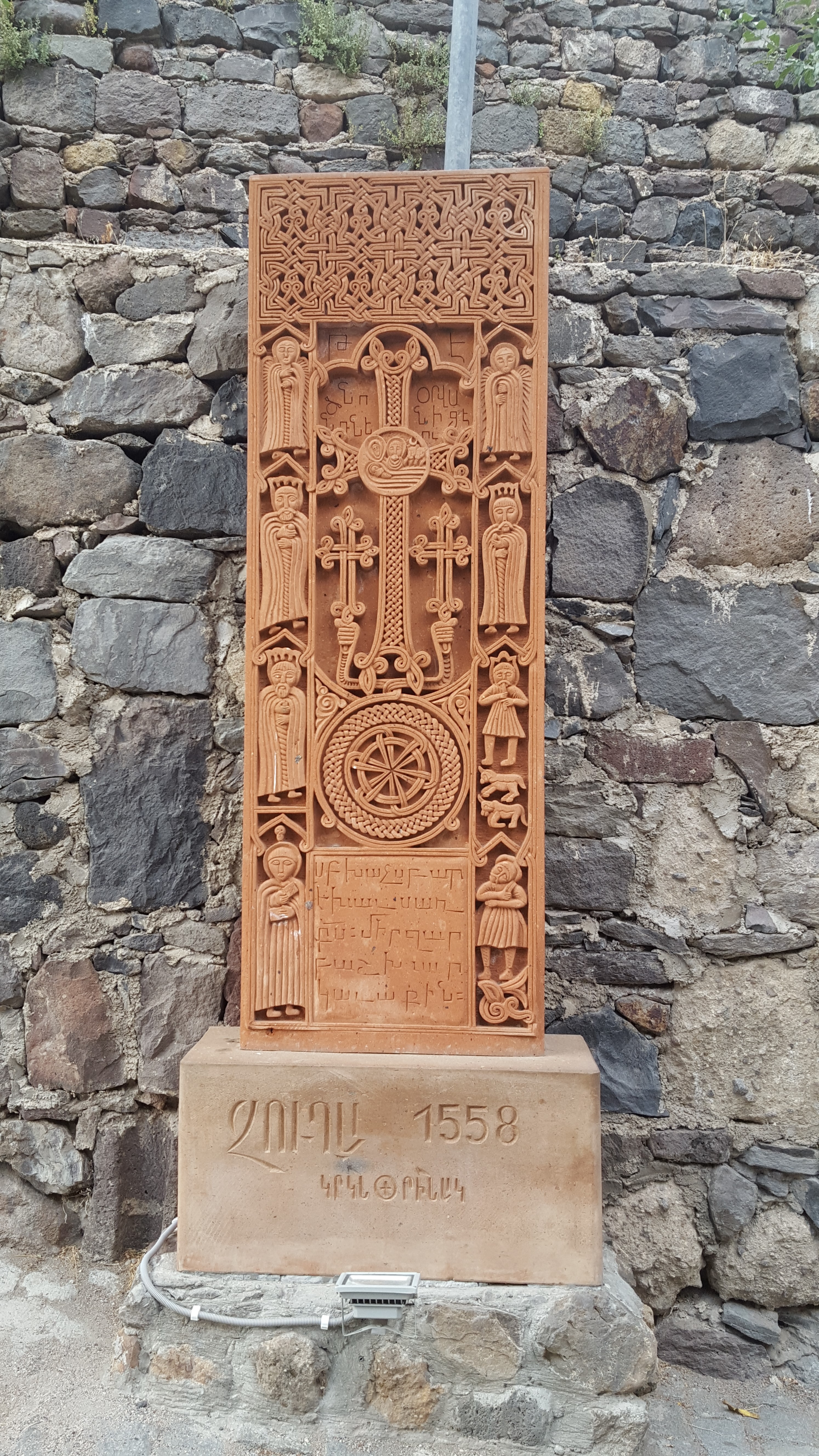
Armenian Cemetery in Julfa
Ten thousand carved stone crosses once covered three low hills near the Aras River, each one a masterwork of Armenian craftsmanship spanning seven centuries. By 2006, not one remained standing. The Armenian cemetery at Julfa, in Azerbaijan's Nakhchivan exclave, represented the largest surviving collection of khachkars in the world -- intricately decorated Christian tombstones that recorded births, deaths, and the persistence of a culture. Its systematic destruction over eight years, documented by satellite imagery and photographs taken from across the Iranian border, stands as one of the most significant acts of cultural erasure in modern history.
Stones That Spoke Across Centuries
The khachkars of Julfa dated from the 9th century to 1604, when Shah Abbas I of Safavid Persia ordered the town destroyed and its Armenian population deported. In the centuries between, Julfa grew from a village into a prosperous city of 20,000 to 40,000 Armenians, its wealth built on trade and craftsmanship. The cemetery accumulated layer upon layer of these carved memorial stones, each one unique, each bearing geometric patterns and Christian imagery cut deep into the rock. In addition to the thousands of khachkars, Armenians erected tombstones shaped like rams, decorated with Christian motifs and intricate engravings. The Encyclopaedia Iranica described the cemetery as the most visible material evidence for Julfa's Armenian past. A French Jesuit missionary who visited in 1648 counted over ten thousand tombstones.
The Erasure
Armenia first accused Azerbaijan of destroying khachkars in 1998. Arpiar Petrosyan, a member of Armenian Architecture in Iran, had witnessed and filmed bulldozers demolishing the monuments. International scrutiny temporarily slowed the destruction, but by 2002 an earlier wave of vandalism had reduced the intact khachkars to roughly 2,000. Then the bulldozers returned. Azerbaijan's president denied everything, calling the charges a lie. In 2006, a journalist from the Institute for War and Peace Reporting visited the site and found nothing left. Photographs taken from Iran showed the cemetery grounds had been converted into a military shooting range. European Parliament members who demanded to inspect the site were barred entry. The U.S. ambassador to Azerbaijan was refused access in 2011.
Evidence From Above
When every attempt at ground-level investigation was blocked, the evidence came from space. In December 2010, the American Association for the Advancement of Science released an analysis comparing high-resolution satellite photographs from 2003 and 2009. The conclusion was unambiguous: significant destruction and changes in the grade of the terrain had occurred, and the cemetery area was likely destroyed and later leveled by earth-moving equipment. The satellite images confirmed what observers on the ground had reported for years. Scholar Simon Maghakyan pointed out a troubling double standard: the West condemned the Taliban's destruction of the Buddhas of Bamiyan and the Islamist destruction of shrines in Timbuktu, but maintained silence regarding what he called the complete destruction of the world's largest medieval Armenian cemetery.
What Survives
A handful of khachkars, removed before the destruction, survive at Etchmiadzin Cathedral in Armenia -- stones dated to around 1576 and 1602, their geometric patterns still sharp after four centuries. Replicas stand at the Geghard monastery and at the Saint John the Baptist Church in Yerevan. In 2013, Australian Catholic University launched a project to digitally reconstruct the destroyed cemetery using 3D visualization and virtual reality, drawing on historical photographs taken by researcher Argam Ayvazyan over a 25-year period. The physical stones are gone, but their digital ghosts persist -- a monument to both artistic achievement and its deliberate annihilation.
From the Air
Located at 38.97N, 45.56E along the Aras River in the Nakhchivan exclave of Azerbaijan. The site sits on the Iran-Azerbaijan border. The nearest airport is Nakhchivan International Airport (UBBN), approximately 40 km northwest. From altitude, the Aras River valley is clearly visible as a dividing line between Iran and Azerbaijan. The former cemetery site, now leveled, lies on three low hills west of the modern town of Julfa.