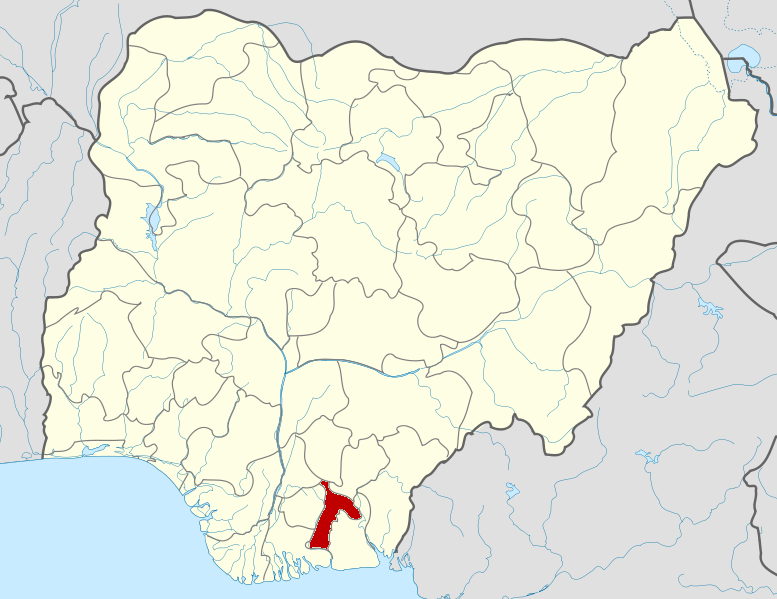
Arochukwu
The name says it plainly: Aro means 'Children,' and Chukwu means 'God.' Arochukwu, the Children of God, is a settlement in southeastern Nigeria's Abia State whose people believed they had a direct line to the divine. For centuries, that belief was enforced not by faith alone but by the Ibini Ukpabi, an oracle shrine whose verdicts could make a person disappear forever. Through a combination of spiritual authority, military muscle, and shrewd trade networks, the Aro people built a confederacy that dominated much of what is now Eastern Nigeria until British guns ended it at the dawn of the twentieth century.
Five Clans, One Kingdom
Arochukwu is not a single community but a coalition of five clans: Abam, Aro, Ihechiowa, Ututu, and Isu. Each has its own ancestry, villages, and traditions, yet they share cultural and linguistic roots that trace back to waves of migration across the Niger River. Abam, the largest by population and landmass, was renowned for its warriors who pioneered the Ikpirikpi Ogu war dance, later adapted by neighboring clans. Ihechiowa, the second largest, consists of seventeen villages, each governed by its own Eze Ogo. Ututu, founded by Mazi Otutu Ezema, stretches from the Cross River in the east to the Nkana River in the west, organized into nineteen villages across four anthropological zones. Today the local government area has a population of roughly 193,820 people, up from 97,800 in 1991, making it the third largest in Abia State after Aba and Umuahia.
Mercenaries and Confederates
By the mid-eighteenth century, the Aro Confederacy had become a regional economic power, and its engine was military force. The Abam, Ututu, Ohafia, Abiriba, and Ihechiowa clans all developed sophisticated warrior cultures, glorying in conquest and contracting out as mercenaries to communities across Igboland and beyond. Villages under threat of annihilation hired these fighters for defense; the Aro, in turn, exploited these alliances for their own territorial expeditions across Southern Nigeria. The oracle of Ibini Ukpabi provided spiritual legitimacy, its priests sending envoys to communities east of the Niger to settle disputes, collect tribute, and extend influence. Without the warrior clans, many historians speculate, there would have been no Aro Confederacy at all. But the arrangement worked for all parties, creating a bloc that the whole of Igboland feared and respected.
The Oracle and the Slave Routes
At the heart of Arochukwu's power stood the Ibini Ukpabi shrine, known to the British as the Long Juju. People from across the Niger Delta brought their disputes here for divine judgment. Those declared innocent returned to their families. Those declared guilty walked into dark tunnels beneath a hill and never came back. Their relatives, watching the river run red with dye, believed the oracle had consumed the condemned. In reality, many were blindfolded, marched to the coast, and loaded onto boats bound for Calabar, then onward to European slave markets. The shrine's relics and the slave routes that connect its tunnels to the river remain visible today, a stark reminder of the human cost of the trade that underwrote the confederacy's wealth.
War and Aftermath
British colonial expansion into the interior of Nigeria inevitably collided with Aro economic hegemony. Tensions escalated through the 1890s, and between 1901 and 1902 the Anglo-Aro War brought the Aro Confederacy to its knees. The British targeted the Long Juju shrine directly, destroying the stronghold and breaking the spiritual hold it exercised over the region. The Aro resisted fiercely, but the confederacy was outgunned. British victory opened the way for the occupation of Eastern Nigeria and the absorption of Arochukwu into the Southern Nigeria Protectorate. Yet the clans endured. Today Arochukwu sits in the food belt of Abia State, its landscape covered with palm plantations, rubber groves, rice paddies, and cocoa farms. Its notable sons include the educator Mazi Alvan Ikoku, footballer Nwankwo Kanu, and sprinter Chidi Imoh.
Palm Oil and Persistence
Daily temperatures in Arochukwu hover around 83 degrees Fahrenheit, rarely dropping below 79 or rising above 87, and the climate feeds a green abundance. Abam's fertile lands make it a breadbasket for the state, and across the five clans, agriculture remains the foundation of daily life. The kingdom is ethnically mixed, with Igbo and Ibibio speakers sharing the territory, and the cultural blend gives Arochukwu a character distinct from other Igbo towns. The slave route and the Long Juju shrine have been preserved as tourist sites, drawing visitors who come to reckon with a history that is painful, complex, and inseparable from the story of the Atlantic slave trade. Arochukwu's past is neither simple nor comfortable, but its people carry it forward with the same resilience that built a confederacy from five clans and a forest oracle.
From the Air
Arochukwu is located at 5.38°N, 7.92°E in southeastern Nigeria's Abia State. From altitude, the settlement appears amid dense green vegetation along the Cross River basin. The nearest significant airport is Port Harcourt International Airport (DNPO), roughly 130 km to the south. Sam Mbakwe International Cargo Airport (DNIM) in Owerri lies approximately 100 km to the west. Expect tropical haze and cloud cover year-round; best visibility in the dry season from November through February.