The Cat Sculptor's House in Yanaka
When Fumio Asakura could not afford to hire models, he walked the lanes of Yanaka and sketched the neighborhood cats. He turned those sketches into sculptures so lifelike they seem moments away from stretching and padding off. At one point, the artist kept nineteen cats in the three-story house where he lived, worked, and taught, and if that number seems excessive, it was exactly right -- Asakura believed studying cats sharpened a sculptor's eye for motion, tension, and the architecture of muscle beneath fur. Today that house, tucked into one of Tokyo's most atmospheric old neighborhoods, is the Asakura Museum of Sculpture, and the cats are still there. They are bronze now, frozen mid-prowl in the third-floor gallery that was once a greenhouse for orchids.
A Young Man from Oita
Fumio Asakura was born in 1883 in the town of Asaji in Oita Prefecture, on the island of Kyushu. He moved to Tokyo at nineteen to join his brother, whose sculpting talent inspired the younger Asakura to pursue the craft. He enrolled at the Tokyo School of Fine Arts -- now Tokyo University of the Arts -- and immersed himself in the Western realist tradition that was transforming Japanese art in the Meiji era. His deepest influences were French: Bourdelle, Maillol, and above all Auguste Rodin, whose commitment to capturing natural form resonated with Asakura's own instincts. But Asakura pushed naturalism toward something distinctly Japanese -- intimate, precise, and anchored in direct observation of the living world around him. He became known as the father of modern Japanese sculpture. In 1948, he became the first sculptor to receive Japan's Order of Culture.
A Studio Built for Light
In 1907, at the age of twenty-four, Asakura established his studio and residence in Yanaka. He designed the building himself and expanded it over the decades with the help of master craftsmen, reaching its final form in 1935. The studio was built of reinforced concrete -- unusual for a private home -- with soaring ceilings and skylights that flooded the workspace with natural light. The walls were painted a warm light-brown to soften the illumination. This was not just a workplace but a school: the Asakura Choso Juku, or Asakura School of Plastic Arts, operated here from 1920 to 1944. Students learned far more than technique. Asakura required them to tend the rooftop garden, growing radishes, turnips, and tomatoes, on the theory that working with soil and plants would sharpen their senses and deepen their connection to nature. That roof garden -- the oldest extant in Tokyo -- survives today.
Nineteen Cats and an Orchid Room
Asakura's love of cats was legendary. He kept as many as nineteen at a time, and they roamed freely through the studio and residence, becoming subjects, companions, and muses. His cat sculptures span nearly his entire career, capturing every posture: stretching, sleeping, watching, pouncing. He observed his own pets with the same intensity he brought to his portrait busts of statesmen and intellectuals. The third floor of the museum was originally a greenhouse where Asakura cultivated orchids, another of his passions. After the building became a museum, the Orchid Room was converted into a gallery dedicated entirely to his cat sculptures. The effect is enchanting -- dozens of bronze cats in a sunlit room high above the quiet streets of Yanaka, each one rendered with the anatomical precision and emotional warmth that defined Asakura's life's work.
Yanaka's Quiet Treasure
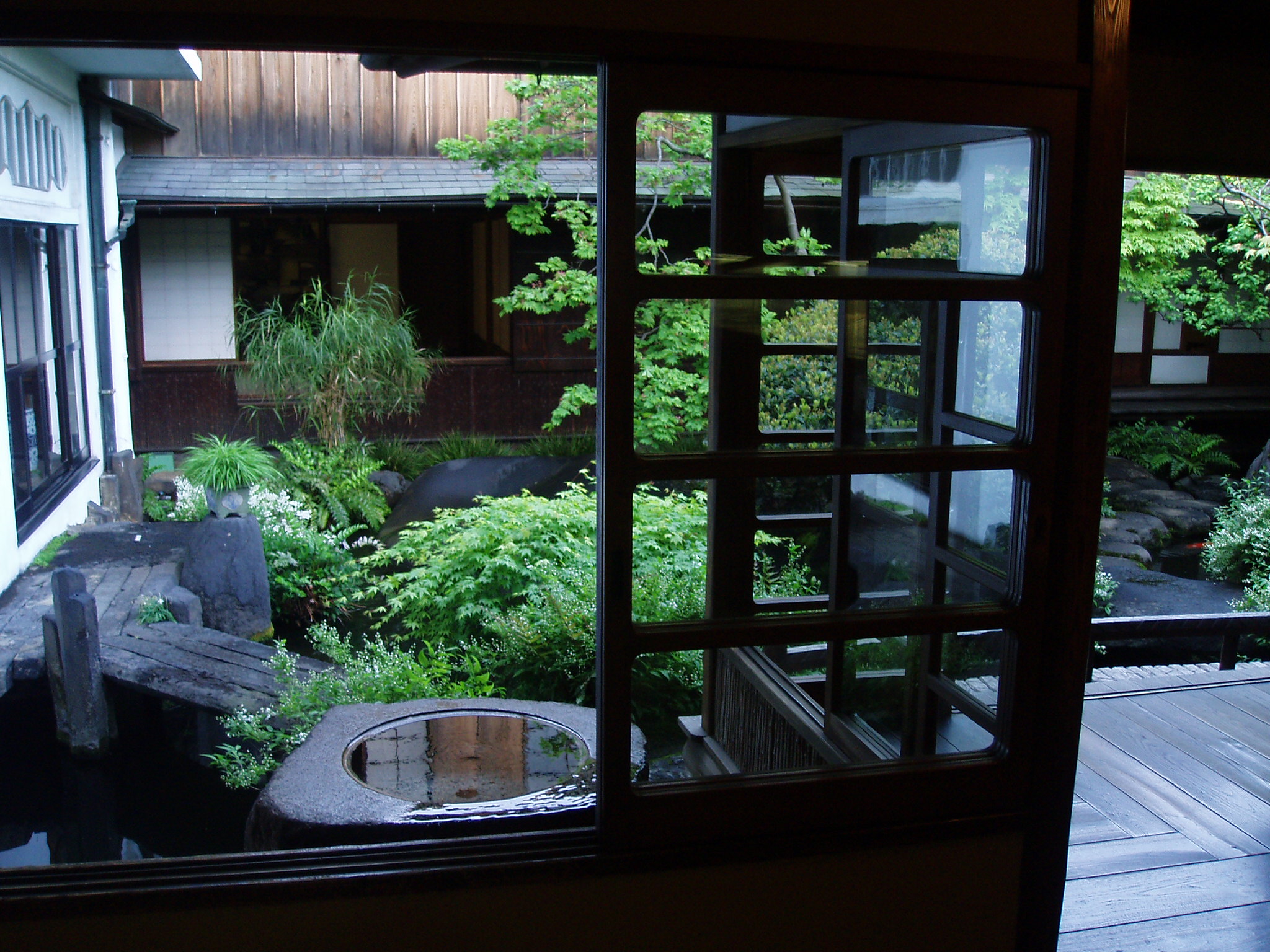
Asakura died in 1964, and his family opened the building to the public. The Taito ward government has managed it since, and in 2001, the building was registered as a cultural property. In 2008, both the courtyard and rooftop garden earned designation as a national place of scenic beauty. A major restoration beginning in April 2009 returned the building to its condition during Asakura's lifetime: the storehouse next door was removed to let sunlight reach the studio walls again, and the interior was refinished using original materials and colors. The museum sits in Yanaka, one of the few Tokyo neighborhoods that survived both the 1923 earthquake and the wartime firebombing, and the surrounding streets retain an old-town atmosphere of narrow lanes, temple walls, and small shops. Finding the museum feels like a discovery, which is exactly as Asakura would have wanted it -- art encountered not in a monument, but in a home where the sculptor's cats once slept in the sun.
From the Air
Located at 35.727N, 139.769E in the Yanaka neighborhood of Taito ward, northern Tokyo. The museum is a small residential-scale building and is not individually visible from flight altitude, but the Yanaka district is identifiable as a cluster of low-rise traditional buildings and temple grounds between Nippori and Ueno stations, contrasting with the taller modern buildings surrounding it. Ueno Park and its large green space lie approximately 800 meters to the south and serve as the primary visual landmark. Tokyo Haneda International Airport (RJTT) is approximately 12 nautical miles to the south-southwest. Narita International Airport (RJAA) is roughly 35 nautical miles to the east-northeast.