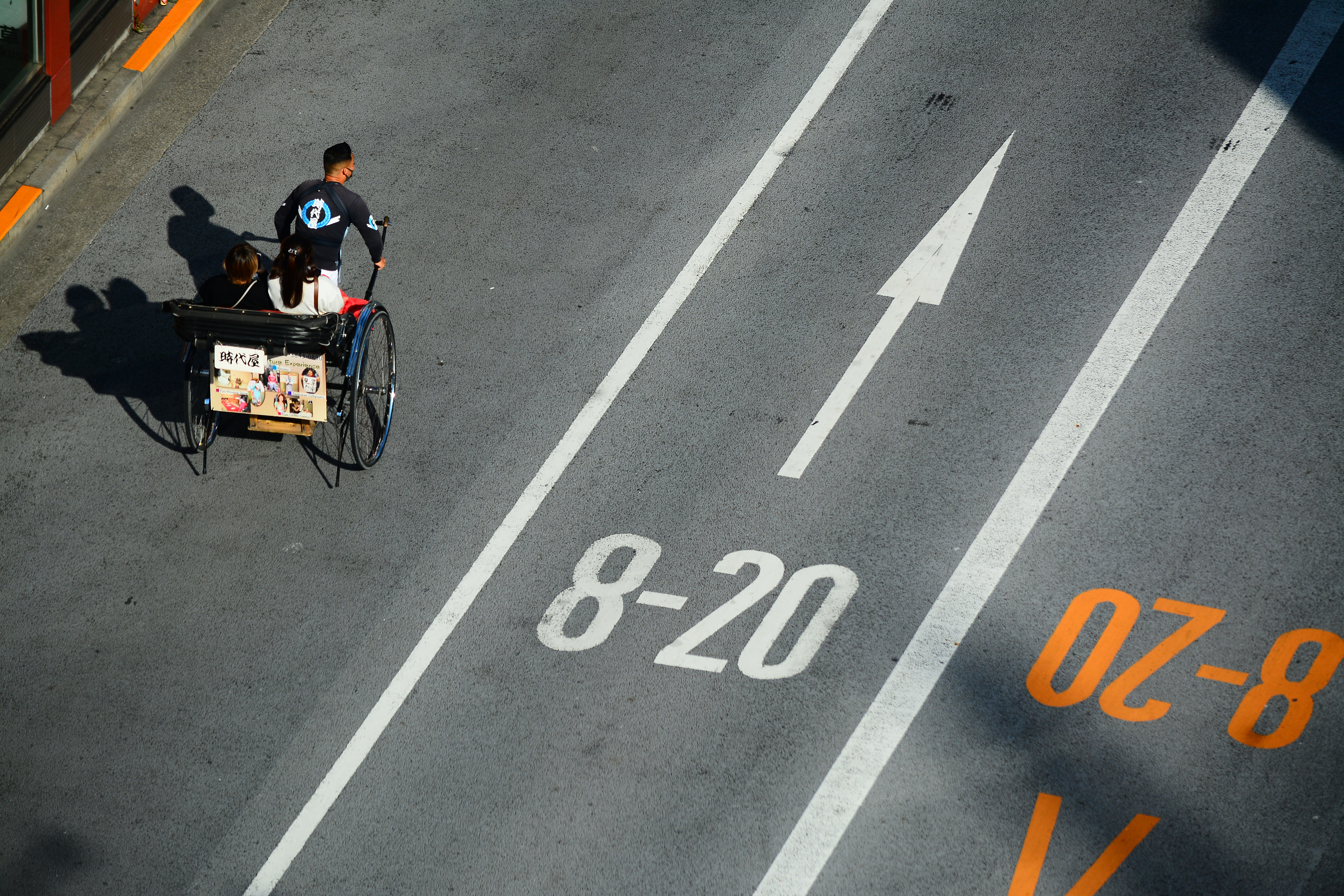
Asakusa: Tokyo's Old Soul
The rice warehouses of Kuramae made Asakusa what it is. During the Edo period, keepers of the government's vast rice storehouses in the neighboring district began trading surplus grain for cash, building small fortunes on the margins. That disposable income needed somewhere to go, and it went next door -- into the theaters, geisha houses, and pleasure quarters that sprouted along the streets near Senso-ji temple. By the early twentieth century, Asakusa had become Tokyo's undisputed entertainment capital, its Roku-ku or Sixth District packed with cinemas like the famous Denkikan, its streets vivid enough to inspire Nobel laureate Yasunari Kawabata to set an entire novel there. Then, on a single night in March 1945, almost all of it burned.
The Low City
Asakusa sits in Shitamachi -- literally 'the low city' -- the flat, river-hugging eastern quarter of Tokyo that has always been the working-class counterweight to the hilly, aristocratic Yamanote to the west. Located on the northeast fringe of central Tokyo at the eastern end of the Ginza subway line, Asakusa sprawls along the banks of the Sumida River with a distinctly more traditional Japanese atmosphere than neighborhoods like Shinjuku or Shibuya. The narrow streets still feel human-scaled. In a city where few buildings predate the wartime bombing, Asakusa holds an unusual concentration of structures from the 1950s and 1960s -- not old by global standards, but ancient by Tokyo's. Traditional guesthouses and small-scale apartment buildings line streets that recall the modest, ground-level urbanism of earlier decades.
The Night the Lights Went Out
On March 10, 1945, American B-29 bombers dropped incendiary clusters across Tokyo's eastern wards. The resulting firestorm killed an estimated 100,000 people in a single night and leveled sixteen square miles of the city. Asakusa was devastated. Senso-ji, the ancient Buddhist temple that had anchored the neighborhood since the seventh century, burned to the ground. The entertainment district, the theaters, the cinemas of the Sixth District -- all gone. Asakusa rebuilt after the war, but the center of gravity for Tokyo nightlife shifted west to Shinjuku and beyond. The old pleasure district never fully reclaimed its throne, and what emerged instead was something more interesting: a neighborhood that remembers what it was, wears that memory openly, and attracts visitors precisely because it feels like a Tokyo that no longer exists elsewhere.
Geisha, Samba, and Sweet Potatoes
Asakusa remains Tokyo's oldest geisha district, with 45 geisha still actively working their art -- a tradition stretching back some four hundred years to the Edo period. But the neighborhood's cultural range is wider than its history might suggest. A significant Brazilian community established roots here, and the annual Asakusa Samba Carnival fills the streets with dancers and percussion in a style imported straight from Rio. The culinary landscape runs traditional: sweet potatoes and grilled fish cakes from street vendors, local craft beer poured alongside classical dishes at the Suzuhiro store, and a famous cluster of kitchenware shops where Tokyoites come for essential cooking supplies. Next to the Senso-ji grounds sits Hanayashiki, an amusement park that opened in 1853 as a flower garden and claims to be the oldest in Japan. Its roller coaster rattles through what might be the most compact theme park footprint in the world.
Three Days of Portable Gods
Asakusa hosts festivals throughout the year, but the Sanja Matsuri in May eclipses them all. Over three days, mikoshi -- portable shrines -- are carried through the streets by teams of bearers whose shouts and chanting fill the district from dawn until well after dark. The processions are deliberately wild, the mikoshi bouncing and rocking to energize the spirits within. Between 1.5 and 2 million visitors pour into the narrow streets to watch, joining a celebration that is equal parts solemn devotion and joyous chaos. The festival centers on Asakusa Shrine, honoring the three men whose founding legend gave this neighborhood its spiritual anchor nearly fourteen centuries ago.
Downstream from the Temple
Cruises down the Sumida River depart from a wharf just a five-minute walk from Senso-ji, offering a water-level view of a district that has always defined itself by its relationship to the river. The neighborhood movie theaters still specialize in classic Japanese films, drawing older audiences who remember when Asakusa was the only place to see a picture. Budget travelers favor the area for its guesthouses, its relaxed pace, and its proximity to the great temple gate -- the Kaminarimon, with its massive red lantern -- that serves as the symbolic entrance to everything Asakusa has been and continues to be.
From the Air
Located at 35.714°N, 139.797°E in the Taito ward of eastern Tokyo. From the air, Asakusa is identifiable by the large Senso-ji temple complex and the distinctive red Kaminarimon gate area along the west bank of the Sumida River. The broad river itself is the best navigational landmark, curving through the dense urban grid. The Tokyo Skytree tower, just across the river to the east, provides an unmistakable vertical reference point. Best viewed at 2,000-4,000 feet AGL. Tokyo Haneda Airport (RJTT) lies approximately 10 nautical miles south. Narita International Airport (RJAA) is about 35 nautical miles east-northeast.