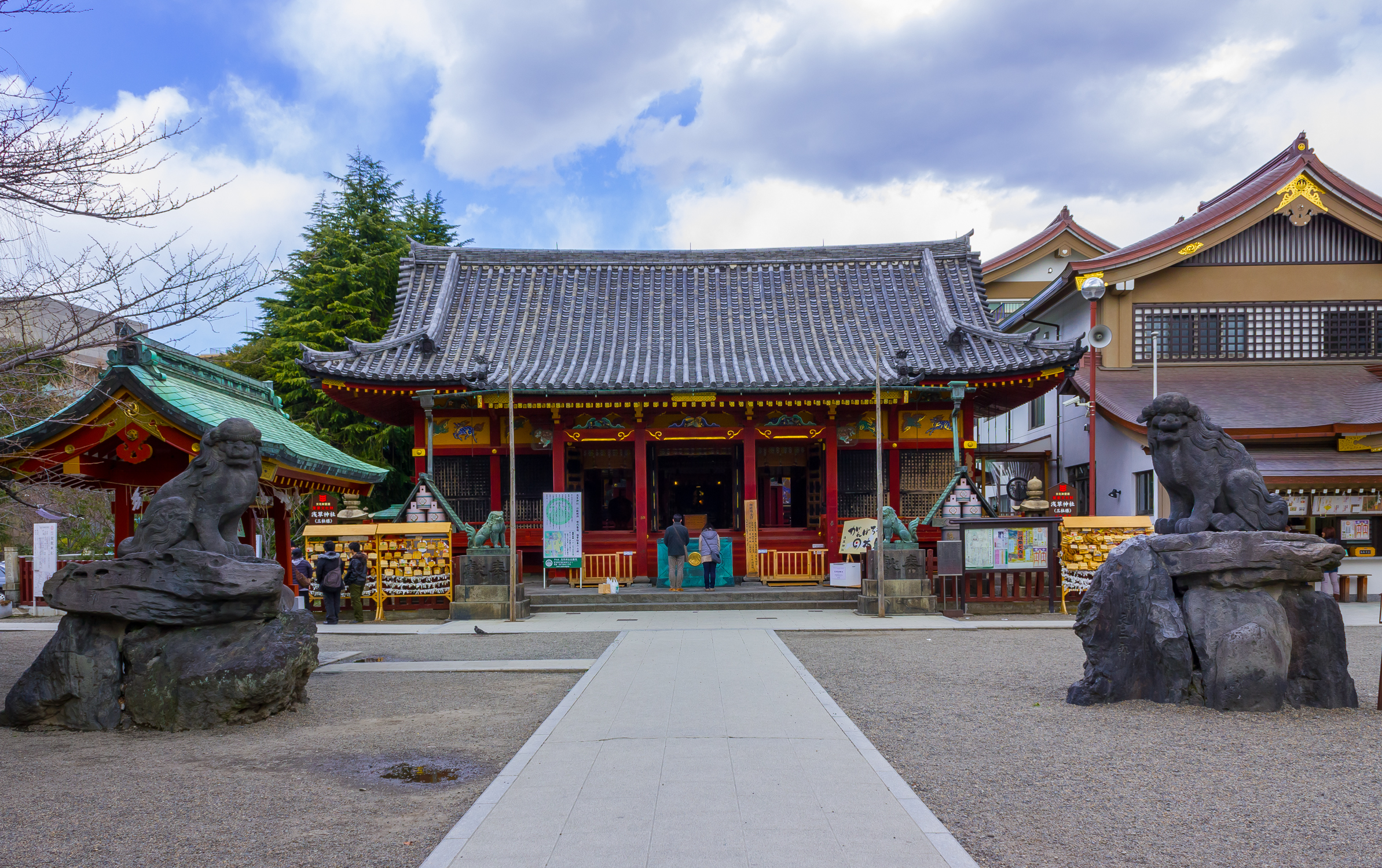
Asakusa Shrine: The Fishermen's Gods Who Survived the Firestorm
On a May morning in 628 AD, two brothers cast their fishing net into the Sumida River and hauled up something that changed the course of a neighborhood forever. Tangled in the mesh was a small golden statuette of Kannon, the bodhisattva of compassion. Hinokuma Hamanari and Hinokuma Takenari tried to throw it back -- fishermen wanted fish, not gods -- but the statuette kept returning to their net. A wealthy landlord named Haji no Matsuchi recognized the figure's significance and enshrined it. That act of devotion became the seed of Senso-ji, Tokyo's oldest temple. And more than a millennium later, the three men themselves -- the fishermen and the landlord -- received their own shrine next door, built by the direct order of a shogun.
A Shogun's Commission
In 1649, during the height of the Edo period, Tokugawa Iemitsu -- the third shogun of the Tokugawa dynasty -- commissioned a shrine to honor the three founders of Senso-ji. The result was Asakusa Shrine, built in the gongen-zukuri architectural style that connects multiple buildings under flowing rooflines. Also called Sanja-sama, the Shrine of the Three Gods, the structure sits just east of the great temple, down a street marked by a large stone torii gate. Iemitsu's patronage gave the shrine a prestige that anchored it permanently in the sacred geography of Asakusa. The buildings included a kagura-den for sacred dance performances and the Hikan Inari Shrine, creating a complex that blended Shinto worship with the Buddhist traditions of the neighboring temple.
Fire Spared What Bombs Could Not
On the night of March 10, 1945, American B-29 bombers dropped incendiary clusters across eastern Tokyo in the deadliest air raid in human history. The firestorm consumed sixteen square miles of the city, and the Asakusa district was devastated. Senso-ji, the ancient temple that had stood for over a thousand years, burned to the ground. Nearly everything in the neighborhood was reduced to ash. But Asakusa Shrine survived. Along with the nearby Nitenmon gate, it was one of only two structures in the temple complex area to remain standing after the bombing. The shrine's survival elevated its historical importance immeasurably. In 1951, the Japanese government designated it an Important Cultural Property -- not merely for its age or its architecture, but because it represented an unbroken physical link to the Edo period in a neighborhood where almost everything else had been rebuilt from nothing.
Sanja Matsuri: When the Gods Walk the Streets
Every May, the three enshrined founders leave their quiet shrine and travel through Asakusa in spectacular fashion. The Sanja Matsuri, one of Tokyo's three great Shinto festivals, centers on three mikoshi -- portable shrines, each representing one of the founding trio -- carried through the streets by teams of shouting bearers. Over three days, the festival draws between 1.5 and 2 million visitors to the narrow streets surrounding the shrine. The processions are loud, chaotic, and joyful, with the mikoshi bouncing and swaying to energize the gods within. It is the most visceral expression of Asakusa's character: a neighborhood that has always been about spectacle, devotion, and the happy collision of the sacred and the everyday.
Shinto Beside Buddhism
Asakusa Shrine's history reflects a tension woven through Japanese spiritual life. For centuries, Shinto and Buddhist practices coexisted at the site, the shrine and temple functioning as a unified sacred precinct. That changed in 1868 when the Meiji government ordered shinbutsu bunri -- the forced separation of Shinto and Buddhism. The Nishinomiya Inari shrine, once located near the Hozomon gate of Senso-ji, was relocated to Asakusa Shrine's grounds near the kagura-den. It stood there until the 1945 firebombing destroyed it. Today, the shrine and temple remain neighbors but are administratively distinct, a quiet reminder that the boundaries between Japan's spiritual traditions were drawn by politics as much as theology. Visitors often pass between the two without realizing they have crossed from one religious tradition into another.
From the Air
Located at 35.715°N, 139.797°E in the Asakusa district of Taito, Tokyo. From the air, Asakusa Shrine sits just east of the large Senso-ji temple complex, identifiable by its distinctive curved rooflines among the dense urban grid along the west bank of the Sumida River. Best viewed at 2,000-3,000 feet AGL. The broad Sumida River provides an excellent visual corridor into the area. Tokyo Haneda Airport (RJTT) lies approximately 10 nautical miles to the south. Narita International Airport (RJAA) is approximately 35 nautical miles to the east-northeast.