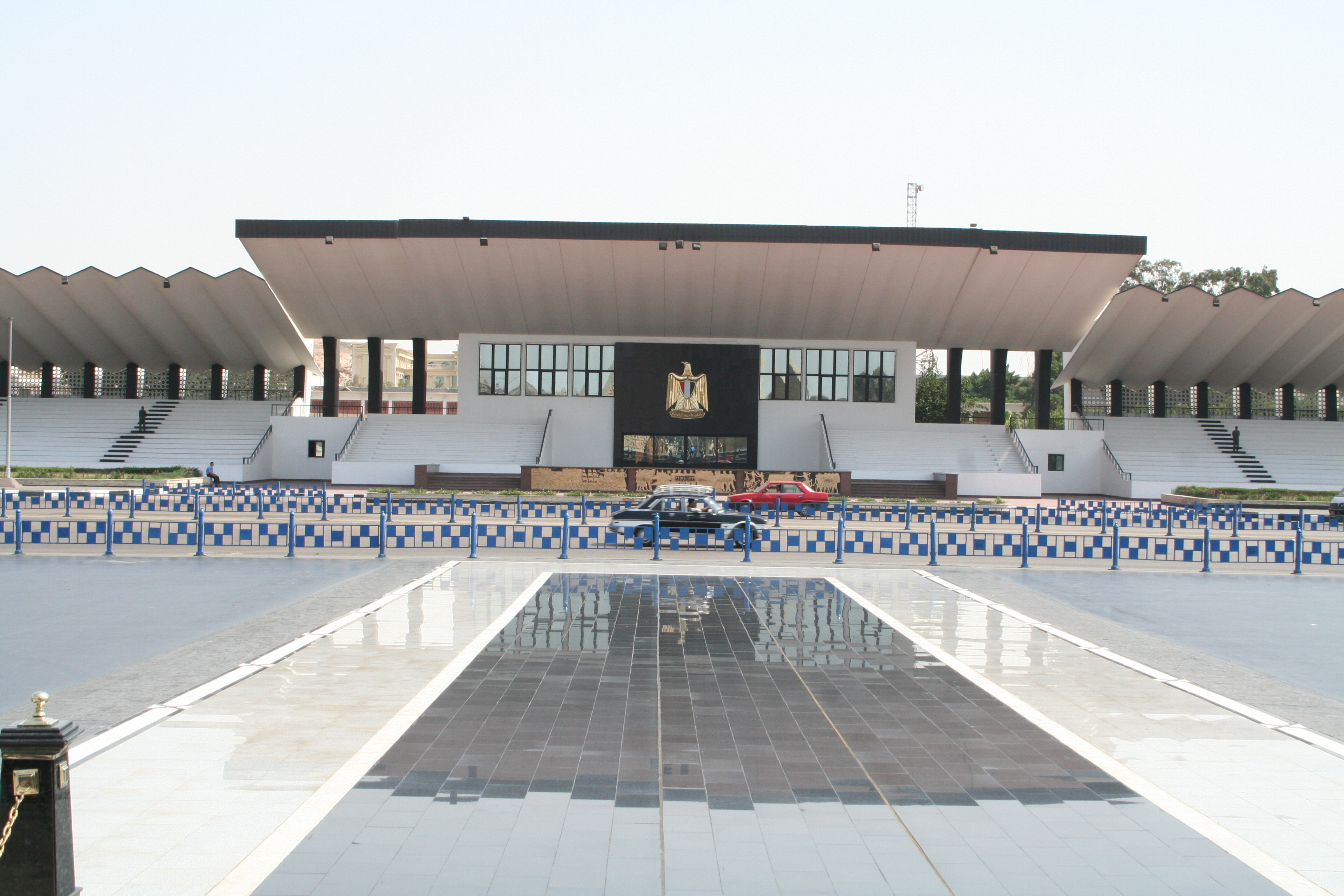
Assassination of Anwar Sadat
The parade was celebrating Egypt's crossing of the Suez Canal eight years earlier -- a military triumph that had restored Egyptian pride after the humiliation of 1967. President Anwar Sadat sat in the reviewing stand on 6 October 1981, watching trucks, artillery, and jets pass in formation along the Cairo parade route. At approximately 12:40 pm, a military truck halted in front of the stand. Lieutenant Khalid al-Islambuli leaped out, threw grenades, and opened fire. Three other gunmen followed. The attack lasted about two minutes. By the time security forces responded -- approximately 45 seconds after the first shots -- Sadat and ten others lay dead or dying. The man who had made peace with Israel was killed at a celebration of war against Israel, by soldiers in his own army.
The Price of Peace
Sadat's 1979 peace treaty with Israel earned him a Nobel Prize and the fury of the Arab world. Egypt's membership in the Arab League was suspended. PLO leader Yasser Arafat dismissed the agreement: "Let them sign what they like. False peace will not last." Domestically, jihadist groups that Sadat had once cultivated as a counterweight to leftists turned against him with lethal intent. The Egyptian Islamic Jihad and al-Jama'a al-Islamiyya used the Camp David Accords as a recruitment tool, framing Sadat as a traitor to both Islam and the Palestinian cause. The irony was sharp: Sadat had released many of these Islamists from prisons where Nasser had put them, hoping to integrate them into Egyptian society. Instead, they began planning his overthrow.
A Conspiracy Hidden in Plain Sight
The plot was ambitious beyond assassination. Colonel Aboud el-Zomor, the chief strategist of Egyptian Islamic Jihad, envisioned a full revolution: kill the country's leaders, seize army headquarters, capture the telephone exchange and the radio and television building, then broadcast news of an Islamic revolution that would trigger a popular uprising. In February 1981, authorities caught wind of the conspiracy when they arrested an operative carrying crucial information. Sadat responded in September with a massive crackdown -- over 1,500 people arrested, including Jihad members, the Coptic Pope, intellectuals, and activists across the political spectrum. All non-government press was shut down. But the dragnet missed the military cell led by Lieutenant al-Islambuli, whose brother had been among those arrested. The civilian engineer Muhammad Abd al-Salam Faraj coordinated the plot that al-Islambuli would carry out.
Two Minutes at the Reviewing Stand
When the military truck stopped before the reviewing stand, Sadat reportedly stood -- perhaps believing the soldiers were saluting him. Al-Islambuli threw his grenades, only one of which detonated, and it fell short. Then the gunmen opened fire into the stands, emptying their magazines before attempting to flee. People threw chairs around Sadat's fallen body, trying to shield him from the continuing hail of bullets. The dead included Major General Hassan Allam, a general from the Omani delegation, the presidential photographer, a Chinese aerospace engineer, the Cuban ambassador, and a Coptic Orthodox bishop. Twenty-eight others were wounded, including Vice President Hosni Mubarak and the Irish Defence Minister. Egyptian state television, which had been broadcasting the parade live, abruptly cut to military music and Quranic recitations. One attacker was killed at the scene; three were wounded and arrested. Sadat was airlifted to a military hospital, where he died nearly two hours later.
Reverberations Across the Region
The assassination triggered an armed insurrection in Asyut, in Upper Egypt, where Islamic militants seized the security services headquarters and held off government forces for two days. Six attackers and 68 police and soldiers died before paratroopers from Cairo and Air Force jets restored order. Across the Middle East, reaction split along predictable lines. Syria's state newspaper ran the headline "Egypt Today Bids Farewell to the Ultimate Traitor." Iran named a street in Tehran after al-Islambuli. In the West, the funeral drew an unusual assembly: U.S. President Ronald Reagan, who had survived his own assassination attempt months earlier, sent Secretary of State Alexander Haig and Secretary of Defense Caspar Weinberger rather than attending personally. Stevie Wonder and Walter Cronkite were among those who came.
Justice and Legacy
Twenty-four people were tried for the assassination. Al-Islambuli and four others were sentenced to death and executed on 15 April 1982 -- the two military men by firing squad, the three civilians by hanging. Faraj, the plot's mastermind, was among those executed. Hosni Mubarak, wounded in the attack, succeeded Sadat as president and would rule Egypt for the next thirty years under a state of emergency that never fully lifted. Sadat lies buried at the Unknown Soldier Memorial, near the spot where he was killed. The peace treaty he signed with Israel endures. So does the violence his assassination unleashed -- the jihadist networks that killed Sadat evolved into movements that would eventually produce both al-Qaeda and the broader global jihadist movement. The two minutes at the reviewing stand reshaped not just Egypt but the trajectory of the modern Middle East.
From the Air
Coordinates: 30.06N, 31.31E, in the Nasr City district of eastern Cairo, near the Unknown Soldier Memorial and the reviewing stands where the assassination took place. The memorial and parade grounds are visible from the air as a large open area amid Nasr City's grid pattern. Cairo International Airport (ICAO: HECA) is approximately 10 km to the northeast. The Nile is about 8 km to the west. Best viewed at 3,000-5,000 ft AGL.