Astola Island
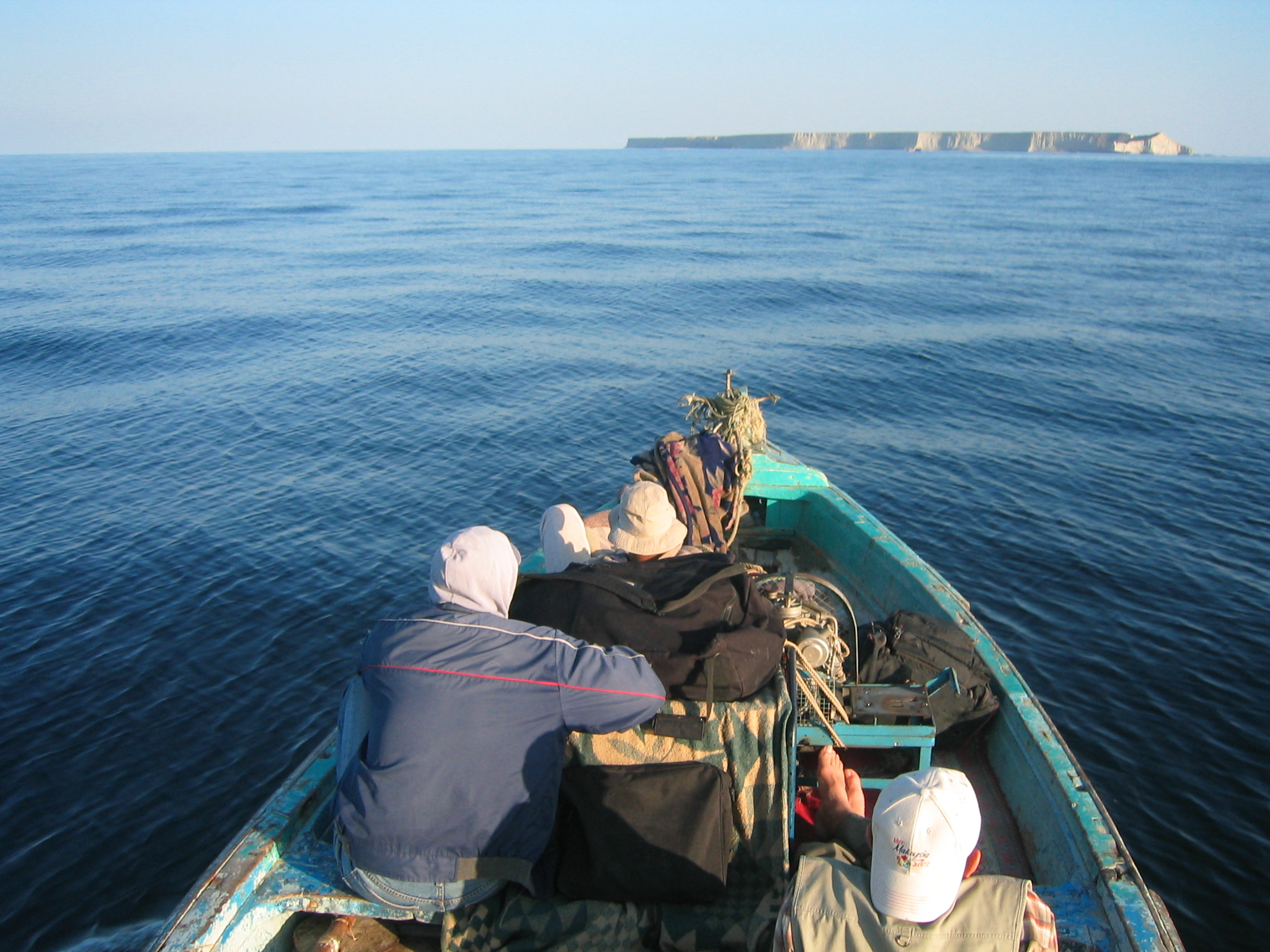
The sailors refused to go ashore. In 325 BC, when Admiral Nearchus led Alexander the Great's fleet along the Makran coast, his men were frightened by "weird tales told about an uninhabited island" that the historian Arrian called Nosala. Twenty-three centuries later, Astola Island still rises from the Arabian Sea like something out of a mariner's nightmare -- a tilted plateau of seven rocky hillocks, riven with deep chasms and ringed by cliff faces that drop vertically into the surf. Pakistan's largest offshore island sits 25 kilometers south of the mainland coast, utterly without fresh water, baking under a desert sun that keeps annual rainfall below 28 millimeters. Yet this forbidding rock teems with life, and its history reaches back to the earliest recorded voyages of the ancient world.
Seven Hills Above the Sea
The local name tells the story: Haft Talar, Seven Hills. Astola's terrain is a tilted plateau fractured by crevices several feet wide, pocked with natural caves and coves. The southern face slopes gently toward the water; the northern side is a sheer cliff. No trees grow here. The largest plant is Prosopis juliflora, an invasive shrub introduced to South Asia from South America in 1877. Vegetation clings to existence through occasional rain and whatever moisture the rocky soil can trap. Despite these harsh conditions, the island supports 61 bird species, from resident plovers to migratory visitors. Nine species of sea snakes patrol the surrounding waters. Carpet vipers and cliff racers inhabit the rocky interior. And somewhere offshore, the Arabian Sea humpback whale -- one of the rarest whale populations on Earth -- has been sighted.
Where Faiths and Empires Overlap
Two places of worship share this waterless rock. A small mosque dedicated to the Muslim saint Pir Khawaja Khizr serves mainland fishermen during the lobster and oyster season, which runs from September through May. Nearby stand the ruins of an ancient Hindu temple to the goddess Kali, a remnant of the centuries when Hindus knew this island as Satadip. The coexistence of these sacred sites reflects the layered religious history of the Makran coast, where Buddhist, Hindu, and Muslim traditions have all left their marks. The Persian word mahi khoran, meaning "fish eaters," gave the entire Makran coastline its name -- a legacy of the Ichthyophagoi whom Nearchus encountered, people for whom even the mutton tasted of the sea.
Pakistan's First Marine Sanctuary
In June 2017, Pakistan declared Astola its first Marine Protected Area, fulfilling an obligation under the Convention on Biological Diversity. The island itself covers 6.7 square kilometers, but the protected area including its marine buffer zone extends to 401.47 square kilometers, protecting an ecosystem of remarkable diversity: 23 species of hard corals, various soft corals, and a multitude of fish and invertebrate species. From June through August, the island stands completely empty -- the seas too rough, the tides too high for fishermen to make the crossing. During these months, seabirds claim the island entirely, nesting on the bare rock in numbers that have drawn the attention of international conservation organizations. The protected status came none too soon: increasing boat traffic and overfishing had begun to strain the marine ecosystem that makes Astola unique among Pakistan's coastal formations.
An Island Between Worlds
Astola occupies a peculiar position in both geography and imagination. It is close enough to the mainland to be visible on clear days, yet remote enough to remain uninhabited across millennia. Fishermen use it as a seasonal camp, arriving with the cool weather and leaving when monsoon swells make the crossing dangerous. Scholars have debated whether Astola is the "Carnine" where Nearchus anchored, but the island's extreme aridity and lack of fresh water make permanent habitation impossible, suggesting the ancient fleet sheltered at a different island in what is now the Khor Kalmat lagoon. Whatever its classical identity, Astola endures as a place apart -- Pakistan's lonely sentinel in the Arabian Sea, too harsh for people but rich enough to sustain an entire marine world.
From the Air
Located at 25.12N, 63.85E, approximately 25 km south of the Makran coast in the Arabian Sea. Astola is clearly visible as an isolated landmass from altitude. Nearest airport is Pasni Airport (OPPI), about 35 km to the northwest. Best viewed at 2,000-4,000 feet AGL. The seven-hillock plateau and cliff faces are distinctive from the air. The island is surrounded by open water with no nearby navigation hazards visible at altitude.