Astoria: Where Lewis and Clark Finally Saw the Pacific
William Clark carved into a tree in November 1805: 'Capt William Clark December 3rd 1805. By Land from the U. States in 1804 & 1805.' The Corps of Discovery had reached the Pacific Ocean after eighteen months of travel. The journey that Jefferson had dreamed and funded had succeeded. But Clark's celebration was premature - months of miserable winter remained before the return journey. The expedition camped nearby at Fort Clatsop; Astoria itself was founded six years later as a fur trading post. The town became America's first permanent Pacific settlement, traded between nations, built on salmon and lumber, decorated with Victorian mansions that still climb the hills above the Columbia's mouth.
The Expedition
Lewis and Clark reached the Pacific Coast in November 1805, having traveled over 4,000 miles from St. Louis. The final push down the Columbia River was rapid after the mountain crossing; the expedition made the ocean in weeks. But 'reaching the Pacific' meant a wet, hungry winter at Fort Clatsop, where rain fell nearly continuously and food was scarce. The men made salt, hunted elk, prepared for the return journey, and suffered. Clark's triumphant carving didn't record the misery that followed. The expedition departed in March 1806, leaving the Oregon coast for the mountains and eventual return to St. Louis.
The Founding
John Jacob Astor sent an expedition in 1811 to establish a fur trading post at the Columbia's mouth. Fort Astoria became the first permanent American settlement on the Pacific Coast. The timing was terrible: the War of 1812 threatened British seizure, and Astor's representatives sold the post to the North West Company rather than lose it. Britain held the region until 1846, when the Oregon Treaty established the current boundary. Astoria reverted to American control, becoming a fishing and canning center as salmon runs proved more valuable than furs. The town that Astor founded bore his name but made others wealthy.
The Salmon
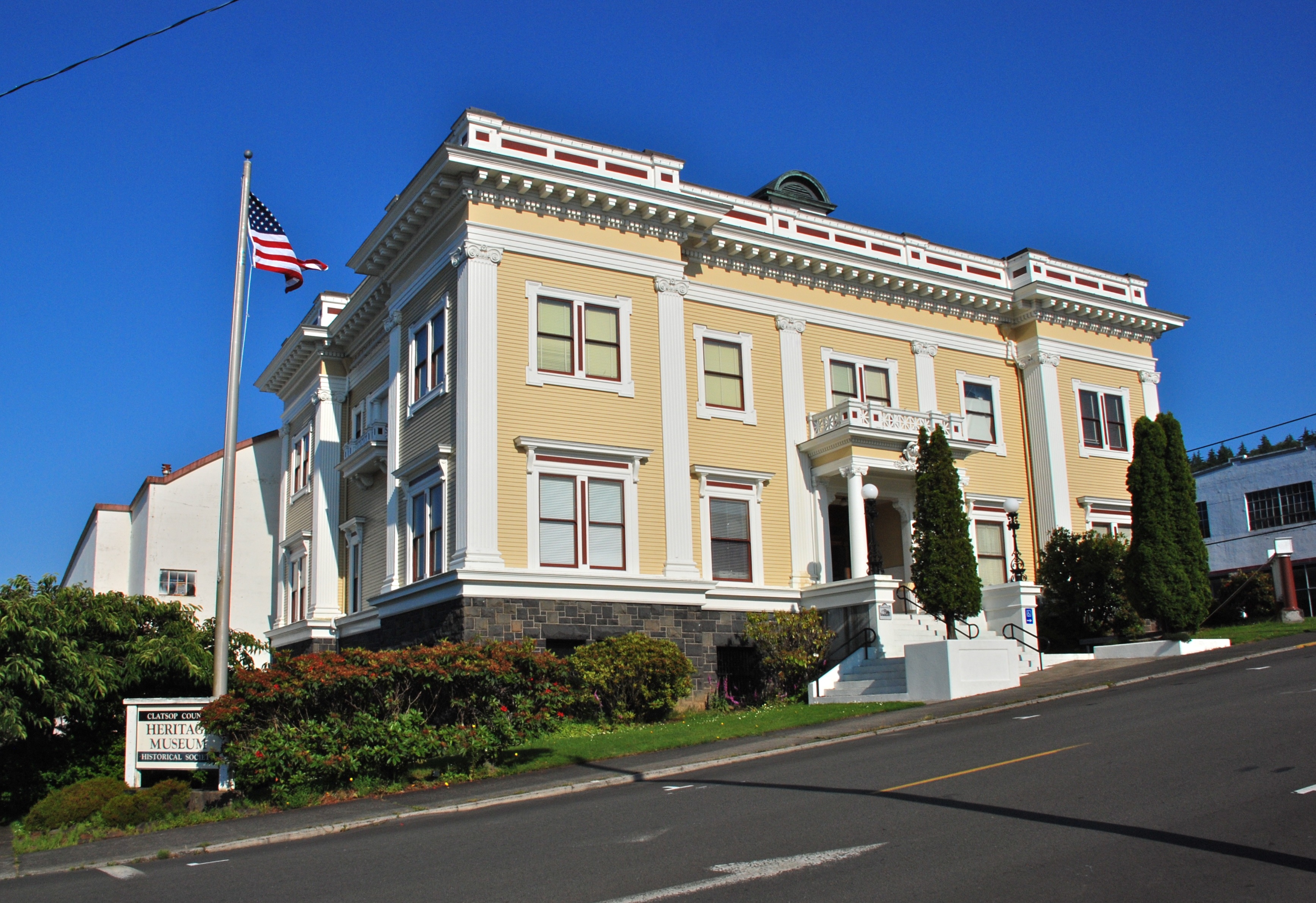
Columbia River salmon built Astoria's Victorian grandeur. The runs were immense - millions of fish returning annually to spawn - and the canning technology to preserve them developed in the 1860s. By 1880, the Columbia had more canneries than any river in the world. Immigrant workers, primarily Chinese and Scandinavian, processed fish in brutal conditions. The wealth flowed uphill to the mansions that still crown Astoria's slopes. The runs declined through the 20th century - overfishing, dams, habitat destruction - and the canneries closed. What remains is architecture: Victorian homes, fishing docks, the memory of abundance that couldn't last.
The Films
Astoria's Victorian streetscapes and dramatic Columbia setting have attracted filmmakers since the 1980s. 'The Goonies' (1985) made the town famous to a generation; fans still visit filming locations. 'Kindergarten Cop,' 'Short Circuit,' and 'Free Willy' followed. The Oregon Film Museum occupies the former county jail, featured in 'The Goonies.' The town embraces its cinematic identity - 'Goonies Day' celebrations draw crowds - while maintaining actual fishing and timber economies. The films provide recognition and tourism; the economy depends on resources the films rarely depicted.
Visiting Astoria
Astoria is located at the mouth of the Columbia River, approximately 95 miles northwest of Portland via US-30. The Astoria Column, a 125-foot tower decorated with a painted frieze of regional history, provides panoramic views. The Columbia River Maritime Museum interprets regional nautical history. Fort Clatsop, Lewis and Clark's winter camp, is a few miles south. The Victorian homes on the hillside include several operating as B&Bs. The Astoria-Megler Bridge crosses to Washington. Fishing fleets still operate from the docks. Allow a full day for Astoria and Fort Clatsop; the combination of expedition history, Victorian architecture, and Columbia scenery rewards unhurried exploration.
From the Air
Located at 46.19°N, 123.83°W at the mouth of the Columbia River in northwestern Oregon. From altitude, Astoria appears where the Columbia meets the Pacific - a town climbing hillsides above the river's final mile. The Astoria-Megler Bridge, 4.1 miles long, crosses to Washington. The river mouth is dramatic: brown river water meeting gray Pacific, sandbars visible beneath the surface. The Columbia's flow is visible as a plume extending into the ocean. The hills behind Astoria rise toward the Coast Range. Fort Clatsop lies to the south in forest. What Lewis and Clark reached after 18 months of travel is visible from altitude as confluence: the continent's second-largest river meeting the ocean that defined America's destiny.