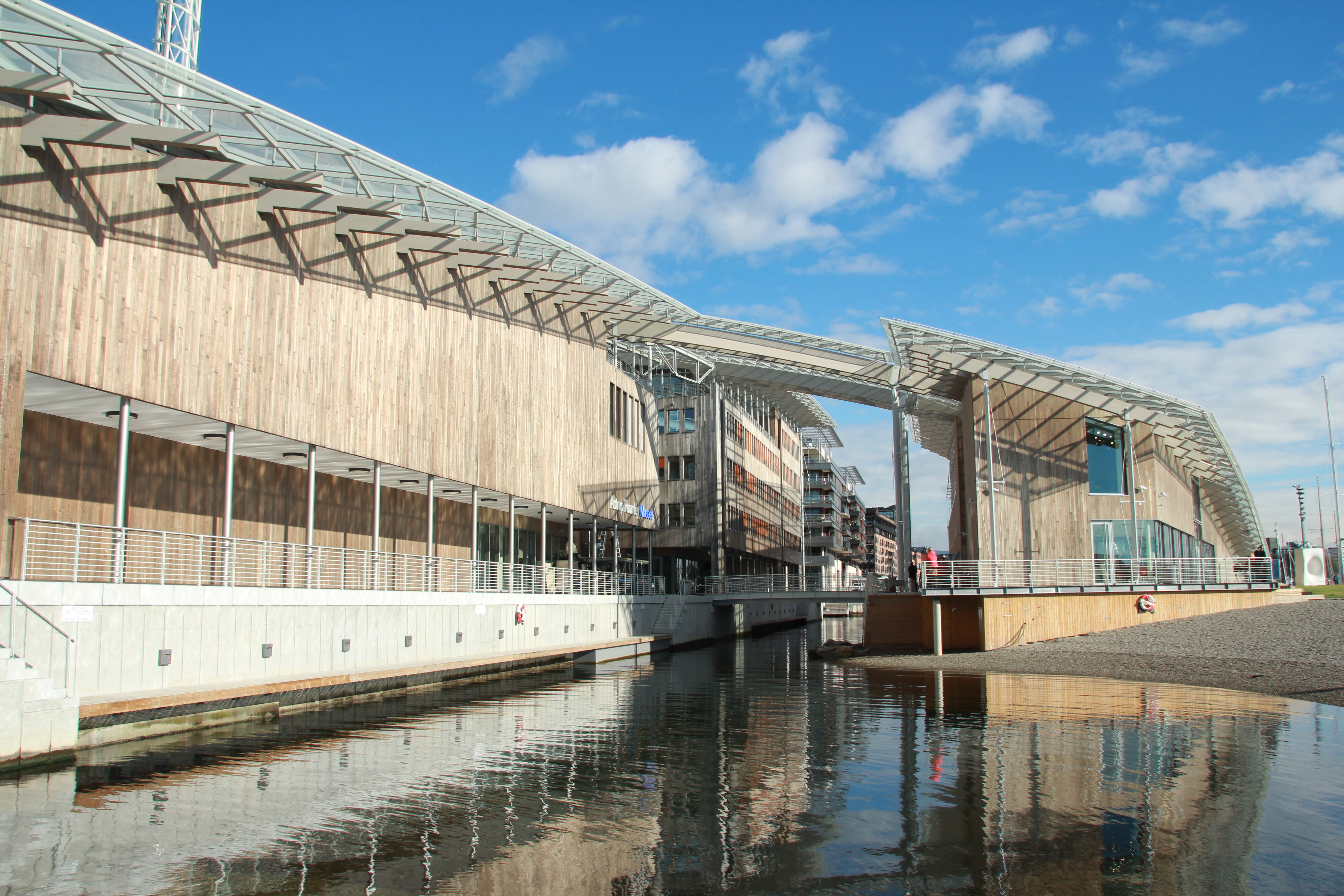
Astrup Fearnley Museum of Modern Art
In 2002, a museum in Oslo paid $5.1 million for a gilt porcelain sculpture of Michael Jackson cradling his pet chimpanzee Bubbles. The purchase made international headlines, not because the price was extraordinary by art-world standards, but because the buyer was a privately funded Norwegian institution that most of the world had never heard of. The Astrup Fearnley Museum of Modern Art had been open for less than a decade, yet it was already assembling one of Europe's most ambitious collections of contemporary American art. That a country of five million people, better known for fjords and oil rigs than for pop-art acquisitions, should produce such a museum requires understanding the family behind it.
Ships to Canvas
The museum traces its origins to two philanthropic foundations descended from the Fearnley shipping dynasty. Thomas Fearnley, a romantic painter of the early 19th century, had a grandson and great-grandson who became shipping magnates, both also named Thomas Fearnley. The great-grandson established the Thomas Fearnley Foundation in 1939. The Heddy and Nils Astrup Foundation, named for another branch of the family, merged with it in 1995. When the museum opened in 1993, Norway had no institution solely dedicated to contemporary art. The Fearnley family's private collection, three decades in the making, filled that gap. What began with an interest in German Abstract Expressionism and English modern painting evolved toward the young American art scene of the 1980s and the global contemporary movement that followed.
The Collection That Provokes
The permanent collection reads like a roll call of artists who defined the late 20th century's most provocative movements. Jeff Koons, Damien Hirst, Cindy Sherman, Richard Prince, Andy Warhol, Matthew Barney, Francis Bacon, Gerhard Richter, and Anselm Kiefer are all represented. The curatorial focus on American appropriation art from the 1980s gives the collection a distinct identity: art that questions originality, ownership, and the commercial machinery of the art world itself. Norwegian artists appear alongside international names, including Bjarne Melgaard and Gardar Eide Einarsson. The museum stages six to seven temporary exhibitions each year and collaborates with international institutions, producing shows that travel worldwide. For a privately funded gallery in a relatively small capital, the ambition is outsized.
Renzo Piano on the Fjord
For nearly two decades, the museum occupied a building on Revierstredet designed by LPO architects, its entrance marked by monumental steel doors that signaled from a distance whether the gallery was open. The old building's 2,500 square meters offered galleries ranging from 3.5 to 10.5 meters in height, with concrete walls providing a deliberately subdued backdrop and floors of Cascais Azul, a Portuguese sandstone. In 2012, the museum relocated to Tjuvholmen, a peninsula that has become Oslo's most striking waterfront development. Renzo Piano, the Italian architect behind the Pompidou Centre and the Shard, designed two buildings totaling 4,200 square meters, set within the Tjuvholmen sculpture park that he also designed. Glass, wood, and the waterfront itself form the museum's architecture, blurring the line between gallery and harbor.
Contemporary Art in an Oil-Rich Nation
Norway's relationship with contemporary art is shaped by the same wealth that transformed the country after North Sea oil was discovered in 1969. The Astrup Fearnley Museum exists because private fortunes built on shipping could be directed toward cultural philanthropy on a scale few Norwegian families had previously attempted. The museum opened the same decade that Norway's sovereign wealth fund began accumulating the returns that would make the country one of the world's richest. That context matters: the Fearnley family funded the museum privately, but the broader Norwegian willingness to invest in culture, from the National Museum to the Opera House, reflects a society with resources and the inclination to spend them. The museum's collection, with its emphasis on art that interrogates commerce and image-making, sits in interesting tension with the oil economy that made Oslo's cultural ambitions possible.
From the Air
The Astrup Fearnley Museum (59.91N, 10.72E) is located on the Tjuvholmen peninsula at the western end of Oslo's Aker Brygge waterfront. The distinctive Renzo Piano-designed buildings with their curved glass roofline are visible along the harbor edge. Oslo Gardermoen Airport (ENGM) lies 47km north. From above, Tjuvholmen is identifiable as the small promontory extending into the Oslofjord just west of the city center. Best viewed at 1,500-3,000 feet to distinguish the museum's architecture from surrounding waterfront development.