Asuka-dera: Where Buddhism First Took Root in Japan
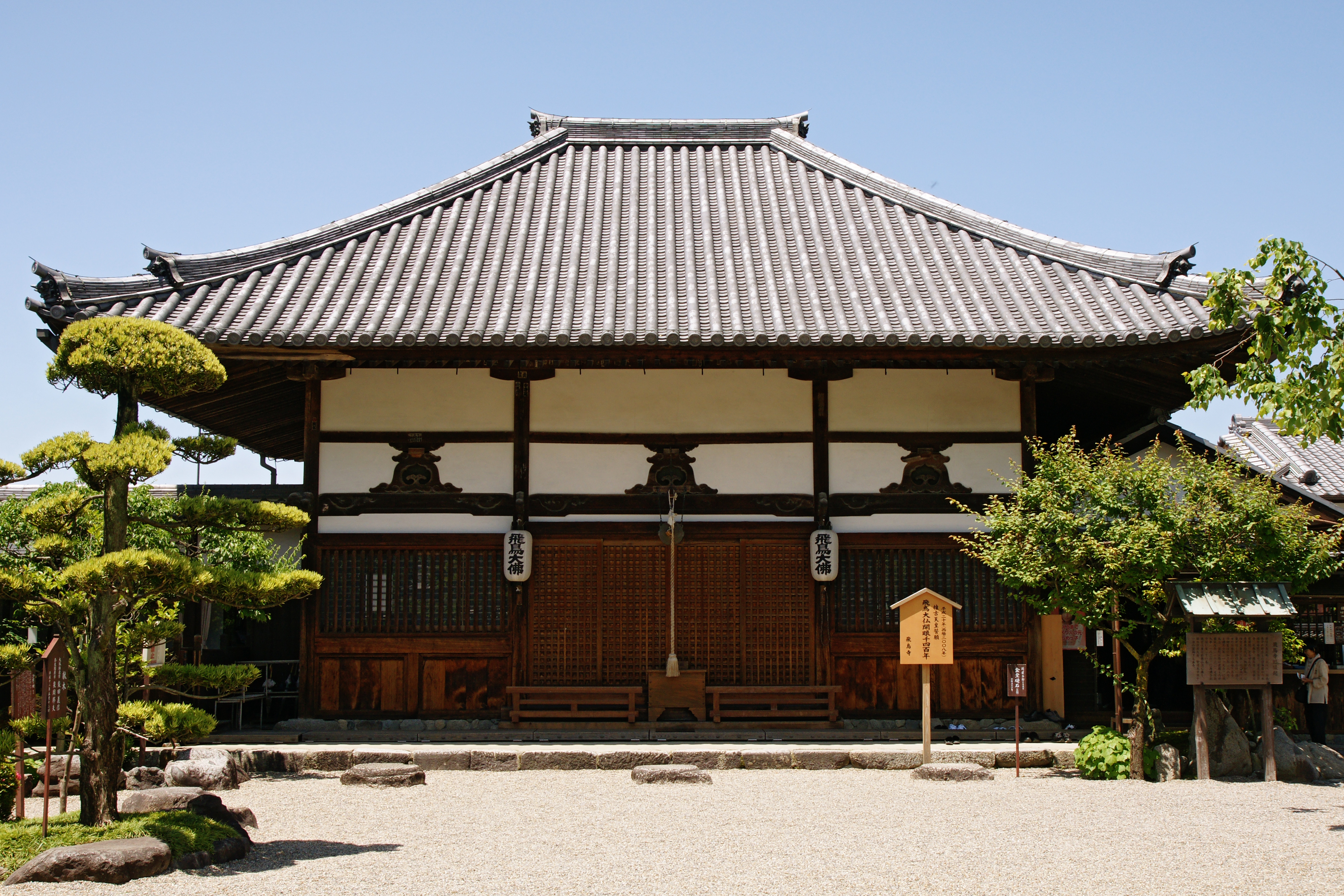
The bronze Buddha at Asuka-dera has been looking out from roughly the same spot since the early seventh century. Not always from inside a building. When the main hall burned in a lightning strike in 1196, the statue -- cast by the master sculptor Kuratsukuri no Tori and designated an Important Cultural Property -- simply remained where it was. For the next two hundred years and more, the Great Buddha of Asuka sat exposed to rain, wind, and sun. A monk named Kunkai, visiting from Hōryū-ji in 1447, recorded that the principal image stood in the open air. The scholar Motoori Norinaga visited in 1772 and noted that the temple had 'no gate or anything' and the Buddha rested in a 'temporary hall.' The current main hall was not built until 1826, funded by donations from Osaka. That this statue endured at all -- through fire, famine, abandonment, and centuries of exposure -- is a testament to something more durable than bronze. Asuka-dera is regarded as one of the oldest temples in Japan, and its story is inseparable from the story of how Buddhism arrived on these islands.
A Vow on the Battlefield
In 587, the powerful statesman Soga no Umako was locked in a struggle with Mononobe no Moriya, who opposed the spread of Buddhism in Japan. According to the Nihon Shoki, Japan's oldest official chronicle, Umako made a vow: if he defeated the Mononobe, he would build a temple. He won. Construction of Hōkō-ji -- the original name of Asuka-dera -- began the following year, when Emperor Sushun's court invited monks and craftsmen from the Korean kingdom of Baekje: two temple builders, a metalworker, four roof tile specialists, and a painter. A nobleman's mansion in Makamihara, Asuka, was demolished to clear the ground. By 593, relics had been placed in the foundation stone of the pagoda's central pillar. By 596, the Nihon Shoki records, 'Hōkō-ji Temple was completed.' It was the first Buddhist temple in Japan to feature a fully-fledged temple complex.
The Buddha Who Would Not Fit
The temple existed for nearly a decade before receiving its principal image. In 605, Empress Suiko issued an edict requesting the construction of a bronze Buddha statue. The King of Goryeo contributed 300 ryō of gold. When the 180-centimeter bronze was completed and brought to be installed in the Golden Hall, the craftsmen discovered a problem: the statue was taller than the door. According to the Nihon Shoki, it was placed inside 'without destroying the door,' though exactly how remains one of history's small mysteries. The Shaka Triad, as the ensemble is known, became the heart of a temple that functioned less as a place of quiet devotion and more as a research institute for Buddhist learning, drawing immigrant monks from Baekje, Goguryeo, and Tang China. The head priest Dōshō traveled to China and brought back Chan Buddhism, laying the foundations for Japanese Zen.
Four Great Temples, Then Ruin
Asuka-dera survived the violent destruction of its patron family, the Soga clan, during the Isshi Incident of 645 -- partly because the imperial court had come to see the temple as too important to lose. Under Emperor Mommu, it was designated one of the 'four great temples' of Japan alongside Daikandai-ji, Kawara-dera, and Yakushi-ji. When the capital relocated to Heijō-kyō (present-day Nara), the temple followed, becoming Gangō-ji. But the original complex in Asuka lived on under the name Hon-Gangō-ji. Then came the long decline. The temple burned in 887. In 1158, facing famine, the monks sold a stone Maitreya Bodhisattva that had been brought from Baekje. Lightning struck again in 1196, destroying the pagoda and main hall. By the Muromachi period, the temple was practically abandoned.
Stones Beneath the Rice Paddies
Archaeological excavations beginning in 1956 revealed what the centuries had buried. The original temple complex turned out to be far grander than anyone had assumed -- not the simple Shitennō-ji-style layout scholars expected, but a one-pagoda, three-hall arrangement with a Central Golden Hall, Eastern Golden Hall, and Western Golden Hall, all enclosed by a corridor. The pagoda's underground core stone was found 2.7 meters below the surface, with a hole for the reliquary on the east wall. Among the excavated objects were beads, gold rings, gold and silver plates, miniature armor, and knives -- artifacts that place the temple at the boundary between the Kofun and Asuka periods. The current main hall sits on the exact site of the ancient Central Golden Hall, a continuity that spans fourteen centuries. The bronze Great Buddha remains inside, designated an Important Cultural Property, still looking out from the same place where Soga no Umako's vow took physical form.
From the Air
Located at 34.479°N, 135.820°E in the village of Asuka, southern Nara Prefecture, in the heart of the ancient Yamato region. The temple sits in a flat agricultural valley surrounded by low forested hills -- the Asuka Historical District is rich with other ancient sites visible from the air including nearby tumuli and temple ruins. Best viewed at 2,000-3,000 feet AGL. Osaka Itami Airport (RJOO) lies approximately 20 nautical miles to the northwest. Kansai International Airport (RJBB) is about 25 nautical miles to the southwest. The area around Asuka is relatively flat and open, with rice paddies interspersed among archaeological sites.