Asuka Mizuochi Site: Japan's Oldest Known Clock Tower
Somewhere around 660 AD, Prince Nakano Oe needed to know what time it was. Not approximately, not by the sun's angle, but precisely -- the kind of precision that running a centralized government demands. His solution stands on the east bank of the Asuka River in the Kansai region of Japan: a tower-like structure that used water, gravity, copper pipes, and a black lacquered wooden box to divide the day into measurable units. A bell and drum on the upper floor announced the hours to anyone within earshot. For its era, this was cutting-edge technology. The Nihon Shoki, Japan's oldest official chronicle, records its construction during the sixth year of Empress Saimei's reign. Then the tower fell silent, the site was buried, and thirteen centuries passed before a homeowner's construction survey in 1972 accidentally uncovered what lay beneath.
A Prince's Precision
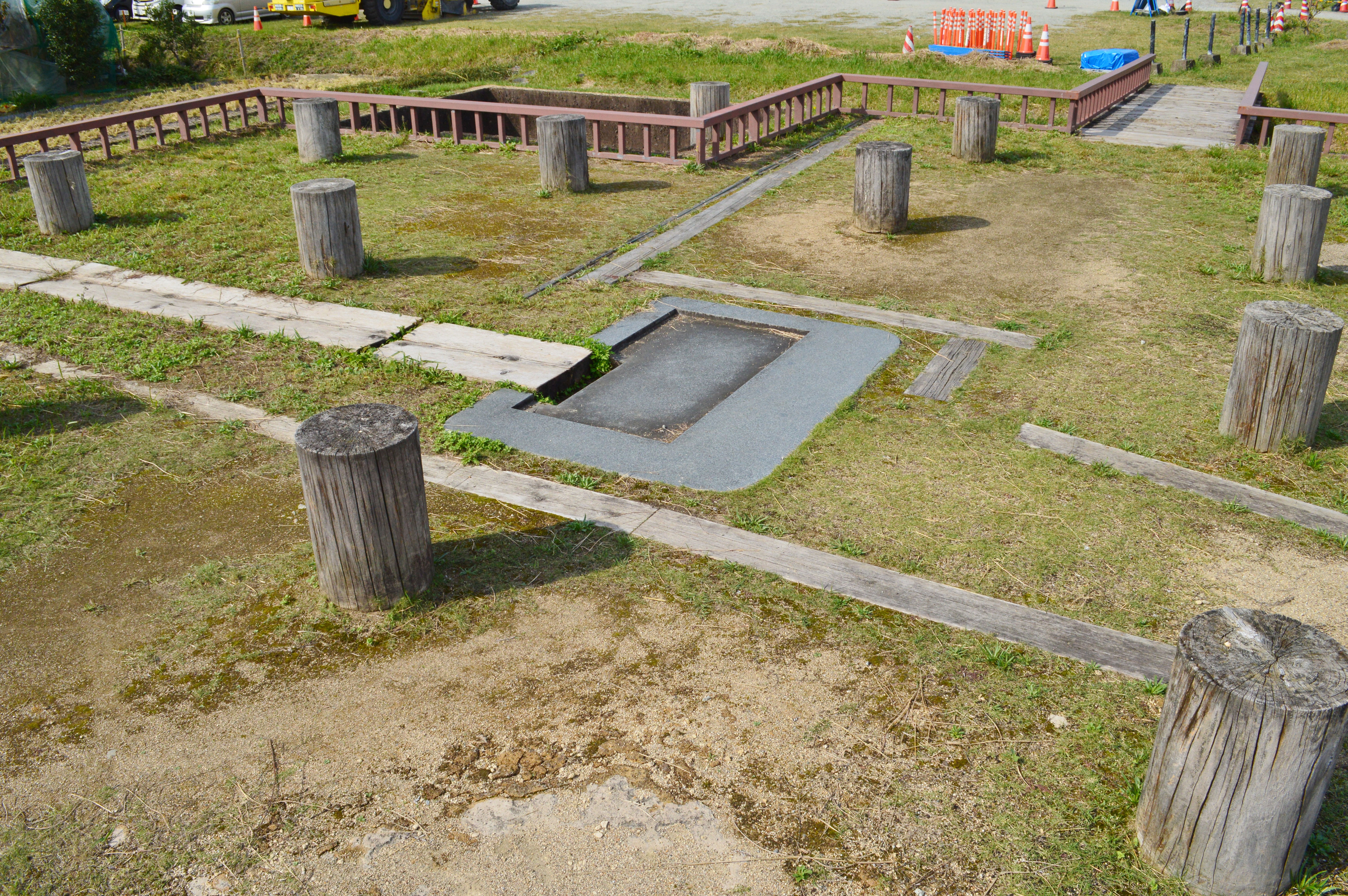
Prince Nakano Oe -- who would later reign as Emperor Tenchi -- was a political reformer obsessed with order. Water clocks had existed across East Asia for centuries, with the oldest written references in China dating to the 6th century BC, but installing one in the Asuka capital was a statement of imperial ambition. The device he commissioned sat just northwest of Asuka-dera, one of Japan's earliest Buddhist temples, placing timekeeping and religion in close proximity. The structure was a square plan measuring four bays -- approximately eleven meters -- on each side, supported by twenty-four pillars arranged around a hollow center. This was not a simple basin with a drip. It was architecture built around hydrology.
Copper Pipes and Lacquer
Archaeological excavations beginning in 1981 peeled back the layers to reveal an ingeniously engineered mechanism. Foundation stones were set a full meter below ground, with pillars fitted into circular recesses forty centimeters in diameter. Stone beams linked the foundation stones together, and the surrounding earth was compacted for stability. At the center, one meter below the floor, sat the remains of a black lacquered wooden box measuring 1.65 by 0.85 meters, resting on a cut granite base. Wooden gutters ran from the east side of the building toward the center, feeding water into a very thin trumpet-shaped copper pipe. The water was siphoned upward through this pipe to the top of the tower, then flowed back down into the lacquered receiving box. A second copper pipe on the west side drained overflow. The rising and falling water levels in the box measured the passage of time. Surrounding the tower on all four sides were long corridor-like structures with corner towers, forming a formal compound befitting a device that governed the rhythm of court life.
Lost and Found
The water clock fell out of use as the imperial capital moved away from Asuka, and the site gradually disappeared under centuries of sediment and construction. In 1972, a preliminary survey for a private house stumbled onto the remains. A full-scale excavation did not begin until 1981, but the findings confirmed what scholars had long suspected from the Nihon Shoki's account: this was the actual location of Prince Nakano Oe's timekeeping apparatus. The foundations, the copper fittings, the traces of the lacquered box -- all matched the historical description. Japan designated the ruins a National Historic Site in 1976, then expanded the protected area in 1982 as excavations revealed the full extent of the compound.
Telling Time in Ancient Asuka
The water clock was more than a curiosity. In a period when Japan was consolidating power under a centralized government, standardized timekeeping was a tool of political control. Knowing the hour meant coordinating court rituals, scheduling audiences, and synchronizing the administrative machinery of the state. The bell and drum that researchers believe were installed on the tower's second floor would have broadcast the hours across the Asuka plain, anchoring daily life to a rhythm set by the prince himself. Today, the site sits quietly on the riverbank, its foundation stones and post holes the only visible traces of a device that once imposed order on the hours. Signs mark the location of the wooden receiving box. The Buddhist temple of Asuka-dera still stands to the southeast, as it did when the water clock first sounded.
From the Air
Located at 34.48N, 135.82E in the Asuka village area of Nara Prefecture, Japan. The site lies on the east bank of the Asuka River in a flat plain at the southern end of the Nara Basin. Kansai International Airport (RJBB) is approximately 30 nautical miles to the west-northwest; Nara Airport is not available, so the nearest general aviation field is Yao Airport (RJOY) about 20 nautical miles north-northwest. Best viewed at 2,000-3,000 feet AGL. Look for the Asuka-dera temple complex nearby as a visual landmark.