Asuncion
From July to September, the city drowns in color. Pink and yellow lapacho trees bloom along every avenue and in every park, their petals carpeting sidewalks and settling on the roofs of the old diesel Mercedes taxis that still lumber through downtown Asuncion. The oldest continuously inhabited settlement in the Rio de la Plata basin does not announce itself with grand monuments or famous skylines. It reveals itself slowly, in the colonial facades along Calle Colon, in the shade of Plaza Uruguaya's trees, in the way a street vendor's lomito sandwich -- beef, fried egg, cheese, mayonnaise -- tastes at midnight after a night out in Villa Morra.
Mother of Cities
Juan de Salazar y Espinosa founded Asuncion on August 15, 1537, the feast of the Assumption of Mary, on the eastern bank of a calm bay in the Paraguay River. The location was chosen for its defensive qualities -- a natural lookout post over the water. In 1541, the first Cabildo transformed the military fort into a civilian town, and from this small settlement on a subtropical river, expeditions fanned out across South America. Missionaries and colonists departed Asuncion to found Corrientes, Santa Fe, Buenos Aires, and Santa Cruz de la Sierra. The city earned the title Madre de Ciudades -- Mother of Cities -- a claim that Buenos Aires, now vastly larger and more famous, might prefer to forget. The first president after independence, Jose Gaspar Rodriguez de Francia, imposed order and isolation from 1814 to 1840. His successor Carlos Antonio Lopez inaugurated the railway and raised the handsome nineteenth-century buildings that still anchor the center. The next president, Mariscal Francisco Solano Lopez, built the grandest structure of all -- the Palacio de Lopez, modeled after Versailles -- before plunging Paraguay into the catastrophic War of the Triple Alliance.
Walking the Microcentro
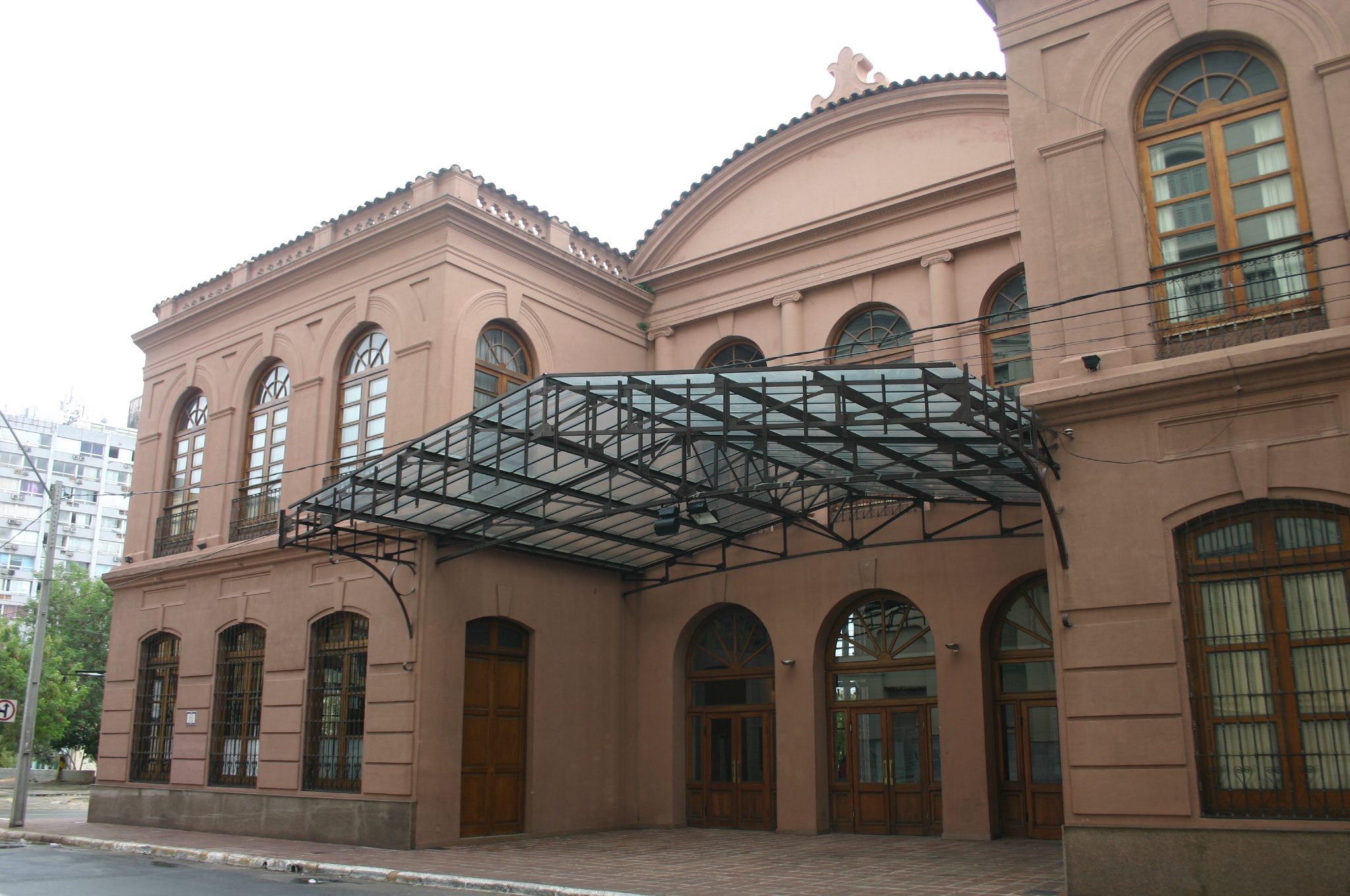
The historic heart of Asuncion fits within a few dozen walkable blocks. At the bottom of Calle Colon, the colonial facades of La Recova house shops selling local crafts in wood, cotton, and leather. The Palacio de Lopez presides over El Paraguayo Independiente, its French-inspired architecture facing the river. Directly opposite, the Manzana de la Rivera -- a complex of ten restored colonial houses, some from the 1700s -- contains the Museo Memoria de la Ciudad, with its collection of historical photographs. The Casa Viola is reportedly the oldest surviving house in the city. A block east stands the Congreso Nacional, completed in 2013 in steel and glass to resemble a ship moored on the riverbank. The Panteon Nacional de los Heroes on Plaza de los Heroes, modeled after Les Invalides in Paris and completed in 1936, holds the remains of former presidents and the unknown soldier. On nearby Plaza Libertad, covered stalls sell traditional Paraguayan crafts while indigenous women offer woven bags and beaded baskets along Calle Palma.
A City of Contrasts
Asuncion is three architectural cities layered on top of one another: the colonial buildings of the centro historico, the Italianate public buildings and mansions with their formal gardens, and the glass-and-steel towers of the modern business district along Avenida Aviadores del Chaco. The metropolitan area holds 2.2 million of Paraguay's 6.9 million inhabitants, and sixty-five percent of residents are under thirty. Internal migration since the 1970s has fused more than a dozen surrounding cities into one continuous urban sprawl. Traffic during rush hours -- 6:30 to 9:00, noon, and 5:00 to 8:00 -- can trap drivers for an hour or more. Yet Asuncion remains remarkably affordable. Street-side lomito vendors feed the after-midnight crowd for next to nothing, and the shopping malls of Villa Morra and Carmelitas draw day-trippers from Argentina hunting for bargain electronics and goods. The city is officially bilingual in Spanish and Guarani, with seventy-nine percent speaking Spanish as their first language and twenty percent Guarani.
The River and What Lies Beyond
The Paraguay River defines Asuncion's western edge and its identity. A riverside promenade -- the costanera, opened in 2012 -- gives runners and families space along the Bay of Asuncion. From the old port at the end of Calle Colon, small motorboats and car ferries make the twenty-five-minute crossing to Chaco'i, a tiny settlement on the far bank where the views back toward the city skyline are worth the trip, provided you return before sunset. The nineteenth-century train station beside Plaza Uruguaya no longer receives trains -- Paraguay had one of the first passenger railways in South America, but the service is long gone -- and now serves as a museum housing the original Sapucai steam engine from 1861 and machinery shipped from Wolverhampton and Battersea. The building is a reminder that Asuncion once looked outward with industrial ambition, and that the river was always the road that connected it to the world.
From the Air
Located at 25.28S, 57.63W on the east bank of the Paraguay River. The city sprawls across relatively flat terrain just south of the Tropic of Capricorn. Best viewed from 3,000-5,000 feet AGL approaching from the west over the river, where the Palacio de Lopez and the costanera promenade are visible along the waterfront. The Bay of Asuncion forms a distinctive curve. Silvio Pettirossi International Airport (SGAS) is located in the suburb of Luque, approximately 15 km northeast of the city center.