Atalaya Castle
No architect drew plans for Atalaya. Archer Milton Huntington, heir to a railroad fortune and obsessive scholar of Hispanic culture, carried the design in his head -- pulled from the watchtowers and courtyard houses he had studied along the Moorish coast of Andalusia. Between 1931 and 1933, while America buckled under the Great Depression, Huntington hired only local laborers from the struggling community around Murrells Inlet, South Carolina, paying them to raise a masonry compound that looked as if it had been transported from North Africa and dropped beside the Atlantic Ocean. The name itself is borrowed from Atalaya Castle in Spain: atalaya means "watchtower" in Spanish, and the square tower that dominates the structure once held nothing more strategic than a water tank.
Built for Healing, Designed from Memory
The Huntingtons came south for Anna's health. Anna Hyatt Huntington, already one of America's most celebrated sculptors, had been fighting tuberculosis since the mid-1920s. Archer chose the mild coastal climate of Georgetown County as her winter refuge, purchasing a vast stretch of land along Waccamaw Neck between the Waccamaw River and the Atlantic. While their grander ambition -- Brookgreen Gardens, just across U.S. Route 17 -- would become the nation's first public sculpture garden, Atalaya was their private world. Archer designed the home in the Moorish Revival and Mediterranean Revival styles, drawing on years of research into Spanish and North African architecture. That he built it without formal blueprints speaks to how deeply those forms had seeped into his imagination.
Thirty Rooms Around a Courtyard
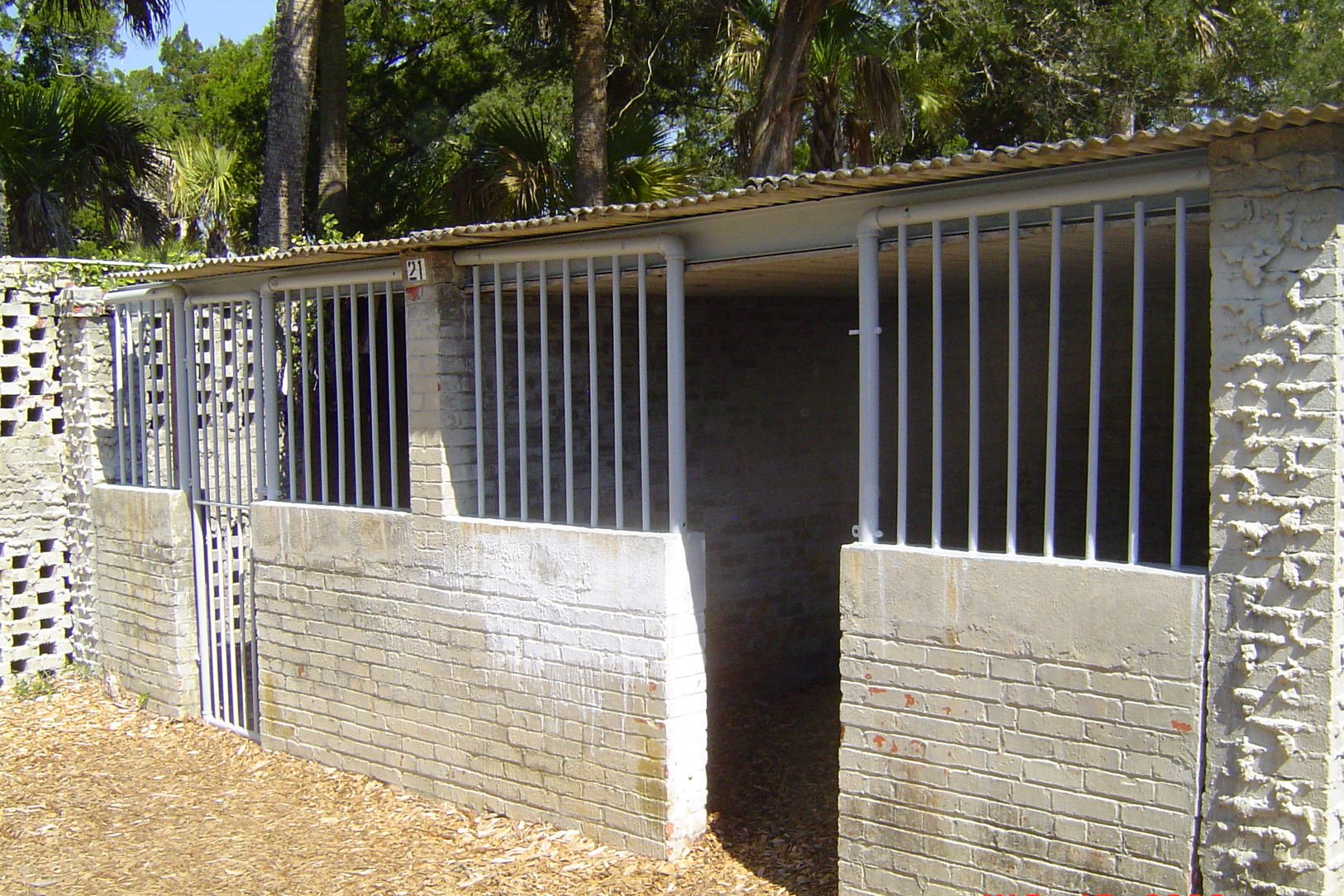
Atalaya sprawls rather than rises. Its 30 rooms wrap around three sides of a central courtyard, while Anna's sculpture studio opens onto a smaller, enclosed yard flooded by a large skylight. The inner courtyard walls were once thick with creeping fig vines and Sabal palmettos, the South Carolina state tree. Pens for Anna's animal models -- horses, dogs, and bears -- sat adjacent to the open studio, allowing her to work from life just steps from her living quarters. She designed the hand-wrought iron grills that cover every exterior window, functional art meant to protect against hurricane winds. Shutters reinforced the defense. The covered walkway that circles the interior was bisected by the tower, which rose nearly from the courtyard floor -- a landmark visible well before you reached the gate.
Depression-Era Defiance
Archer Huntington could have imported craftsmen from anywhere. Instead, he insisted on hiring local workers from the Murrells Inlet area, a community devastated by the economic collapse. The construction of Atalaya became a lifeline for families who had few other prospects. The masonry is sturdy and unadorned -- thick walls built to outlast hurricanes and centuries, not to impress visitors with ornamental flourish. The Huntingtons were not seeking grandeur for its own sake. They wanted a functional compound where Anna could sculpt and Archer could study, sheltered from harsh northern winters and surrounded by the Lowcountry landscape they had grown to love.
A Castle that Endures
Atalaya was listed on the National Register of Historic Places in 1984 and designated, together with neighboring Brookgreen Gardens, as a National Historic Landmark in 1992. Today it sits within Huntington Beach State Park, open for guided tours led by the Friends of Huntington Beach State Park. The Atalaya Visitor Center houses exhibits on the Huntingtons and their intertwined contributions to American art and philanthropy. Each September, the Atalaya Arts and Crafts Festival fills the courtyard with artisans and visitors -- a fitting tribute to a home that was, from its first day, built around the creative life of one of the twentieth century's great American sculptors.
From the Air
Atalaya Castle sits at 33.50N, 79.07W within Huntington Beach State Park on the South Carolina coast, just south of Murrells Inlet. From the air, look for the distinctive square courtyard compound set back from the beach, adjacent to salt marshes. Brookgreen Gardens lies directly across US-17 to the west. The nearest airports are Myrtle Beach International (KMYR) approximately 17nm northeast, and Georgetown County Airport (KGGE) about 15nm south. Best viewed at 2,000-3,000 feet AGL on a clear day; the Moorish tower is the most visible feature from altitude.