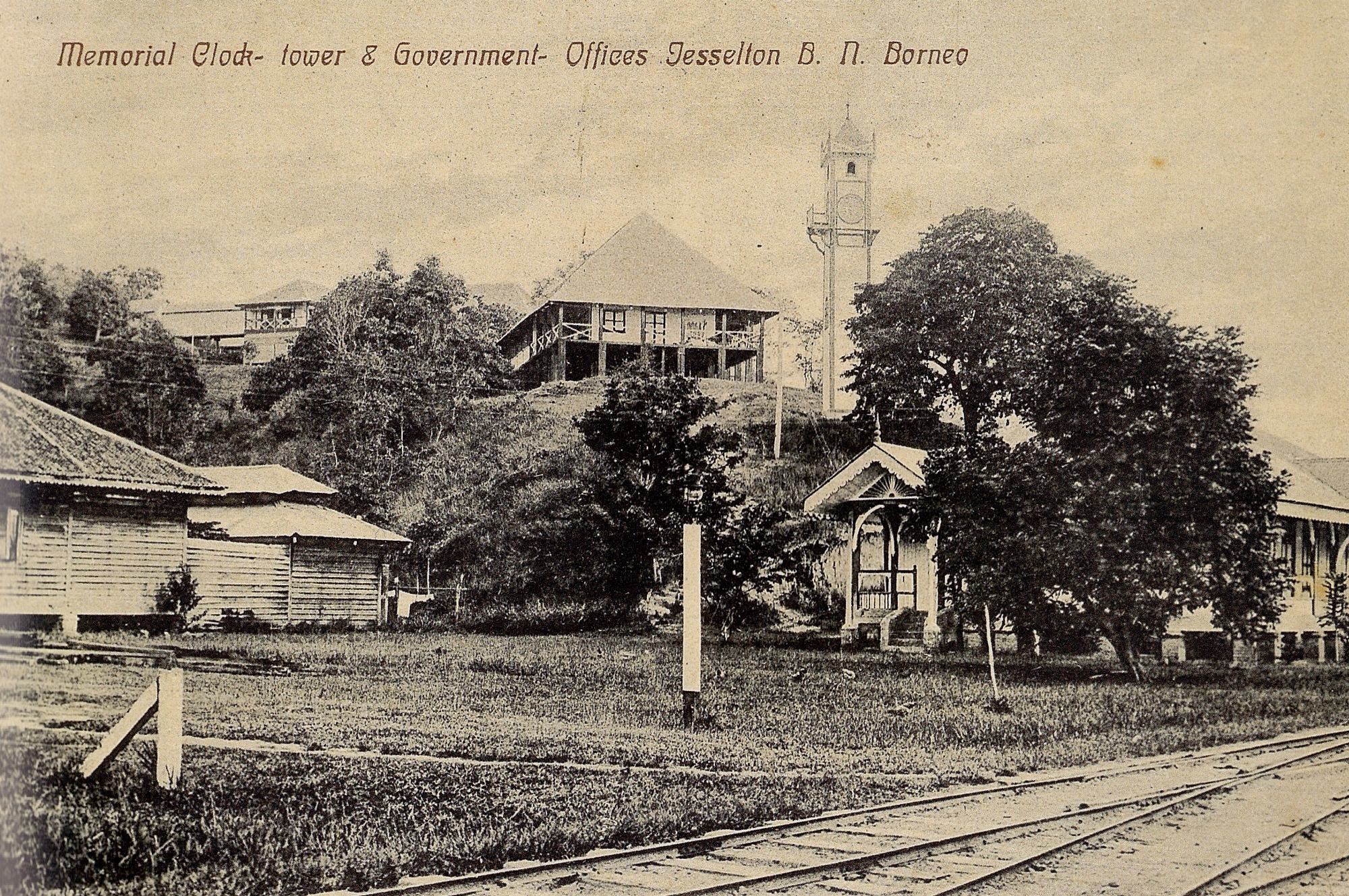
Atkinson Clock Tower
A mother's grief built the oldest structure still standing in Kota Kinabalu. In December 1902, Francis George Atkinson, the first district officer of the colonial town then called Jesselton, died of what was variously called malaria or "Borneo Fever." He was 28 years old. His mother, Mary Edith Atkinson, responded by presenting the town with a two-faced clock, and his friends raised the funds to build a tower worthy of housing it. The Atkinson Clock Tower was commissioned on 20 April 1905, and its chimes, crafted by William Potts and Sons of Leeds, could be heard across the entire settlement even before the structure was finished.
Carpentry of a Ship's Carpenter
The clock tower was built from Mirabau wood, a tropical hardwood known for its resistance to termites and moisture, qualities essential for any structure expected to survive Borneo's equatorial climate. The funding came from Atkinson's friends and colleagues, supplemented by what historians believe were additional funds channeled from the shipwrights of visiting naval vessels. The evidence for this maritime connection lies in the tower's internal carpentry, which bears all the hallmarks of work done by a ship's carpenter: tight, precise joinery designed to withstand movement and stress. The clock mechanism itself was manufactured by William Potts and Sons, a Leeds firm established in 1883 that later became part of the Smith of Derby Group in 1933. While still under construction, the clock began keeping time on 19 April 1905, one day before the tower was officially commissioned.
The Only Thing Left Standing
When Japanese bombing and Allied air raids reduced Jesselton to rubble during World War II, the Atkinson Clock Tower survived. Nearly every other colonial-era structure in the town was destroyed. The reasons for its survival are not entirely clear; whether it was too small to target, too far from strategic objectives, or simply lucky. But the result was that when the town rebuilt itself as Kota Kinabalu, the clock tower on the bluff along Signal Hill Road became the sole physical link to the pre-war settlement. A road once named Atkinson Drive in the officer's honor was renamed Jalan Istana, but the tower itself kept its name and its position, overlooking the city from its perch above the harbor.
Developers, Defenders, and the Heritage Line
In 2011, developers proposed building a shopping mall on land adjacent to the clock tower, a project that would have dwarfed and overshadowed the 120-year-old structure. Heritage organizations and NGOs protested, and the plan was shelved. But it returned in 2017, this time with state government backing and a proposal to relocate the tower to a different site entirely. Kota Kinabalu City Hall stated publicly that it lacked the authority to move the tower, and the Malaysian Architect Association voiced strong opposition. On 23 February 2018, the tower was gazetted as one of 24 heritage sites under Sabah's new State Heritage Enactment of 2017, a legal protection that gave formal weight to what the public had been arguing all along: that some things are worth more where they stand than anywhere else.
The Chimes Above the City
Today the Atkinson Clock Tower sits where it has always sat, on the bluff where Signal Hill Road begins its climb above the waterfront. The city has grown up around it and beneath it and far beyond it, but the tower remains, a small wooden structure in a city of concrete and glass. Its two clock faces look out over the harbor and the islands of the South China Sea. In July 2016, the Daily Express newspaper reported that the clocks had stopped working, prompting the Sabah Museum to undertake repairs. The malfunction and the repair are both part of the story: the clock is old enough to break and valued enough to fix. Mary Edith Atkinson gave a clock to a town where her son died young. That town became a city, and the clock kept ticking, kept needing tending, kept standing while everything around it fell and was rebuilt.
From the Air
Located at 5.98°N, 116.08°E on a bluff along Signal Hill Road in Kota Kinabalu. The clock tower is a small wooden structure and not individually visible from high altitude, but Signal Hill itself is a prominent ridgeline above the city waterfront. Nearest airport is Kota Kinabalu International Airport (WBKK), approximately 7 km to the south. The tower overlooks the harbor and the islands of Tunku Abdul Rahman National Park. Best viewed on a low-altitude pass over the city center from the west, where Signal Hill and the waterfront are both visible.