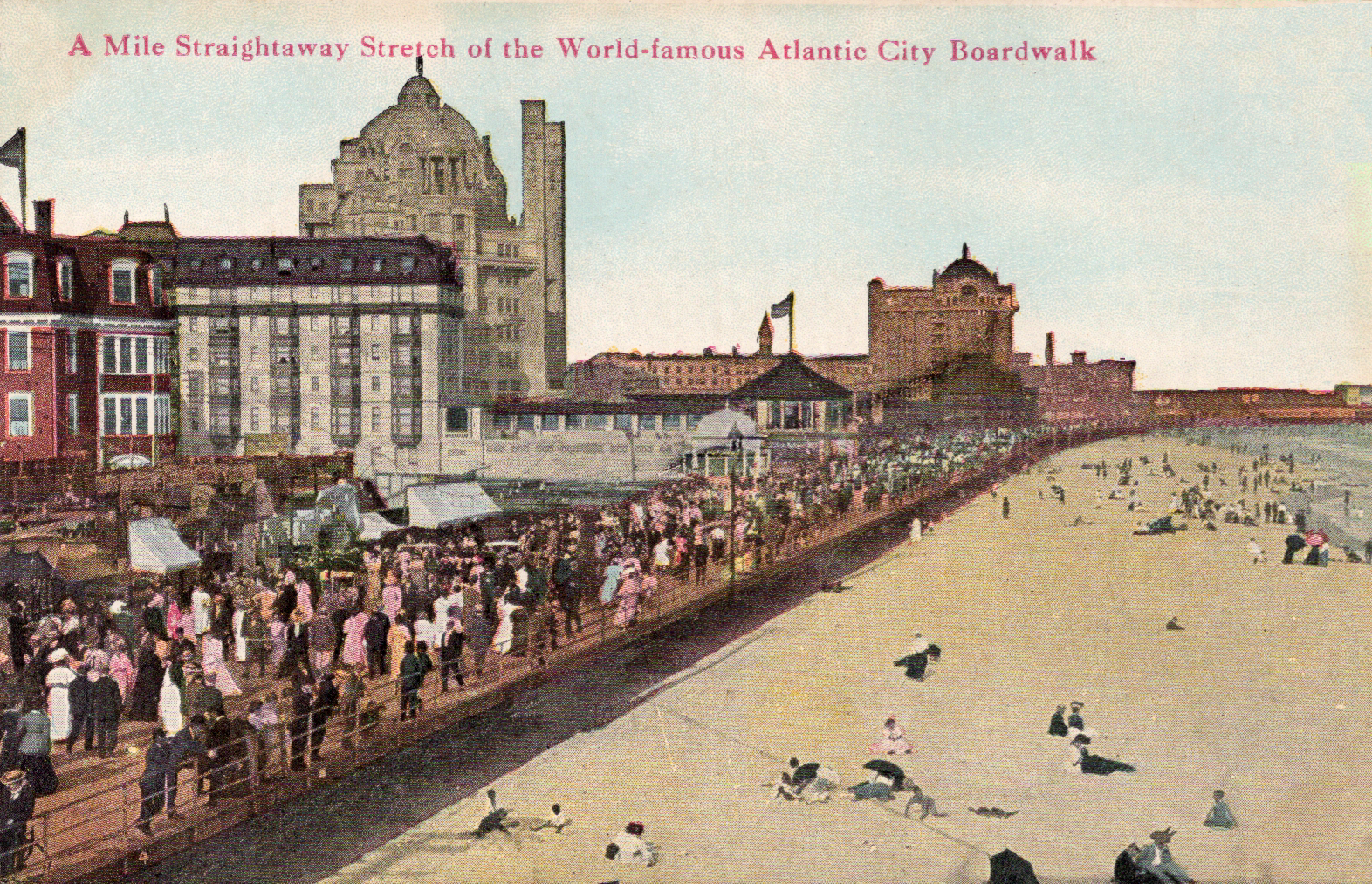
Atlantic City Boardwalk: The First and the Fallen
Atlantic City invented the American boardwalk in 1870 - a temporary wooden walkway to keep sand out of resort hotels. The idea worked too well. The boardwalk became permanent, then famous, then a destination itself: six miles of hotels, piers, saltwater taffy shops, and entertainment that made Atlantic City the nation's premier resort. Miss America was born here. Monopoly street names came from here. By the 1960s, Atlantic City had declined into seediness as Americans discovered air travel to warmer destinations. Legalized gambling in 1978 brought casinos and hope for revival. The revival was partial. Modern Atlantic City is a strange mix of glitter and decay, casino wealth and urban poverty, boardwalk grandeur and block-by-block desperation.
The Golden Age
From the 1880s through the 1940s, Atlantic City was America's playground. The boardwalk stretched six miles, lined with grand hotels, amusement piers, and attractions. Steel Pier featured diving horses. Hamid's Million Dollar Pier offered entertainment. The Miss America Pageant, founded in 1921, showcased idealized femininity annually. Saltwater taffy, invented here by accident (a flooded shop's candy was marketed as 'salt water' taffy), became an iconic souvenir. The wealthy arrived by train; middle-class families followed. Atlantic City represented escape, glamour, the possibility of reinvention at the shore.
The Decline
Jet travel killed Atlantic City. When Americans could afford to fly to Florida, the Caribbean, or Europe, a New Jersey beach lost its appeal. By the 1960s, hotels closed, piers collapsed, neighborhoods emptied. The Miss America Pageant continued in increasingly tawdry surroundings. Atlantic City became a symbol of urban decay - the grand buildings deteriorating, the boardwalk businesses shuttering, poverty and crime replacing prosperity. The city that had defined American leisure became a cautionary tale about change.
The Gamble
In 1976, New Jersey voters approved casino gambling for Atlantic City. The first casino opened in 1978; a dozen followed. The casinos brought construction, jobs, and visitors - but they also created an economy parallel to the city rather than integrated with it. Casinos are self-contained; guests need never leave the building. The boardwalk between casinos improved; the neighborhoods behind them often didn't. Wealth concentrated in gambling halls while poverty persisted blocks away. The casino gamble half-worked: Atlantic City survived but didn't fully revive.
The Present
Modern Atlantic City hosts nine casinos and roughly 18 million visitors annually. The boardwalk remains, offering a surreal mix: Trump-branded towers next to fading Victorian architecture, outlet malls next to elderly taffy shops, glittering casinos next to boarded storefronts. Online gambling and competition from neighboring states have pressured revenues. Some casinos have closed; the survivors compete for a shrinking market. The boardwalk itself is still America's most famous - still offering the rolling chairs, still selling taffy, still providing beach access for millions. Whether Atlantic City represents revival or managed decline depends on which blocks you walk.
Visiting Atlantic City
Atlantic City is located on Absecon Island, roughly 60 miles southeast of Philadelphia via the Atlantic City Expressway. The boardwalk is the primary attraction - six miles of casinos, shops, and beach access. Steel Pier has been rebuilt with rides and attractions. The casinos offer gambling, entertainment, and restaurants. The beach is free. Rolling chairs (wheeled wicker carts pushed by operators) are an Atlantic City tradition. Lucy the Elephant, a 19th-century building in neighboring Margate, is a quirky side trip. Philadelphia has the nearest major airport, though Atlantic City has a small airport with limited service. Summer weekends are crowded; weekdays offer casino deals.
From the Air
Located at 39.36°N, 74.42°W on the New Jersey shore. From altitude, Atlantic City is visible as a narrow barrier island densely developed with casino hotels rising along the beach. The boardwalk is visible as a line between buildings and sand. Absecon Lighthouse, the tallest in New Jersey, is identifiable. The causeway connections to the mainland are visible. The contrast between the glittering casino towers and the smaller buildings behind them is apparent from altitude - the economic stratification expressed in architecture. Philadelphia lies to the northwest; the barrier islands of the Jersey Shore stretch north and south. Atlantic City is the brightest concentration of development on the Jersey coast, its casinos lit like beacons.