The Pipe Bomb at Saikazaki: An Assassination Attempt on Japan's Prime Minister
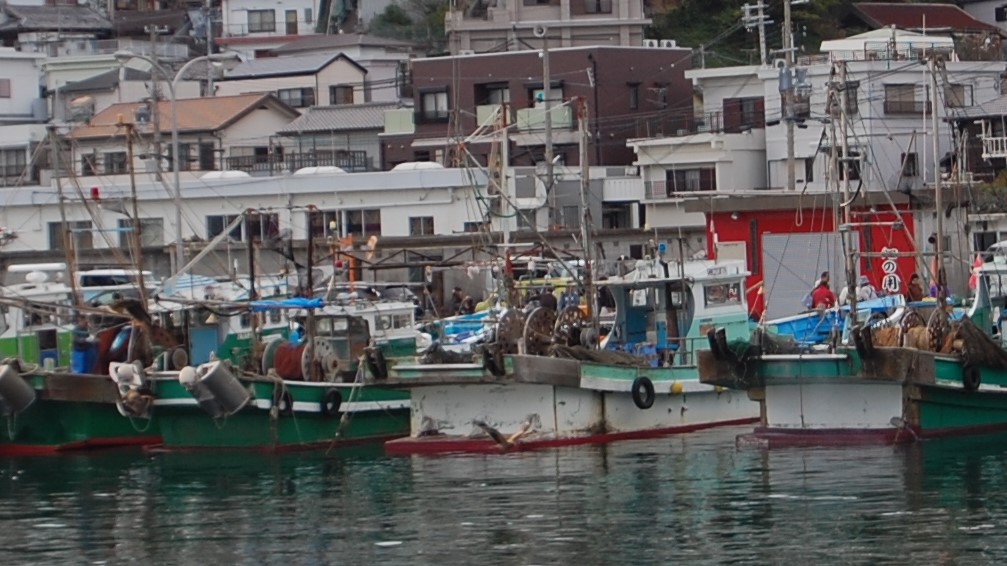
Two fishermen saved the day. On the morning of April 15, 2023, Prime Minister Fumio Kishida arrived at the fishing port of Saikazaki in Wakayama City to deliver a campaign speech for a local by-election. The small harbor, sometimes called Japan's Amalfi for its steep hillsides and densely packed houses overlooking the water, was an ordinary stop on an ordinary political tour. Then a cylindrical object arced through the air and landed one meter from the prime minister. Security officers from the Tokyo Metropolitan Police immediately evacuated Kishida. Fifty seconds later, the pipe bomb exploded. While the attacker reached for a second device, two local fishermen -- men accustomed to hauling nets, not subduing assailants -- tackled him to the ground and held him until plainclothes officers made the arrest. The entire incident was captured on camera.
Nine Months After Nara
The attack at Saikazaki did not happen in a vacuum. Just nine months earlier, on July 8, 2022, former Prime Minister Shinzo Abe had been assassinated during a campaign speech in Nara -- shot dead with a homemade firearm by a lone attacker. That killing had shattered Japan's longstanding sense of security around its political leaders, a country where gun violence is extraordinarily rare and politicians routinely campaign in open-air settings with minimal barriers between themselves and the public. The Kishida attack confirmed what many had feared: Abe's assassination was not an isolated aberration but a signal that Japan's open campaign culture had become vulnerable. The fact that the Saikazaki attacker used a homemade pipe bomb rather than a firearm only deepened the anxiety -- the threat could take any form.
A Grievance Turned to Violence
The suspect, 24-year-old Ryuji Kimura from Kawanishi in Hyogo Prefecture, was not motivated by ideology in any conventional sense. In 2022, Kimura had attempted to run in the House of Councillors election but was blocked because he was too young and could not afford the required deposit fee -- a substantial sum that Japanese election law mandates as a barrier against frivolous candidacies. Kimura filed a lawsuit challenging these eligibility requirements as unconstitutional. When the lawsuit failed, his frustration curdled into something darker. At his trial, which began on February 4, 2025, Kimura told the court he did not intend to kill Kishida. His lawyers explained that he had carried out the attack to gain public attention for his grievance, choosing to act in the presence of a prominent politician so the media would be watching. Neighbors in Kawanishi described him as calm and gentle. On February 19, 2025, Kimura was convicted of attempted murder and sentenced to ten years in prison.
Fifty Seconds
The timeline of the attack compressed an enormous amount of action into less than a minute. Kishida had just arrived at the port and was preparing to speak when the pipe bomb was thrown. His security detail reacted instantly, shielding the prime minister and rushing him from the scene. The bomb sat on the ground for fifty seconds before detonating -- long enough for the area to be partially cleared, but not long enough to prevent all injuries. A bystander and a police officer suffered minor wounds from the blast. The attacker, meanwhile, was already reaching for a second explosive device when the two fishermen intervened. Their instinctive decision to physically restrain a man holding a bomb almost certainly prevented a more devastating outcome. Kishida himself was unharmed.
The Aftermath and the G7
Hours after the attack, Kishida addressed the nation. "I am sorry for causing many people to be concerned," he said. "We are in the middle of an important election for our country. We must carry this on together." The next day, he vowed to ensure the safety of the upcoming 49th G7 summit, scheduled for Hiroshima in May 2023. Security across all campaign events was immediately tightened. Bag checks became standard. Buffer zones expanded around candidates. The by-election that had brought Kishida to Saikazaki proceeded on April 23, eight days after the attack, under heavy police presence. Kimura was indicted by Wakayama prosecutors on September 7, 2023, on charges including attempted murder. The Saikazaki incident joined the Abe assassination as evidence that Japan's political landscape had fundamentally shifted -- that the open, accessible campaign tradition the country had long prized now required a new calculus of risk.
From the Air
Located at 34.19°N, 135.14°E at the fishing port of Saikazaki, on the western coast of Wakayama City facing the Kii Channel. From the air, Saikazaki is identifiable as a compact harbor village with houses built on steep hillsides surrounding a small port -- sometimes compared to Italy's Amalfi Coast for its terraced appearance. The port sits southwest of central Wakayama City. Nearest airport is Kansai International Airport (RJBB), approximately 25 nautical miles to the north across Osaka Bay. Nanki-Shirahama Airport (RJBD) is approximately 50 nautical miles to the south. Best viewed at 2,000-3,000 feet AGL to see the port layout and surrounding coastal terrain.
Sources
- Attempted assassination of Fumio Kishida - Wikipedia
- Man jailed for attempted murder of former Japan PM - BBC
- Japanese man who threw pipe bomb at ex-PM Kishida tells court he didn't intend to kill - AP News
- Saikazaki Fishing Port - Japan Travel by NAVITIME
- Fishermen at Japan PM attack acted fast to swarm suspect - Associated Press
- 10-year sentence upheld over 2023 attack on Kishida - The Japan Times
- 49th G7 summit - Wikipedia