Auckland Art Gallery
In 2009, American businessman Julian Robertson donated artworks valued at over $100 million to a gallery in a city most Americans could not locate on a map. The gift - the largest art donation in the region's history - went to Auckland Art Gallery, an institution that has been quietly accumulating significance since 1888, when it became the first permanent public art gallery in New Zealand. Set below the green canopy of Albert Park in central Auckland, the gallery holds the country's most extensive collection of national and international art, a collection that began with donations from two very different benefactors: Governor Sir George Grey, a colonial administrator with cultural ambitions, and James Tannock Mackelvie, a Scottish-born businessman who believed Auckland deserved better than its provincial reputation suggested.
A Gallery Born of Stubbornness
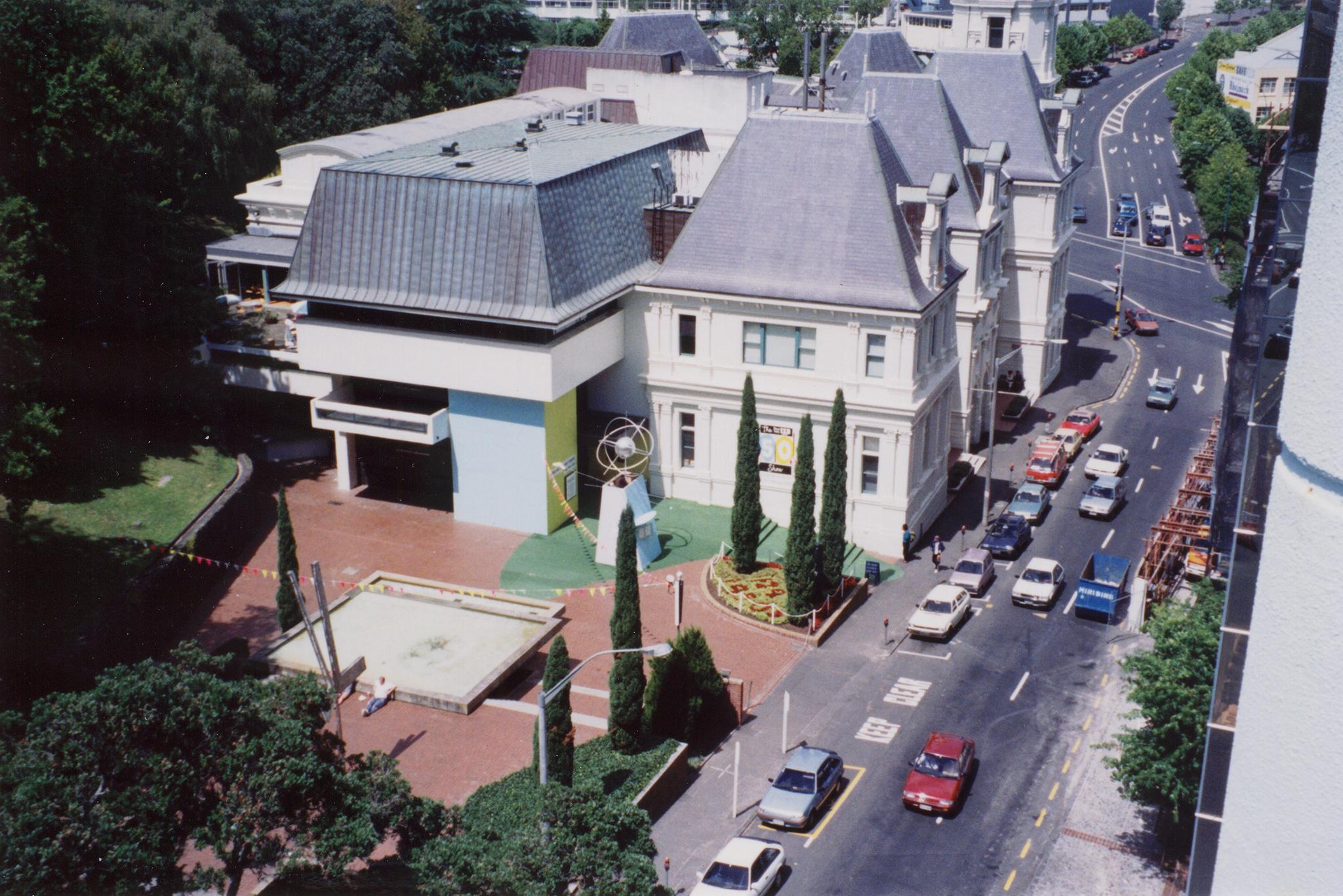
Throughout the 1870s, prominent Aucklanders lobbied for a municipal art collection, but the newly formed Auckland City Council refused to fund one. It took persistence from figures like Sir Maurice O'Rorke, Speaker of the House of Representatives, to force the issue. The compromise was a combined Art Gallery and Library building, designed by Melbourne architects Grainger and D'Ebro in a French Renaissance style. It opened in 1888, making Auckland the second city in New Zealand with a public gallery - Dunedin had beaten it by four years with its own gallery in 1884. The original building's dual purpose reflected the practical economics of colonial culture: neither institution could justify a building alone, so they shared one. The library eventually departed, but the gallery stayed, growing into the space and beyond it, accumulating artworks and ambitions that the original architects could not have anticipated.
The Canopy That Changed Everything
The gallery's most dramatic transformation came in 2011, when it reopened after a major renovation designed by Australian and New Zealand architects Francis-Jones Morehen Thorp in association with Archimedia. The centerpiece of the redesign is a canopy of kauri-like forms that wraps around and over parts of the heritage buildings - an organic, tree-inspired structure that filters light into the galleries below. The renovation nearly doubled the exhibition space, allowing the gallery to display more of its permanent collection alongside temporary international exhibitions. The architectural intervention was deliberate in its symbolism: the canopy references the native forest that once covered the Auckland isthmus, creating a dialogue between the colonial heritage building and the indigenous landscape it displaced. The project won multiple architectural awards and gave Auckland a cultural landmark that photographs well and functions even better.
From Goldie to McCahon
The collection maps New Zealand's artistic evolution with particular strength. Charles Frederick Goldie's portraits of Maori elders, painted in the late nineteenth and early twentieth centuries, remain among the gallery's most famous works - technically masterful paintings that also raise uncomfortable questions about the colonial gaze and the romanticization of a people undergoing enormous disruption. At the other end of the historical arc, Colin McCahon's large-scale canvases - with their stark landscapes and existential text - represent a New Zealand art that broke free from European conventions to find its own vocabulary. Between these poles, the collection holds works by Frances Hodgkins, who found international success in Europe, and a growing body of contemporary Maori and Pacific art that reflects the cultures reshaping Auckland's identity. The Robertson donation added international depth, placing Cezanne and Matisse alongside homegrown masters.
The Park Above, the City Below
The gallery's location gives it a distinctive relationship with its surroundings. Albert Park rises behind and above it, a Victorian-era hilltop garden with mature trees, a fountain, and views across the city to the harbor. Below, the city's commercial heart presses close - Queen Street and its offices and shops are minutes away on foot. This in-between position, perched on the slope between park and commerce, means the gallery serves both as a cultural destination and as a daily refuge for office workers and students from the nearby University of Auckland. Free admission to the permanent collection removes the economic barrier that keeps many people out of museums. The gallery draws over half a million visitors annually, a substantial number for a city of Auckland's size, and its rotating exhibition program ensures repeat visits. For a gallery that began because a few stubborn civic leaders refused to accept that Auckland did not deserve one, the institution has more than justified their persistence.
From the Air
Auckland Art Gallery (36.85S, 174.76E) is located at the southern edge of Albert Park in central Auckland, just east of Queen Street. From the air, look for the distinctive organic canopy structure adjacent to the heritage building, with the green hilltop of Albert Park directly above. Auckland Airport (NZAA) is 21 km south. The Sky Tower (328m) is visible to the northwest. The Waitemata Harbour and port facilities are north of the gallery. The gallery is in the heart of the Auckland CBD. Weather is oceanic temperate.