Augusta Canal: The Waterway That Refused to Die
In the 1960s, Augusta city officials proposed draining the canal to build a superhighway. It would have been a tidy end for a waterway that had already outlived the textile mills it powered, the cotton boats it carried, and the Confederacy it armed. Instead, the Augusta Canal survived -- as it had survived floods, industrial decline, and 120 years of shifting American priorities. Today it holds a distinction no other canal in the country can claim: it remains in continuous use for all three of its original purposes, providing hydroelectric power, water transportation, and municipal drinking water to the city of Augusta, just as it was designed to do in 1845.
A Railroad Man's Canal
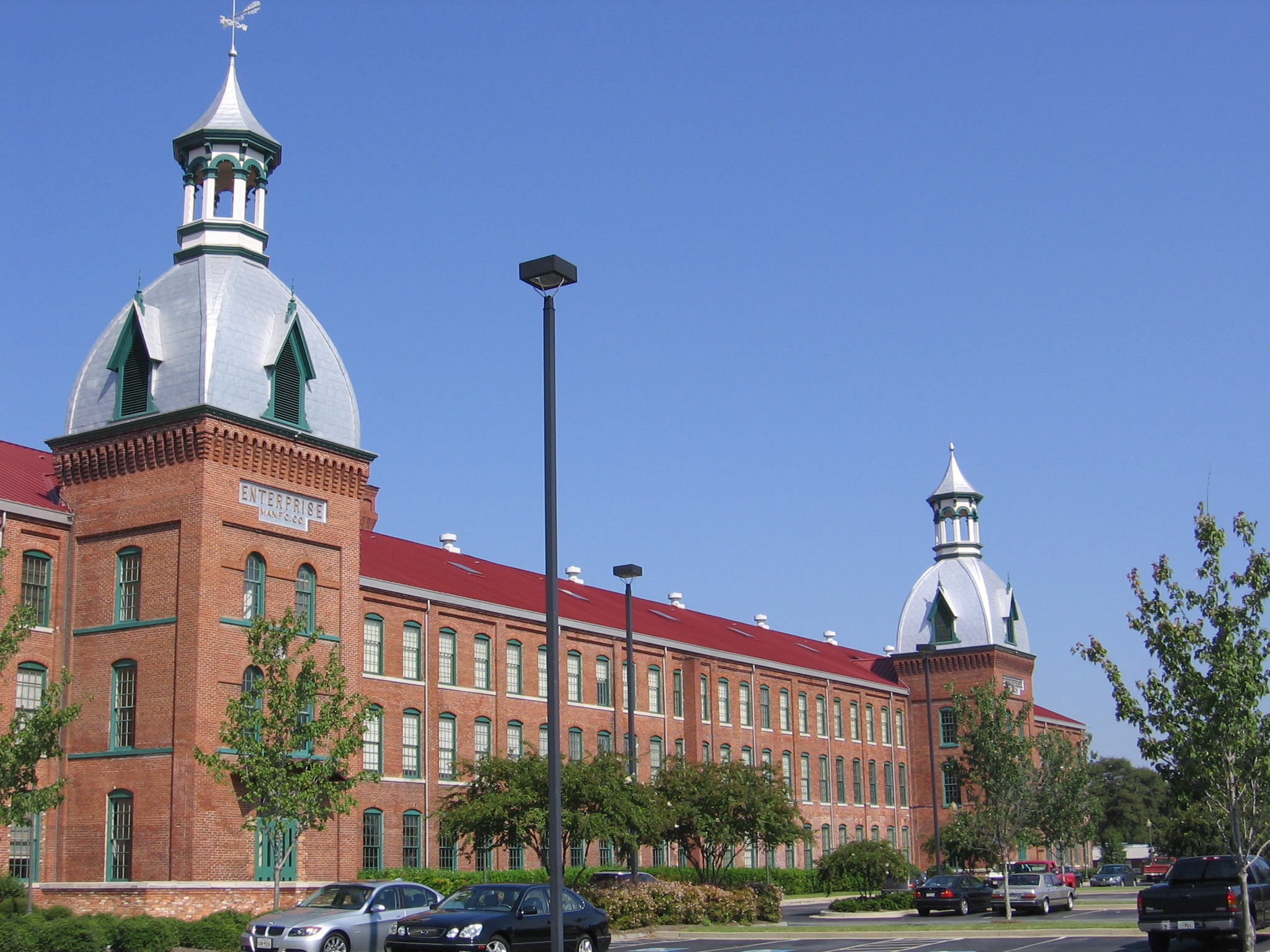
Henry Harford Cumming, heading the city's Canal Commission, personally paid railroad engineer John Edgar Thomson to survey the route for Augusta's canal. It was an unusual pairing -- a railroad engineer designing a waterway -- but Thomson understood how to move things efficiently across terrain. The canal was completed in 1845, tapping the Savannah River at the fall line where the piedmont meets the coastal plain, harnessing the natural drop in elevation to drive machinery. Construction began on the first factory in 1847: a saw and gristmill at the site that would become Enterprise Mill. The Augusta Manufacturing Company, a sprawling four-story textile works, soon followed. It was one of the few successful industrial canals in the entire Southern United States, and the factories that lined its banks would transform Augusta from a river trading post into a manufacturing center.
Gunpowder and Cotton
The canal's industrial capacity caught the attention of Confederate Colonel George Washington Rains, who selected Augusta as the location for the Confederate Powderworks precisely because of the power and water transportation the canal provided. The 28 buildings of the Powderworks -- the only structures designed, built, and financed entirely by the Confederate government -- stretched along the canal. Other war industries clustered nearby, making Augusta a critical center for materiel production. When Sherman's march through Georgia in 1864 raised fears of an attack on the gunpowder factory, the city braced for destruction. But Sherman turned toward Savannah, leaving Augusta and its canal intact. The city emerged from the war in better shape than most Southern cities, its population doubled and hard currency available to finance recovery -- including enlarging the canal in 1875.
The Electric City
The post-war boom brought a rush of construction along the canal's banks. Enterprise Mill, King Mill, Sibley Mill, and the Lombard Ironworks drew workers from surrounding farms -- men, women, and children who settled in mill villages that grew up in the factories' shadows. In the 1890s, Augusta replaced its old water pumping station with an impressive new structure at mid-canal that still serves the city today. But the most transformative moment came when engineers began converting the canal's falling water into electricity. By 1892, Augusta had both electric streetcars and street lights, becoming the first Southern city to claim those amenities. The canal that had been built to turn millstones was now spinning generators, proving its capacity to adapt to whatever technology demanded.
Near Death and Rebirth
The 20th century was unkind to the Augusta Canal. Major floods in the 1920s and 1930s required hundreds of WPA workers to repair damage, build a new spillway, and straighten sections of the waterway. By mid-century, textile factories were closing and industrial activity was migrating south of the city. The canal fell into neglect, and the superhighway proposal of the 1960s seemed like a logical mercy killing. But flickers of preservation interest appeared in the 1970s. A state park proposal failed, but in 1989 the Georgia legislature created the Augusta Canal Authority. A comprehensive master plan followed in 1993. Then in 1996, Congress designated the Augusta Canal a National Heritage Area -- the first in Georgia. The canal's industrial district had already been named a National Historic Landmark in 1977, and in 2018 the American Society of Civil Engineers added a National Historic Civil Engineering Landmark designation.
The Canal Today
The Augusta Canal Discovery Center opened at Enterprise Mill in 2003, and modern-day Petersburg boats -- inspired by the cotton-carrying vessels that once plied the waterway -- began offering guided tours. Old textile mills have been converted to upscale offices and loft apartments. The towpath along the canal's first level forms the backbone of a recreational trail system, welcoming kayakers, paddlers, cyclists, and walkers. The canal still supplies Augusta's drinking water, still generates hydroelectric power, and still carries boats -- tourists now instead of cotton bales. From the air, its three levels trace a visible line through suburban and urban Augusta, paralleling the Savannah River before returning water to it at various points. It is a working artifact, not a museum piece, and that distinction is what makes it unique in America.
From the Air
Located at 33.50°N, 82.00°W in Augusta, Georgia. The canal is fed by the Savannah River and traces a visible path through suburban and urban Augusta across three levels before returning water to the river. From altitude, look for the canal's linear waterway paralleling the Savannah River, with historic mill buildings (Enterprise Mill, Sibley Mill, King Mill) visible along its banks. The canal headgate area on the Savannah River is a useful visual reference. Augusta Regional Airport (KAGS) lies approximately 8 nm to the south. Daniel Field (KDNL) is about 2 nm to the southeast. Best viewed at 2,000-4,000 feet AGL; the canal's three-level layout and mill complexes are distinguishable in clear conditions.