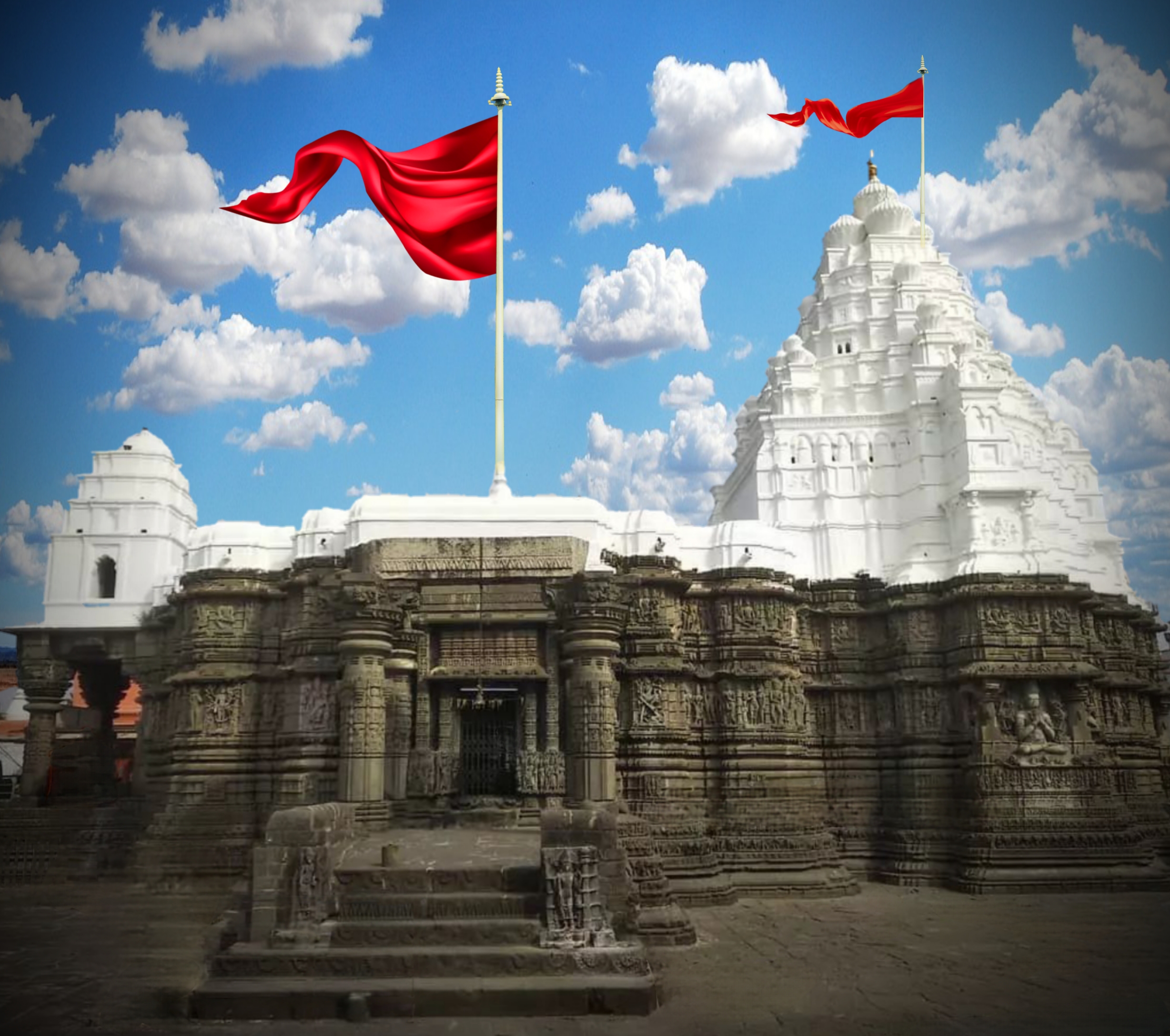
Aundha Nagnath Temple
The bull faces the wrong way. In virtually every Shiva temple in India, Nandi sits in front of the sanctum, gazing toward the deity he serves. At Aundha Nagnath, the stone bull faces the rear of the building. Ask the devotees why, and they will tell you the story of Sant Namdev, the 13th-century Varkari poet who came to sing devotional kirtans. When the temple priests blocked him and told him to move to the back, Namdev prayed. The entire temple, they say, rotated to face him. Nandi stayed where he was. The Archaeological Survey of India has declared this place a Protected Monument of National Importance, but the building's most compelling testimony may be its own disorientation.
The Eighth Pillar of Light
According to the Shiva Purana, Aundha Nagnath is the eighth of the twelve Jyotirlingas, the sites where Shiva manifested as a radiant, self-emanating pillar of light. The name "Nagnath" identifies Shiva as the Lord of Serpents, and devotees believe that worship here provides relief from Kaal Sarp Dosh and other serpent-related afflictions. The region was once known as Darukavana, a forest of deodar trees. In the mythology, a demoness named Daruka used boons from Goddess Parvati to torment the people of the forest, until a devout follower named Supriya prayed for deliverance. Shiva appeared, vanquished the demon, and settled here permanently in the form of the Jyotirlinga. This same legend is claimed by the Nageshwar Jyotirlinga in Gujarat, but in Maharashtra, Aundha Nagnath holds the title.
Two Architectures, One Temple
The building itself is a textbook in stone, with two distinct chapters stacked on top of each other. The base, including the outer walls and the sanctum, dates to the 13th century and the reign of the Yadavas of Devagiri. This section is built in the Hemadpanti style, developed by the Yadava minister Hemadri Pandit, a technique that interlocks stones without mortar. Intricate carvings of deities, mythological scenes, elephants, and geometric designs cover the exterior. The upper portion tells a different story. During the medieval period, invasions by the Delhi Sultanate left the temple severely damaged. In the 18th century, Ahilyabai Holkar, the ruler of the Holkar kingdom of Indore, renovated the structure as part of her campaign to restore Jyotirlinga shrines across India. The current spire, or shikhara, exhibits Maratha architectural style, sitting atop the Hemadpanti base like a crown from a later dynasty placed on an older head.
The Basement Sanctuary
The most distinctive feature of Aundha Nagnath is invisible from outside. The sanctum, the garbhagriha, is located not at ground level but in a small chamber in the basement, accessible only by a narrow flight of stairs. Descending into the earth to reach the Jyotirlinga, the self-manifested pillar of light, creates a paradox that the architecture seems to intend: you go underground to find illumination. The surrounding hills add to the sense of seclusion. During Mahashivratri, the temple's largest festival, hundreds of thousands of devotees gather here. The grand chariot festival, the Rathotsav, takes place at night, when an idol of Shiva is carried in procession on a decorated chariot through crowds chanting "Har Har Mahadev." During the month of Shraavana, thousands of Kavadiyas walk on foot to offer holy water to the Jyotirlinga.
A Bridge Between Faiths
Aundha Nagnath holds a place in Sikhism as well as Hinduism, and that connection runs through Sant Namdev. Sixty-one of Namdev's hymns are included in the Guru Granth Sahib, the holy scripture of Sikhism. The fifth Sikh Guru, Guru Arjan Dev, compiled the Guru Granth Sahib to include not only the teachings of Sikh Gurus but also the works of Indian saints like Namdev, Kabir, and Ravidas, promoting the message of one God across sectarian boundaries. Guru Nanak, the founder of Sikhism, is believed to have visited this Jyotirlinga during his travels in southern India, the journeys known as udasis. Because of these spiritual and historical ties, Aundha Nagnath serves as a symbol of shared faith. Hindus and Sikhs find meaning in the same stones, the same story of a saint who refused to be turned away.
From the Air
Located at 19.54N, 77.04E in the Hingoli district of Maharashtra. The temple is a relatively small structure in a rural setting amid surrounding hills. Nearest airport: Nanded Airport (VAND), approximately 90 km to the southeast. Aurangabad Airport (VAAU) is approximately 200 km to the west. The terrain is flat Deccan plateau with scattered agricultural land.