The Northern Lights: The Sky Show That Vikings Thought Was Bridge to the Gods
The aurora borealis is the greatest light show on Earth, and it's completely free - if you're far enough north. Charged particles from the sun collide with gases in Earth's atmosphere, releasing energy as light. The result: shimmering curtains of green, purple, and red that dance across the night sky, visible from Iceland, Norway, Canada, and Alaska. Vikings believed the lights were the Bifröst bridge to Asgard. Scientists now understand the physics. But understanding doesn't diminish the wonder. Standing beneath the northern lights, watching colors ripple across the sky, you understand why people called it magic.
The Myths
The aurora begins 93 million miles away, on the surface of the sun. Solar flares and coronal mass ejections release charged particles that stream through space as 'solar wind.' When these particles reach Earth, our magnetic field channels them toward the poles.
At altitudes of 60-200 miles, the particles collide with atmospheric gases. Oxygen glows green or red; nitrogen glows blue or purple. The colors depend on altitude and gas type. The dancing motion comes from variations in the solar wind. The physics is well understood. The beauty remains unexplained.
The Myths
Every northern culture has aurora mythology. The Vikings called them 'the Bifröst' - the rainbow bridge connecting Midgard (Earth) to Asgard (the realm of gods). Finnish legends described a firefox whose tail sparked against mountains. The Cree saw dancing spirits of the dead.
Norse mythology also associated the lights with Valkyries carrying fallen warriors to Valhalla - armored women riding on horseback through the sky. In some cultures, the aurora was feared: whistling at it could attract its attention and bring misfortune. The lights that modern tourists photograph were once signs from the gods.
The Chase
Northern lights tourism has exploded in the 21st century. Iceland receives over 2 million visitors annually, many specifically to see the aurora. Tour operators drive clients into the darkness, chasing clear skies. Apps predict solar activity. Hotels wake guests when the lights appear.
The aurora is fickle: you need darkness (winter months), clear skies (rare in Iceland), and solar activity (unpredictable). Many visitors see nothing. Those who see a strong display never forget it. The lights move faster than photographs suggest - rippling, pulsing, disappearing and reappearing. No photograph captures the experience.
The Locations
The aurora is most visible along the 'auroral oval' - a ring around the magnetic poles roughly 65-72 degrees north. Iceland sits perfectly in this zone. So do northern Norway, Swedish Lapland, Finnish Lapland, northern Canada, and Alaska.
Tromsø, Norway calls itself the 'Gateway to the Arctic' and claims the aurora capital title. Fairbanks, Alaska competes. Iceland's lack of light pollution makes the entire country prime viewing territory. In strong solar storms, the aurora can be visible as far south as the continental US and Europe - but such events are rare.
The Experience
Seeing the northern lights changes people. First-time viewers often cry. The colors seem impossible - not painted on the sky but glowing from within it. The movement is hypnotic. Time distorts. An hour passes in what feels like minutes.
For residents of the far north, the aurora is routine - background to winter life. For visitors from lower latitudes, it's transcendent. The lights that Vikings attributed to gods, that scientists explain with physics, that photographers try to capture, remain beyond human creation. The sky puts on a show, and we can only watch.
From the Air
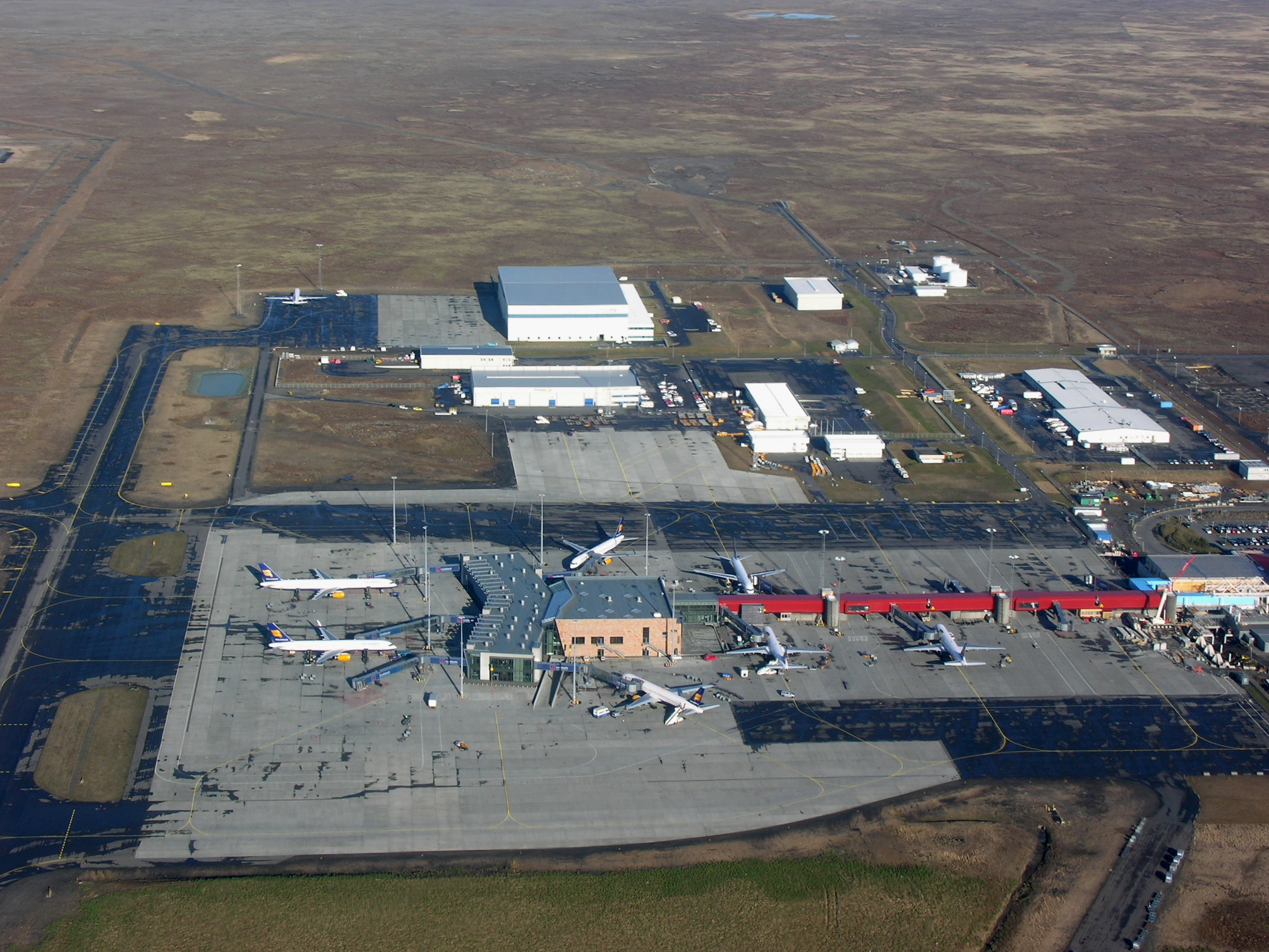
Iceland (64.00N, 22.00W) sits beneath the auroral oval. Keflavik International Airport (BIKF) is 50km southwest of Reykjavik. The entire country offers aurora viewing from September to April. From the air, Iceland appears as a volcanic island with glaciers, black beaches, and during aurora season, the lights themselves may be visible from the aircraft. Best viewing is away from Reykjavik's light pollution. Weather is maritime - changeable, often cloudy, mild for the latitude.