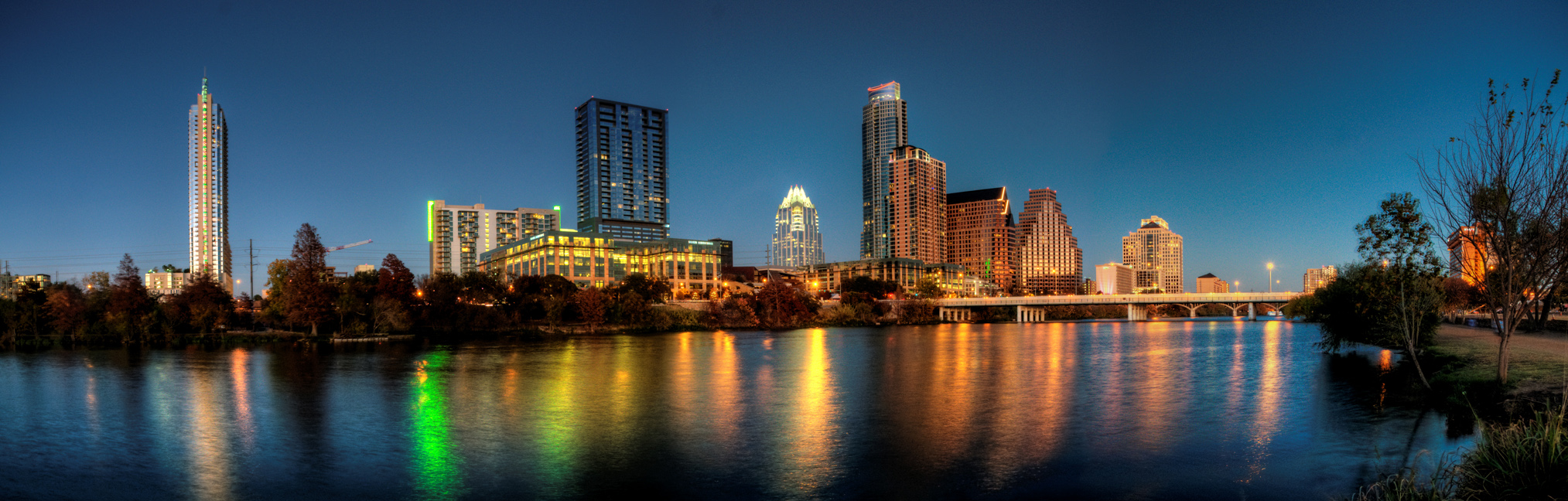
Austin: The City That Made Weird a Battle Cry
The slogan was never about weird for weird's sake. 'Keep Austin Weird' began as a local business mantra in 2000, a plea to support independent shops against chain encroachment. But Austin had earned the tagline long before the bumper stickers. This is the city where Leslie Cochran, a cross-dressing homeless man, ran for mayor three times and became a beloved icon. Where 1.5 million Mexican free-tailed bats emerge from a downtown bridge each summer evening while crowds gather to watch. Where Barton Springs stays 68 degrees year-round. Where the music never stops, or didn't, until the venues started closing and the tech money started pouring in, and suddenly the fight became about whether Austin could stay Austin.
The Music
Austin declared itself the 'Live Music Capital of the World' in 1991, and the claim held. Sixth Street thundered with blues and rock; the Continental Club showcased legends. South by Southwest grew from a small music conference in 1987 to a global festival that takes over the city each March. Willie Nelson lived here; Stevie Ray Vaughan's statue stands on the lake shore. The ecosystem supported hundreds of venues, thousands of musicians, a culture where anyone might sit in, where greatness shared stages with obscurity. But venues require affordable rent, and musicians require cheap housing, and both became endangered species as Austin boomed. The music remains, but the infrastructure that created it is disappearing.
The Bats
The Congress Avenue Bridge reconstruction in 1980 created crevices that attracted bats. By summer's peak, 1.5 million Mexican free-tailed bats roost beneath the bridge - the largest urban bat colony in North America. At sunset, they emerge in a swirling column that darkens the sky, heading out to consume tons of insects nightly. Initial reaction was horror; people demanded extermination. Instead, Austin embraced its bats. The emergence became a spectacle; bat-watching boats cruise the lake; the Austin American-Statesman built a bat-observation center. What seemed like invasion became identity. The bats return each March, give birth in June, and depart by November, their cycle now woven into Austin's rhythm.
The Boom
Austin's population doubled between 2000 and 2020. Tech companies - Dell already there, then Samsung, Apple, Google, Tesla, Oracle - transformed the economy. Housing prices exploded; median home values quadrupled. The musicians and artists who created Austin's culture found themselves priced out. Sixth Street became more bachelorette party than blues bar. East Austin, once the historically Black neighborhood, gentrified beyond recognition. The same creative energy that made Austin attractive made it valuable, and value priced out the creators. The weird survived mostly in nostalgia and marketing; the reality was increasingly corporate.
The Resistance
Keeping Austin weird requires effort now. Local businesses organize against homogenization. Preservation fights target venues and historic structures. Barton Springs Pool, the beloved natural swimming hole, remains free to Austin residents, though development threatens its aquifer. South Austin retains more character than the gleaming downtown towers. The hope is that weird is stubborn, that the culture that created Austin's identity can survive the prosperity it attracted. The fear is that you can't preserve weirdness; you can only create conditions where it might emerge, and those conditions are exactly what prosperity destroys.
Visiting Austin
Austin is located in central Texas, accessible via Austin-Bergstrom International Airport. The bat emergence (March-October) peaks around sunset; arrive early for viewing spots on the Congress Avenue Bridge or book a bat-watching boat tour. Sixth Street for music (Red River Street for less tourist-oriented venues); South Congress ('SoCo') for boutique shopping and food. Barton Springs Pool offers year-round swimming in 68-degree spring water. The LBJ Presidential Library and Texas State Capitol provide historical context. Barbecue is religion here; Franklin requires hours of waiting but delivers transcendence. April's heat begins the long summer; fall and spring are kinder. The experience combines natural beauty, musical heritage, and the tension of a city trying to preserve what made it special.
From the Air
Located at 30.27°N, 97.74°W in central Texas where the Hill Country meets the coastal plains. From altitude, Austin spreads along the Colorado River (dammed here to form Lady Bird Lake), the Congress Avenue Bridge visible crossing the water where the bats roost. Downtown towers cluster north of the river; the Texas State Capitol dome rises pink granite. The University of Texas campus spreads orange and white to the north. East Austin's grid gives way to Hill Country terrain to the west. Dell's Round Rock campus lies north; Tesla's gigafactory southeast near the airport. What appears from altitude as sprawling Sunbelt growth is a city in identity crisis - the weird places that made it famous vanishing under the weight of its own success.