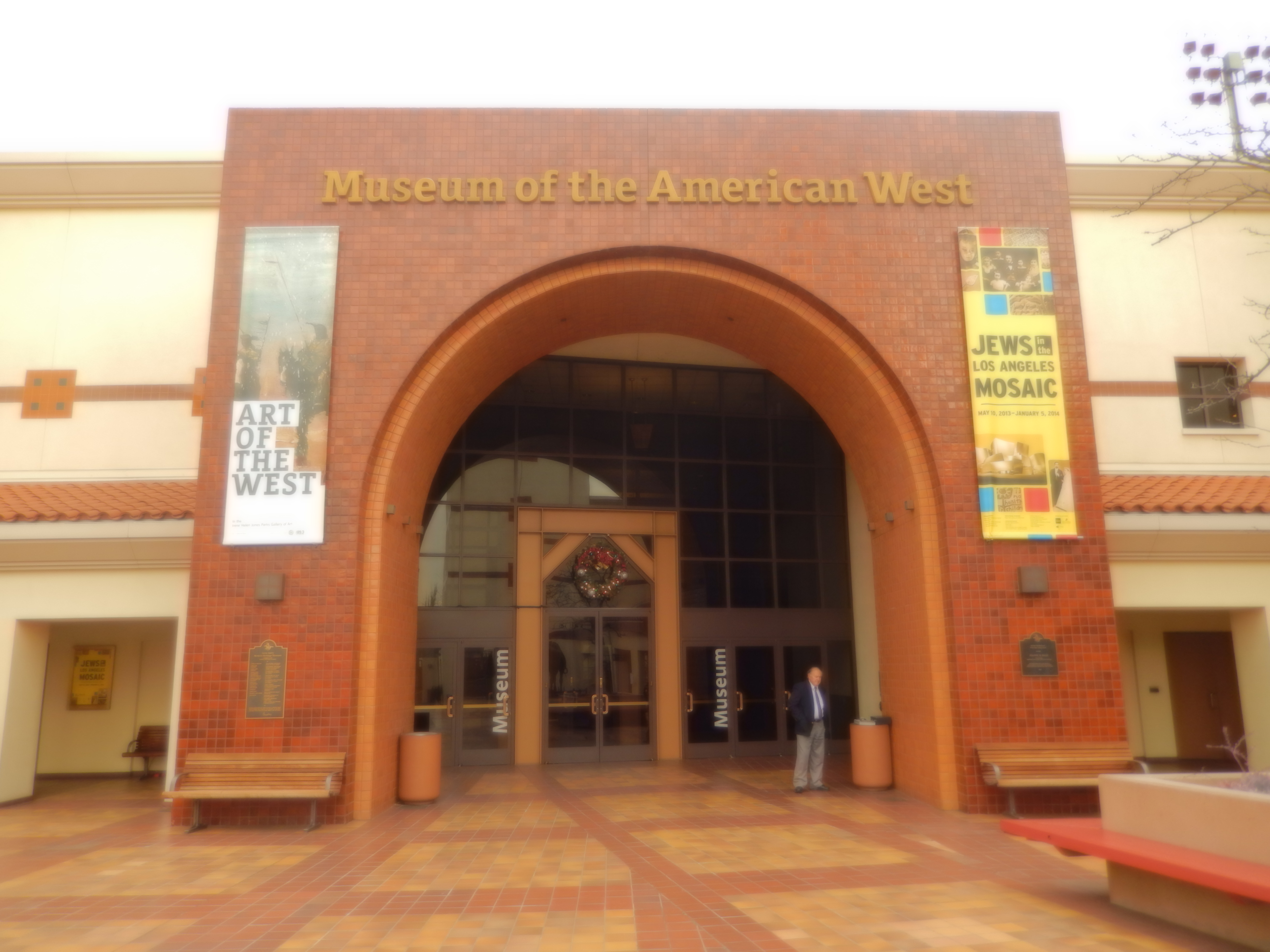
Autry Museum of the American West
Gene Autry sang cowboy songs, rode a horse named Champion, and appeared in nearly a hundred films between 1934 and 1954. He was also a shrewd businessman who parlayed his entertainment career into radio stations, television, and eventually a baseball team. In 1988, near the end of his life, he founded a museum dedicated to the American West—not the mythologized West of his movies, but the actual, complicated, multi-cultural West that those movies had largely ignored. The Autry Museum of the American West is that institution's ongoing attempt to live up to that more honest ambition.
What the Museum Is
The Autry is located in Griffith Park, directly across from the Los Angeles Zoo, in a building that houses 21,000 objects in its Griffith Park collection: paintings, sculptures, costumes, textiles, firearms, tools, toys, musical instruments. The range reflects the breadth of the West's history—from Spanish mission artifacts to nineteenth-century cowboy gear to twentieth-century Indigenous art. The museum attracts about 150,000 visitors annually. In 2013, the Autry renovated its Parks Gallery, reorganizing its permanent collection around themes rather than chronology—Religion and Ritual, Land and Landscape, Migration and Movement—a decision that allowed objects from different eras and cultures to be displayed in conversation with each other.
The Southwest Museum Collection
In 2003, the Autry acquired the Southwest Museum of the American Indian, the oldest museum in Los Angeles, founded in 1907 by Charles Fletcher Lummis (its Mt. Washington building opened in 1914). The acquisition brought with it an extraordinary collection: 238,000 objects, including 14,000 baskets, 10,000 ceramic pieces, 6,300 textiles and weavings, and more than 1,100 pieces of jewelry. The collection represents indigenous peoples from Alaska to South America, with particular depth in the cultures of California and the Southwestern United States. The Autry's Native American collection is, by its own accounting, second only to the Smithsonian's National Museum of the American Indian in the United States. A separate resources center in Burbank includes a ritual space where Indigenous people can access collection items for ceremonial use.
Native Voices at the Autry
Since 1995, the Autry has hosted Native Voices at the Autry, which the museum describes as the only equity theater in the country solely dedicated to producing new works by Native American, Alaska Native, and First Nation playwrights. Randy Reinholz, a member of Oklahoma's Choctaw Nation, and his wife Jean Bruce Scott have led the program for twenty years. Native Voices has produced more than 34 full productions and gone on more than 20 tours, with 23 new play festivals and work by 13 Native playwrights. The program exists because the Autry decided, early in its history, that the story of the American West could not be told responsibly without centering the voices of the people who were there before the settlers, and who are still here.
The Singing Cowboy's Legacy
Gene Autry died in 1998, ten years after founding the museum. The institution he created has evolved considerably from what a singing cowboy of the 1940s might have initially imagined. It has hosted Indigenous Pride LA events, presented contemporary art alongside historical artifacts, and built programming that regularly interrogates the mythologies of westward expansion rather than celebrating them uncritically. The museum's own collection includes the iconic painting American Progress by John Gast (1872), which depicts Manifest Destiny as a luminous female figure stringing telegraph wire across the continent while Native people and wildlife flee before her. The Autry doesn't hide the painting. It contextualizes it. That, in miniature, is what the museum does.
From the Air
Located at 34.15°N, 118.28°W in Griffith Park, Los Angeles. The museum sits at the eastern edge of the park, adjacent to the Los Angeles Zoo. From the air at 2,000–3,000 feet MSL, Griffith Park appears as a large green expanse on the northern edge of metropolitan Los Angeles, with the Autry visible near its eastern entrance on Crystal Springs Drive. Nearest airports: KBUR (Burbank-Bob Hope, ~4 miles north), KVNY (Van Nuys, ~7 miles northwest).