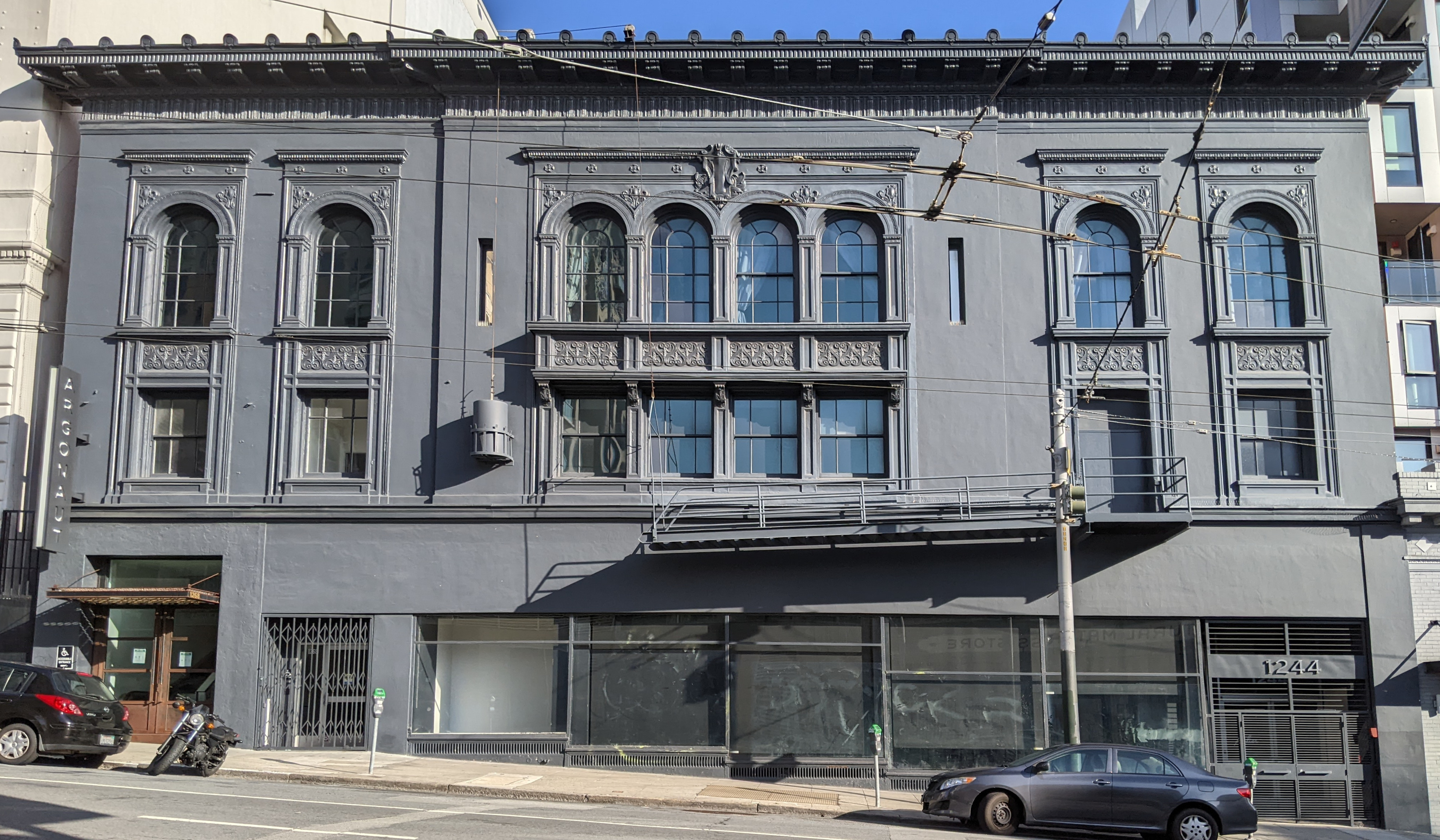
Avalon Ballroom
Before it became a temple of psychedelic rock, the Avalon Ballroom at 1244 Sutter Street was a dance academy called Puckett's College of Dancing. By 1915, couples were fox-trotting across its wooden floor. Half a century later, the Grateful Dead, Big Brother and the Holding Company, Jefferson Airplane, and Quicksilver Messenger Service were playing the same room while liquid light shows pulsed on the walls and the audience danced in ways that would have horrified Professor Puckett.
The Ballroom and the Movement
From roughly 1966 to 1969, the Avalon Ballroom was one of the two essential venues of the San Francisco counterculture, sharing that distinction with Bill Graham's Fillmore. Promoter Chet Helms, working through the Family Dog collective, booked the acts and created the atmosphere. The Avalon's shows were more communal and less commercially driven than Graham's operations -- Helms was a true believer in the culture rather than a businessman who recognized its market value. The concert posters, designed by artists like Stanley Mouse and Alton Kelley, became art objects in their own right, defining the visual language of psychedelic rock.
Sound and Light
The Avalon's shows were multimedia experiences before the term existed. Light artists projected oil-and-water slides, film loops, and colored gels onto the walls and ceiling, creating an immersive visual environment that merged with the music. The bands played long, improvisational sets that encouraged dancers to lose themselves in sound and movement. The room was intimate by modern concert standards, holding roughly 500 people, which meant the boundary between performer and audience was thin. Janis Joplin sang there before fame consumed her. Jerry Garcia played there while the Dead were still a local band. The Avalon was where the San Francisco Sound was forged, night after night, in a former dance school.
After the Music Stopped
The original run of counterculture shows ended around 1969 as the movement fragmented and commercial pressures transformed the music industry. The venue had brief revivals in later decades but never recaptured the energy of those original years. The building at 1244 Sutter Street still stands in the Polk Gulch neighborhood, though its current use bears no resemblance to its countercultural past. The legacy lives in the music, the posters, and the memories of people who were there -- or who wish they had been. The Avalon Ballroom was a specific place at a specific moment, and like all such moments, it could not be sustained. It could only be remembered.
From the Air
Located at 37.79°N, 122.42°W in the Polk Gulch neighborhood of San Francisco at 1244 Sutter Street. The building is within the urban grid northwest of downtown. KSFO is approximately 10 nm south.