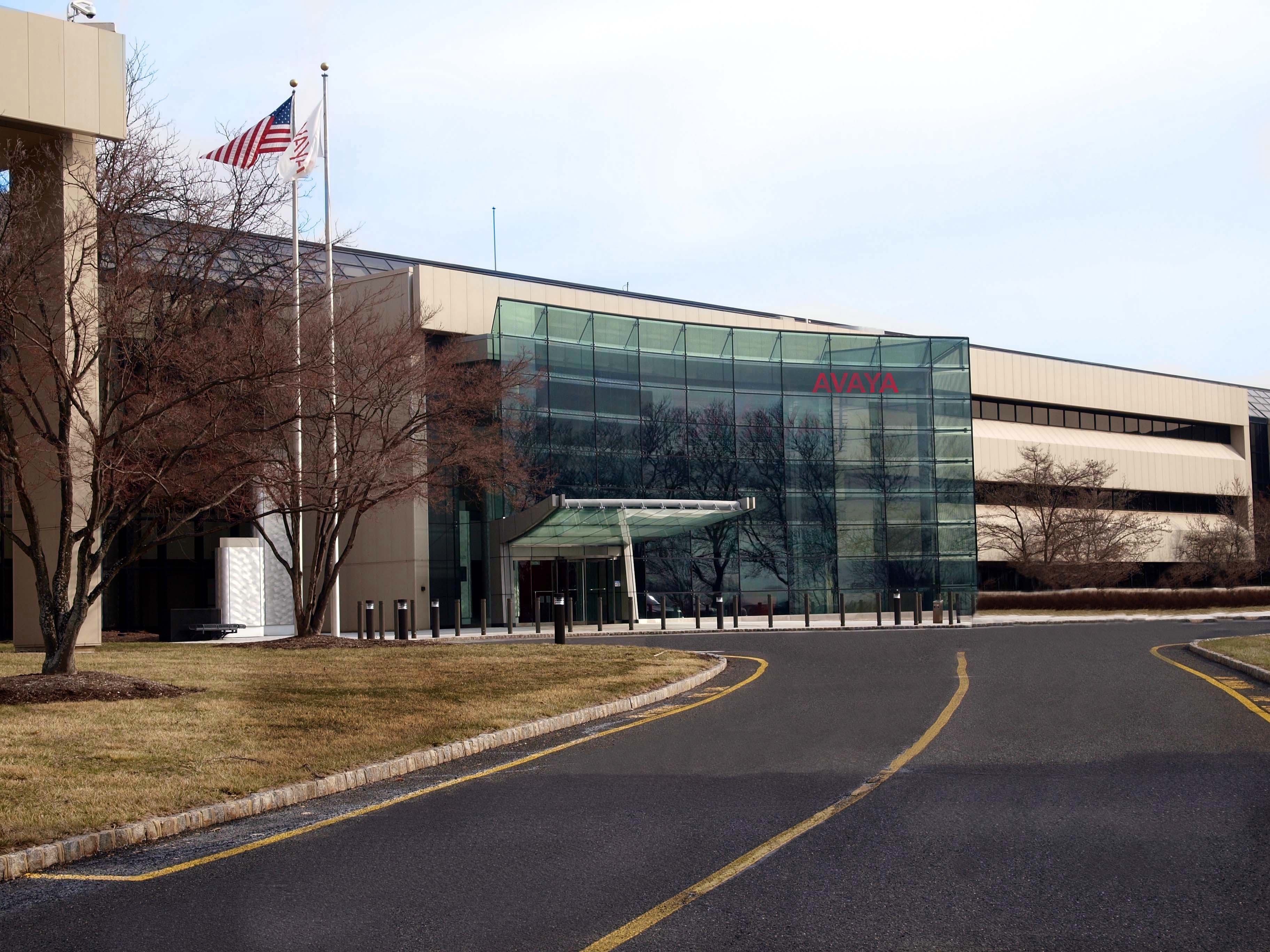
Avaya
Every time you pick up a desk phone in a corporate office, there is a reasonable chance that the system routing your call was built by Avaya. The New Jersey-headquartered company traces its lineage through one of the most consequential corporate breakups in American history: the dismantling of AT&T's Bell System. Avaya was spun off from Lucent Technologies in 2000, which was itself a spinoff from AT&T in 1996, making the company a grandchild of the telephone monopoly that Alexander Graham Bell's invention created.
From Bell Labs to Silicon Valley
Avaya inherited the enterprise communications division of Lucent Technologies, which had inherited it from AT&T, which had developed it at Bell Labs. The technology behind business telephone systems, conference calling, voicemail, and unified communications passed through each corporate restructuring, accumulating decades of engineering refinement. When Avaya emerged as an independent company in 2000, it carried with it the intellectual heritage of Bell Labs, one of the most productive research institutions in history, adapted to the specific needs of business communications.
The Business of Connection
Avaya's products serve the infrastructure of office life that most people take for granted. Phone systems, contact center software, video conferencing platforms, and unified communications suites are the invisible plumbing of corporate connectivity. The company's solutions serve organizations from small businesses to Fortune 500 corporations, handling everything from a receptionist's call routing to a multinational's global video conferencing network. The transition from hardware-based telephone systems to cloud-based communications platforms has been Avaya's defining challenge in the twenty-first century.
The Quiet Giant's Long Road
Headquartered in Morristown, New Jersey, with significant operations in Santa Clara, Avaya operates in the shadow of consumer-facing tech giants whose products are household names. Business communications infrastructure lacks the glamour of social media or consumer electronics, but it is no less essential. The company navigated two Chapter 11 bankruptcy filings — in 2017 and again in 2023 — emerging from the second as a private company with its debt substantially reduced. Through both restructurings, it continued adapting a legacy built on copper wire and circuit boards to a world of software and services. Its products remain more likely to be encountered in an office cubicle than a consumer's pocket.
From the Air
Located at 37.39°N, 121.98°W in Santa Clara. Norman Y. Mineta San Jose International Airport (KSJC) is approximately 3 miles southeast. The company's campus is in the dense commercial corridor of north Santa Clara, near Great America and Levi's Stadium.