Baarle
Walk into the cafe and look down. A line of metal studs runs across the floor, sometimes between tables, sometimes right under your chair. Step over it and you have crossed an international border. This is Baarle, where the boundary between Belgium and the Netherlands does not behave like a border anywhere else on earth. It zigzags through living rooms, slices behind shop counters, and at one house on Loveren Street it runs directly under the front door, leaving the owners with both a Belgian house number, 2, and a Dutch house number, 19. The little national flags screwed beside every house plaque are not whimsy. They are addresses.
Twenty-Two Pieces of a Puzzle
The geography of Baarle reads like a riddle. The Belgian municipality, Baarle-Hertog, consists of 16 separate exclaves sitting inside Dutch territory. Inside seven of those Belgian patches, smaller Dutch pockets of Baarle-Nassau appear, like the dots in the eyes of a face. An eighth Dutch enclave hides in Belgian territory near Ginhoven. There is even a quadripoint, a single spot shared by the corners of two Belgian exclaves. The pattern is not a quirk of cartographers but a fossil. In 1198, Henry I, Duke of Brabant, parcelled out paying farmland to one neighbour and held onto the rest, and the resulting jumble of medieval rents and revenues hardened into a national boundary that no surveyor ever quite straightened. The final line, including a previously neutral grassland, was only fixed in 1995.
The Front Door Rule
Two countries, two sets of laws, one continuous main street. Practical life requires improvisation. The voordeurregel, or front door rule, decides which country a building belongs to: whichever side the entrance opens onto. When Belgian shops were allowed to open on Sundays and Dutch ones were not, owners of buildings that straddled the line were known to relocate their doors. Fireworks legal in Belgium are not in the Netherlands, so the Belgian half of town has a fireworks store open all year. Smuggling was once a way of life here. After the Second World War, butter moved south from Dutch farms into Belgian kitchens. These days the contraband is mostly bottle rockets being slipped north for New Year's Eve.
Two of Everything
Baarle-Hertog and Baarle-Nassau each have their own mayor, town council, church, and police station, though the officers share an office on Parallelweg. The cultural centre has two front doors, one labelled 5 Pastoor de Katerstraat for Belgium and one labelled 7 for the Netherlands, with the international border running through the building itself. Rubbish gets collected twice a week, once by the Dutch service and once by the Belgian. Electricity flows from TenneT on Dutch streets and from Belgian suppliers on the others, sometimes alternating house by house. Telephone calls between the two halves of the village ring as local calls by special arrangement. The fire brigades finally merged in 2010, and Dutch and Belgian volunteers now ride out together when something burns.
The Bels Lijntje
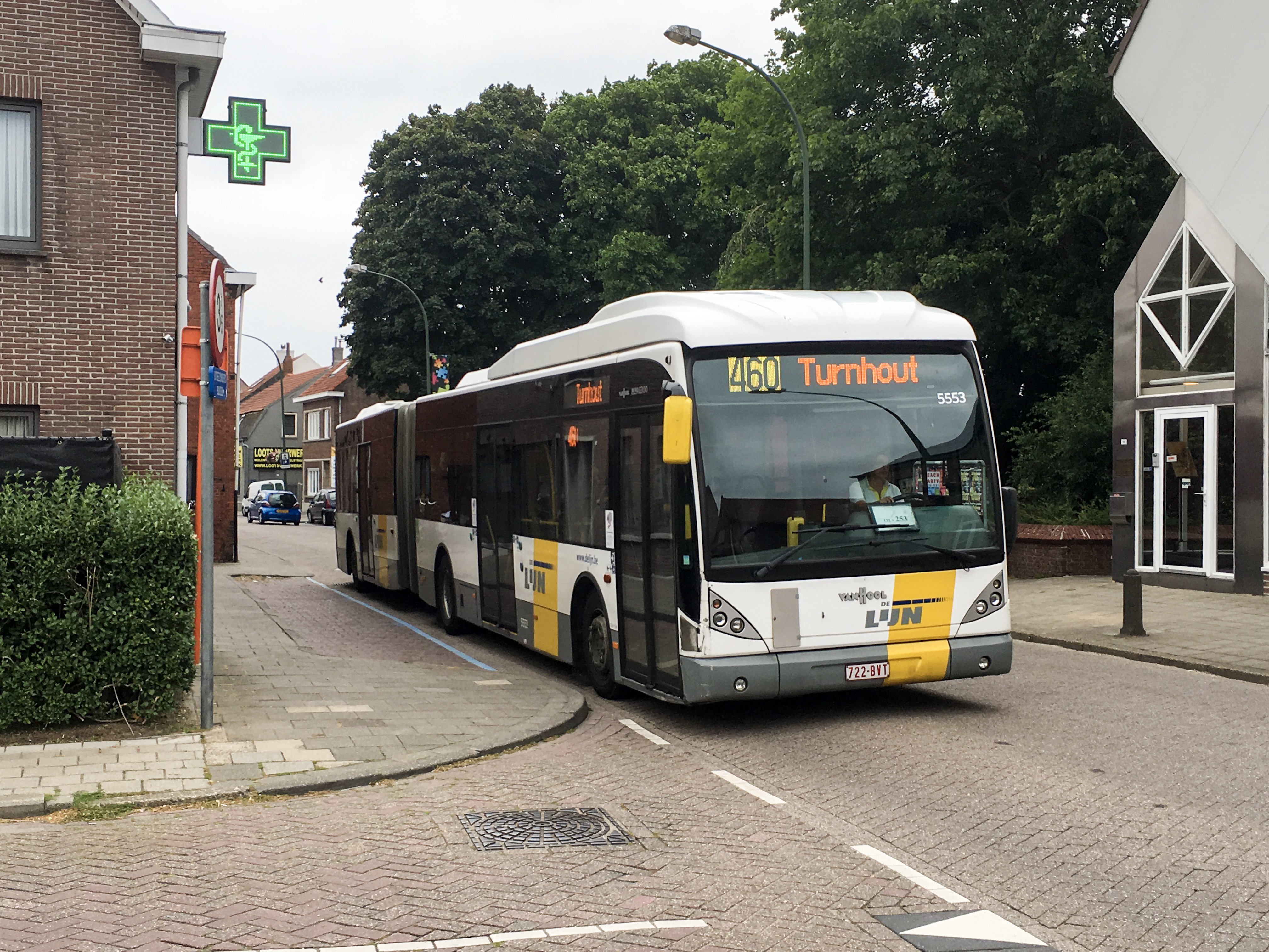
Once, two grand railway stations stood here back to back across the border, Baarle Grens on the Dutch side and Weelde Station on the Belgian. The line ran from Tilburg down to Turnhout from 1867 until 7 October 1934, when the trains stopped. The tracks were pulled up, and for decades the corridor sat quiet. Then someone had a better idea. Today the old railbed is the Bels Lijntje, a 31-kilometre cycle path that strings together Riel, Baarle, and Turnhout through woods, polder, and stream valleys. Cyclists cross the international border countless times without noticing, which is, in the end, the most Baarle thing of all.
Living the Loophole
The European Union has dulled the sharper differences. Customs posts are gone, smuggling is less lucrative, and the absurdities feel less urgent than they did under separate currencies. But the everyday strangeness remains. Tax law, school registration, and even where you can legally buy certain magazines still depend on which side of a brass stud your shop sits on. Local clubs come in matching pairs, like Gloria US on the Dutch side and KVV Dosko on the Belgian, and the carnival association De Grenszuukers, the border-seekers, leans into the joke. Baarle is the rare place where a geopolitical accident has hardened into a charming way of life, neither country quite willing to tidy up the line.
From the Air
Baarle sits at 51.44 N, 4.93 E in the rolling sand country south of Tilburg, on the Dutch-Belgian border. Cruise overhead at 3,000-5,000 feet for a fine view of the patchwork field pattern, though the international border is invisible from the air. Nearest controlled airports are Antwerp (EBAW) about 35 km southwest and Eindhoven (EHEH) about 45 km east. Schiphol (EHAM) is roughly 100 km north. Visibility is typically good in summer but the Low Countries can be hazy or socked in by low stratus much of the year.