Badaguan
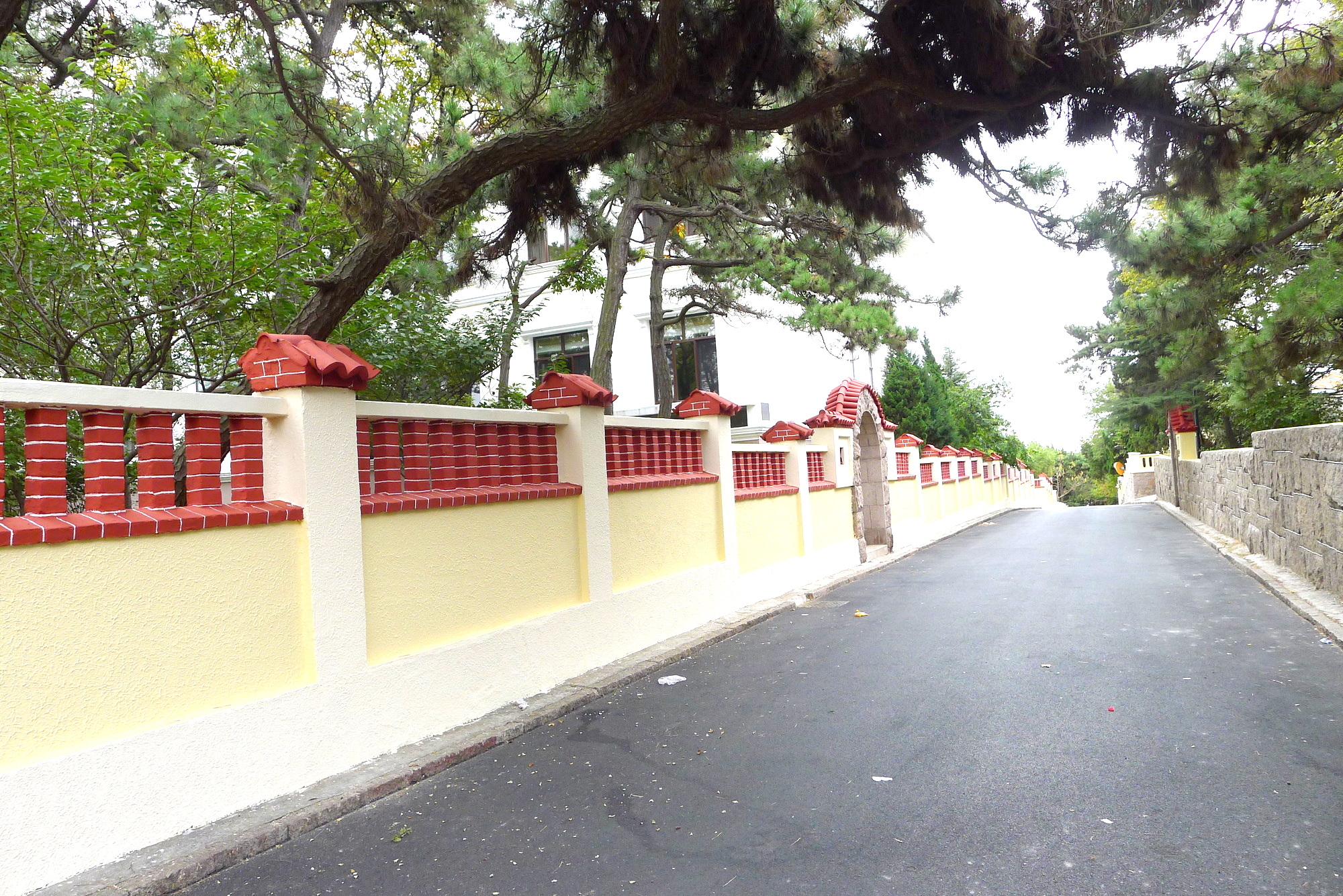
Walk down any street in Badaguan and you might forget which continent you are on. The villas lining the avenues could belong to a resort town on the Baltic coast or a leafy suburb of Munich. Their architectural styles span half of Europe: Tudor half-timbering next to Romanesque stonework, Russian dachas near Scandinavian lodges. Each street is planted with a single species of tree, so that moving from one block to the next changes the canopy overhead as completely as crossing a border. The streets themselves carry the names of China's most famous military passes and fortresses, a reminder that this most European-looking neighborhood sits firmly on the coast of Shandong Province.
A German Colony's Residential Dream
Badaguan was born during Qingdao's years as a German protectorate, a period that lasted from 1897 to 1914. When Germany leased the Kiautschou Bay territory from the Qing dynasty, it set about building a city that would serve as both a naval base and a model of German urban planning on Chinese soil. Badaguan was developed as a residential area for the colony's German inhabitants, laid out with wide, tree-lined streets and generous lots for detached villas. The result was something unique: a neighborhood designed by German architects in an eclectic range of European styles, set against the backdrop of the Yellow Sea. Bordered by No. 1 Beach on the west and No. 3 Beach on the east, Badaguan occupied some of the most desirable coastal real estate in the new city.
Streets Named for Fortresses
The neighborhood's name translates roughly to "Eight Great Passes," a reference to the famous military fortresses and mountain passes that guarded ancient China's frontiers. Shanhaiguan Road recalls the fortress where the Great Wall meets the sea. Jiayuguan Road takes its name from the western terminus of the wall in the Gobi Desert. Juyongguan Road references the pass that guards the northern approach to Beijing. Other streets bear the names of Hanguguan, Wushengguan, Zhengyangguan, Linhuaiguan, Ningwuguan, Zijingguan, and Shaoguan. The north-south streets intersect with east-west avenues, creating a grid that is navigable yet never monotonous, because each street's distinctive tree canopy gives it a character all its own.
The Colorful Rock Building
At the south end of No. 2 Beach, perched on a rocky outcropping overlooking the sea, stands Huashi Lou, a five-story stone villa that blends Greek, Gothic, and Romanesque influences into a single striking structure. Built in 1932 from marble and stone, its multicolored exterior earned it the local nickname "the colorful rock building." The villa features a prominent turret that gives it an almost medieval silhouette against the ocean backdrop. Notably, the building includes a concealed passageway that Chiang Kai-shek reportedly used to reach the seashore, a detail that places Huashi Lou within the broader political history of modern China. Today, the building is a popular tourist attraction and one of Badaguan's most photographed landmarks.
Brides, Beer, and Blossoms
Badaguan has become one of Qingdao's most popular destinations for wedding photography. On any given weekend, dozens of newlywed couples can be seen posing along the shoreline and amid the greenery, their formal attire a striking contrast to the casual beachgoers nearby. The neighborhood's combination of European architecture, tree-lined avenues, and coastal scenery provides a ready-made backdrop that would cost a fortune to replicate in a studio. Each August, the Badaguan Beer Festival adds a different flavor, with musical performances, dance shows, and beer-drinking competitions running from August 10 to 25. The festival is a smaller, more intimate counterpart to Qingdao's famous International Beer Festival, rooted in the same German brewing traditions that the colony introduced over a century ago.
From the Air
Located at 36.05N, 120.35E along the coastline of Qingdao, Shandong Province. Badaguan sits between No. 1 Beach and No. 3 Beach on the city's southern waterfront. The neighborhood's tree-lined grid of streets and European-style architecture are visible from lower altitudes. Nearest airport is Qingdao Jiaodong International Airport (ZSQD). The distinctive coastal setting with beaches flanking both sides of the neighborhood is identifiable from 3,000-5,000 feet.