Dinosaur Provincial Park: The Killing Fields of the Cretaceous
The Red Deer River cuts through 75 million years of death. Dinosaur Provincial Park occupies a stretch of Alberta badlands where more dinosaur species have been discovered than any comparable area on Earth - 44 species, including nearly 500 complete skeletons. The concentration is almost absurd: Tyrannosaurs, hadrosaurs, ceratopsians, and creatures with no popular names lie jumbled in sediments that erode constantly, revealing new specimens with every season's rain. Museums worldwide display specimens from this single river valley. The quarries are still productive; the bones keep appearing. The badlands are a killing field of the Cretaceous, preserved by geological accident, revealed by erosion, still far from exhausted.
The Graveyard
The area now called Dinosaur Provincial Park was coastal lowland 75 million years ago, between the Western Interior Seaway and the rising Rocky Mountains. Rivers carried dinosaur carcasses downstream, depositing them in sandbars and channels. Some specimens are articulated - complete skeletons preserved where they died. Others are bone beds, where floods concentrated remains from hundreds of individuals. The preservation was exceptional; even soft-tissue impressions survive in some specimens. When the rivers changed course and the sea retreated, the sediments were buried and forgotten.
The Discovery
The first dinosaur bones were recognized here in 1884, launching what became known as the Great Canadian Dinosaur Rush. Museums competed fiercely: the Geological Survey of Canada, the Royal Ontario Museum, the American Museum of Natural History. Collectors stripped the most accessible bone beds, shipping specimens by the ton on barges down the Red Deer River. By the 1920s, the richest surface deposits were exhausted. But erosion continued, exposing new specimens every year. The park was established in 1955 to protect what remained.
The Species
Dinosaur Provincial Park has yielded 44 dinosaur species - more than any other site on Earth. The diversity reflects a rich ecosystem: giant herbivores (the hadrosaurs Corythosaurus and Parasaurolophus), armored dinosaurs (Euoplocephalus), horned dinosaurs (Centrosaurus, Styracosaurus), and predators including tyrannosaurs and the smaller Gorgosaurus. The park preserves not just bones but ecological context - whole communities of organisms, their relationships interpretable from their proximity in death. Scientists still describe new species from specimens collected decades ago.
The Landscape
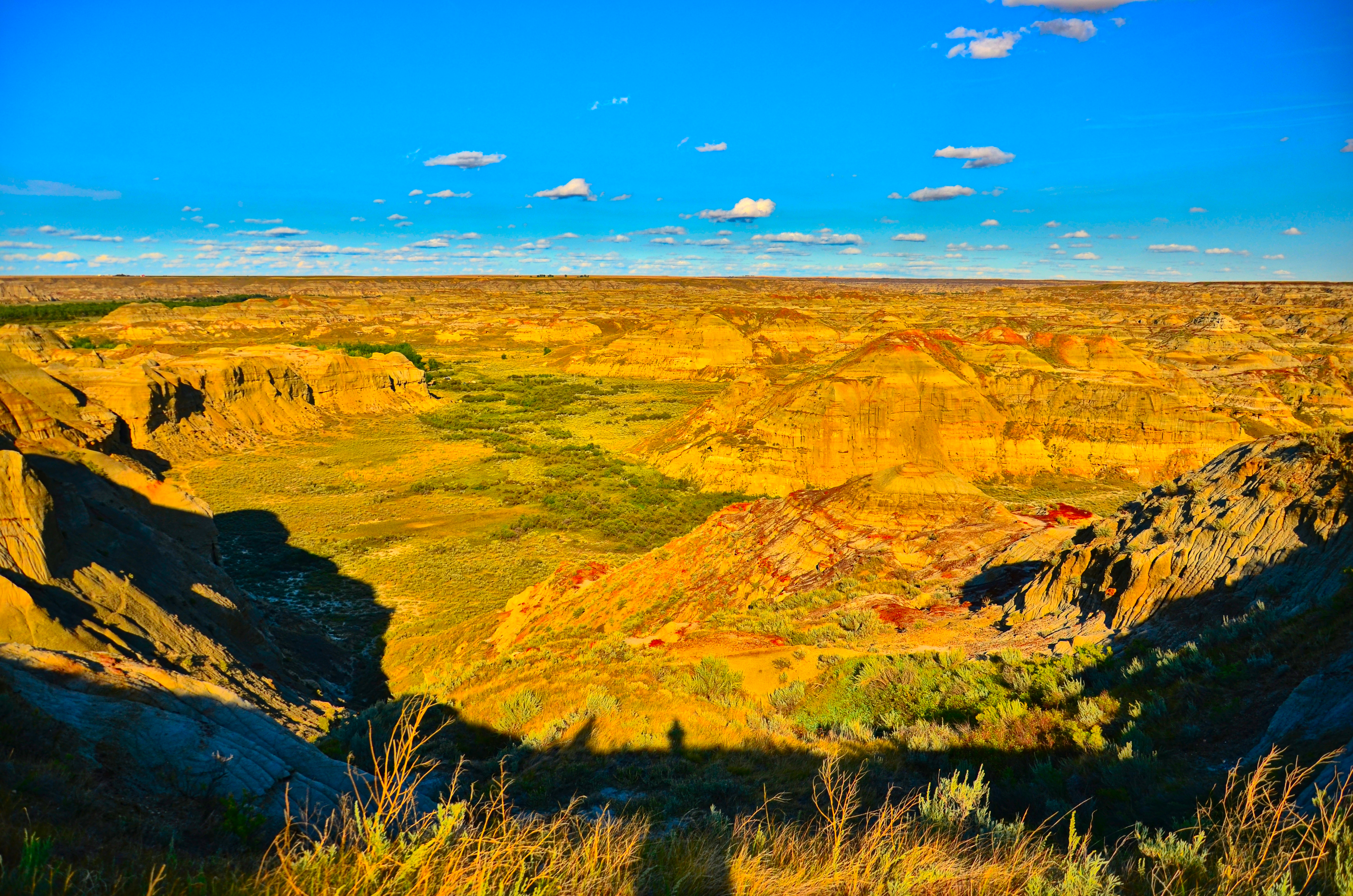
The badlands themselves are spectacular - hoodoos, coulees, and striped cliffs carved by erosion into shapes that look designed. The terrain is hostile to humans: no shade, no water, extreme heat in summer and bitter cold in winter. But the erosion that makes life difficult makes paleontology possible. Every rain exposes new bone. Park staff patrol annually, marking specimens before collectors can disturb them. The most productive areas are restricted; visitors access them only on guided tours. The bones are protected by the difficulty of the land that reveals them.
Visiting Dinosaur Provincial Park
Dinosaur Provincial Park is located 48 kilometers northeast of Brooks, Alberta, via Highway 544. The park has a visitor center, campground, and interpretive programs. The badlands core is a natural preserve accessible only through guided tours (book in advance for bus tours and hikes). Guided tours access active quarries and restricted areas. The public loop drive offers badlands scenery and self-guided trails. Brooks has services; Calgary is 200 kilometers west. The Royal Tyrrell Museum in Drumheller (2.5 hours northwest) provides context for specimens collected here. Visit in spring or fall; summer heat is intense. The badlands photograph best in morning or evening light when shadows define the terrain.
From the Air
Located at 50.75°N, 111.52°W in southern Alberta. From altitude, Dinosaur Provincial Park appears as an eroded gash in the prairie - flat farmland suddenly giving way to dramatic badland terrain along the Red Deer River. The striped sediment layers are visible from high altitude; hoodoos and coulees create complex shadows. The terrain is clearly distinct from surrounding agricultural land. Brooks is visible to the southwest. The Trans-Canada Highway passes to the south. This unassuming stretch of badlands has produced more dinosaur species than any comparable area on Earth - a UNESCO World Heritage Site that looks prehistoric because it is.