Badut Temple: East Java's Oldest Stone Prayer
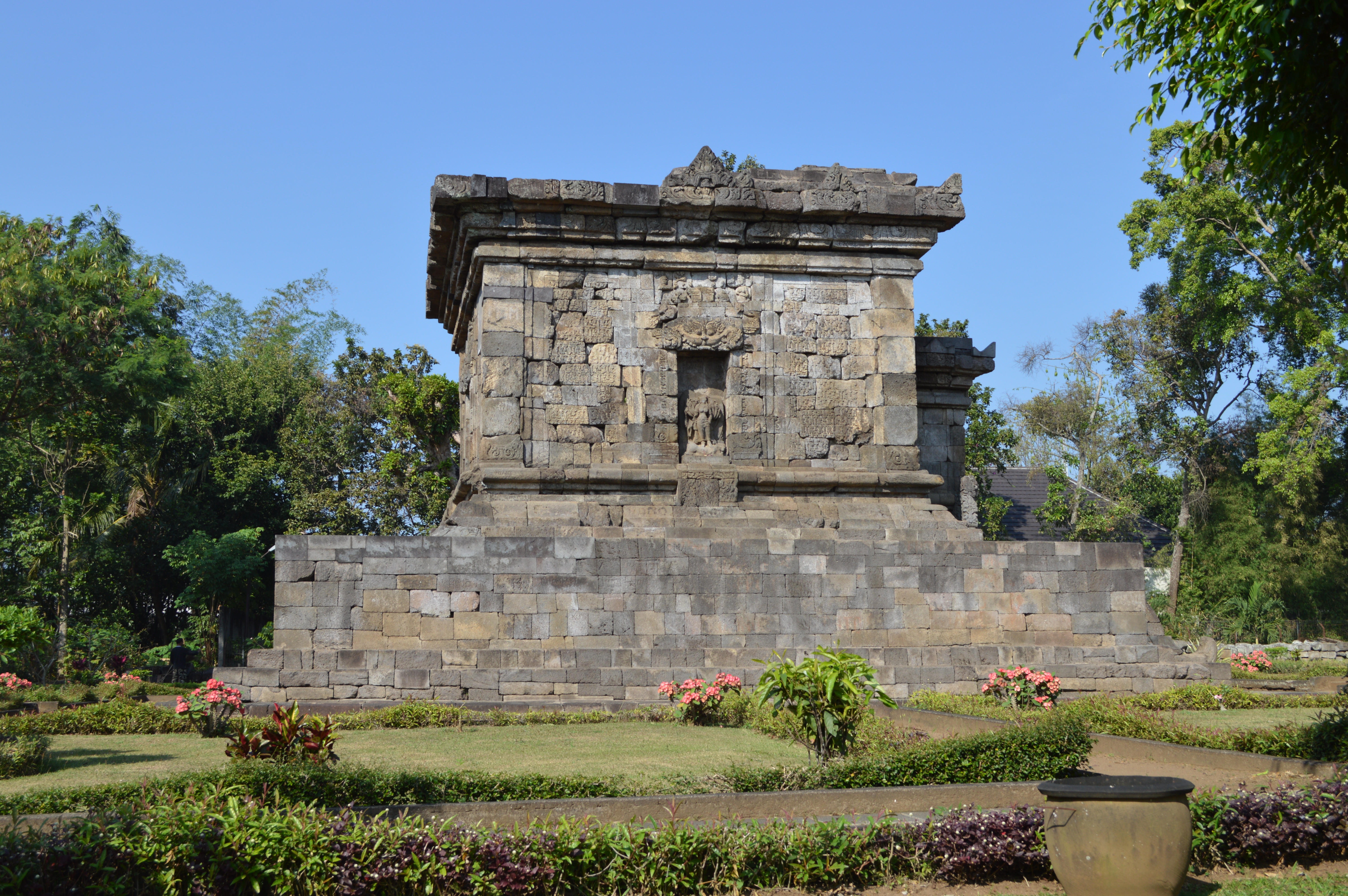
The locals call it Badut, which in modern Indonesian means "clown." Scholars suspect the name has nothing to do with comedy. The Sanskrit term Bha-dyut refers to the Canopus star -- known in Hindu tradition as Agastya, the sage who carried Vedic civilization southward. It is a fitting etymology for a temple that carried Central Javanese architectural traditions east across the island, arriving in what is now Malang around 760 CE and becoming the oldest Hindu temple in all of East Java. When a Dutch controller named Maureen Brecher stumbled upon a mound of andesite rubble and soil in 1921, he was looking at roughly twelve centuries of collapse. What emerged from the subsequent excavation was a building that connects modern Java to the deep roots of Hindu worship in Southeast Asia.
A Kingdom's Stone Witness
The Dinoyo inscription, discovered in the nearby village of Merjosari, offers the closest historical anchor for Badut Temple. Written in Sanskrit using old Javanese script, it employs a chandrasengkala -- a poetic chronogram -- reading nayana vayu ras, which corresponds to 682 in the Saka calendar, or 760 CE. The inscription names King Gajayana, ruler of the Kanjuruhan Kingdom, a polity that controlled the Malang basin during a period when Hindu and Buddhist kingdoms were competing for influence across Java. Indonesian historian Purbatjaraka connected the temple to this inscription, though the link remains debated among scholars. What is not debated is the temple's age. Its architectural style aligns with Central Javanese candi of the 8th century, making it an outlier in a region where most surviving temples date to the later Singhasari and Majapahit periods.
Reading the Ruins
What survives of Badut Temple is the base and the body -- the foot and torso of what was once a three-part structure crowned by a tiered pyramidal roof. The roof is gone entirely, its stones scattered or repurposed over the centuries, leaving too few fragments for reconstruction. The base is remarkable for its plainness: a two-meter-tall rectangular pedestal with no seams and no decoration whatsoever, a stark foundation that contrasts with the more ornate elements above it. On the west side, stairs lead to the entrance, flanked by carvings that time has not been kind to. Enough remains to make out floral motifs surrounding the figure of a person playing a flute -- a musician frozen in stone for over a millennium. The entrance portal still bears its kala-makara decoration, the fearsome face above the doorway that marks the threshold between the mundane world and the sacred interior.
The Inner Sanctum
Step through the portal and you enter the garba griha, the womb-chamber at the heart of Hindu temple architecture. In the center stands a lingam and yoni, the combined symbol of Shiva and the principle of fertility -- male and female creative energy united in stone. Small niches line the surrounding walls, once home to a pantheon of Hindu deities. Comparing Badut to contemporary temples like Sambisari and Gebang, archaeologists can reconstruct the intended arrangement: Mahakala and Nandishwara flanking the door, Durga Mahisasuramardini in the north niche, Ganesha to the east, and Agastya -- that same sage encoded in the temple's name -- to the south. Of all these figures, only Durga remains, still standing in her niche after twelve hundred years. The rest have vanished, carried off by time, looters, or the jungle that consumed the temple before Brecher's discovery.
Central Java's Eastern Outpost
Badut Temple presents a puzzle that reveals something about how Javanese civilization spread. Most temples near Malang -- Singhasari, Kidal, Jago -- follow the architectural conventions of the later East Javanese period. Badut does not. Its proportions, its ornamentation, its structural logic all belong to the Central Javanese tradition, the same school that produced the great temples of Prambanan and Borobudur hundreds of kilometers to the west. The temple stands as evidence that Central Javanese religious and artistic influence reached the Malang basin earlier than the later kingdoms that would dominate the region. Restored in 1925-1926 under the supervision of B. De Haan from the Archaeological Service of the Dutch East Indies, Badut today sits in Karang Besuki village, five kilometers west of central Malang -- an ancient anomaly in a landscape defined by its younger neighbors.
From the Air
Located at 7.96°S, 112.60°E, approximately 5 km west of central Malang, East Java, Indonesia. The temple sits in the Karang Besuki village area within Dau subdistrict. From the air, Malang's urban grid is the primary landmark, with the temple grounds a small green patch in the suburban fringe. Abdul Rachman Saleh Airport (WARA) is the nearest field, roughly 15 km to the east. Juanda International Airport (WARR) in Surabaya lies about 90 km to the north. Morning visibility is typically best before tropical convective buildup begins in the afternoon.