Bagamoyo
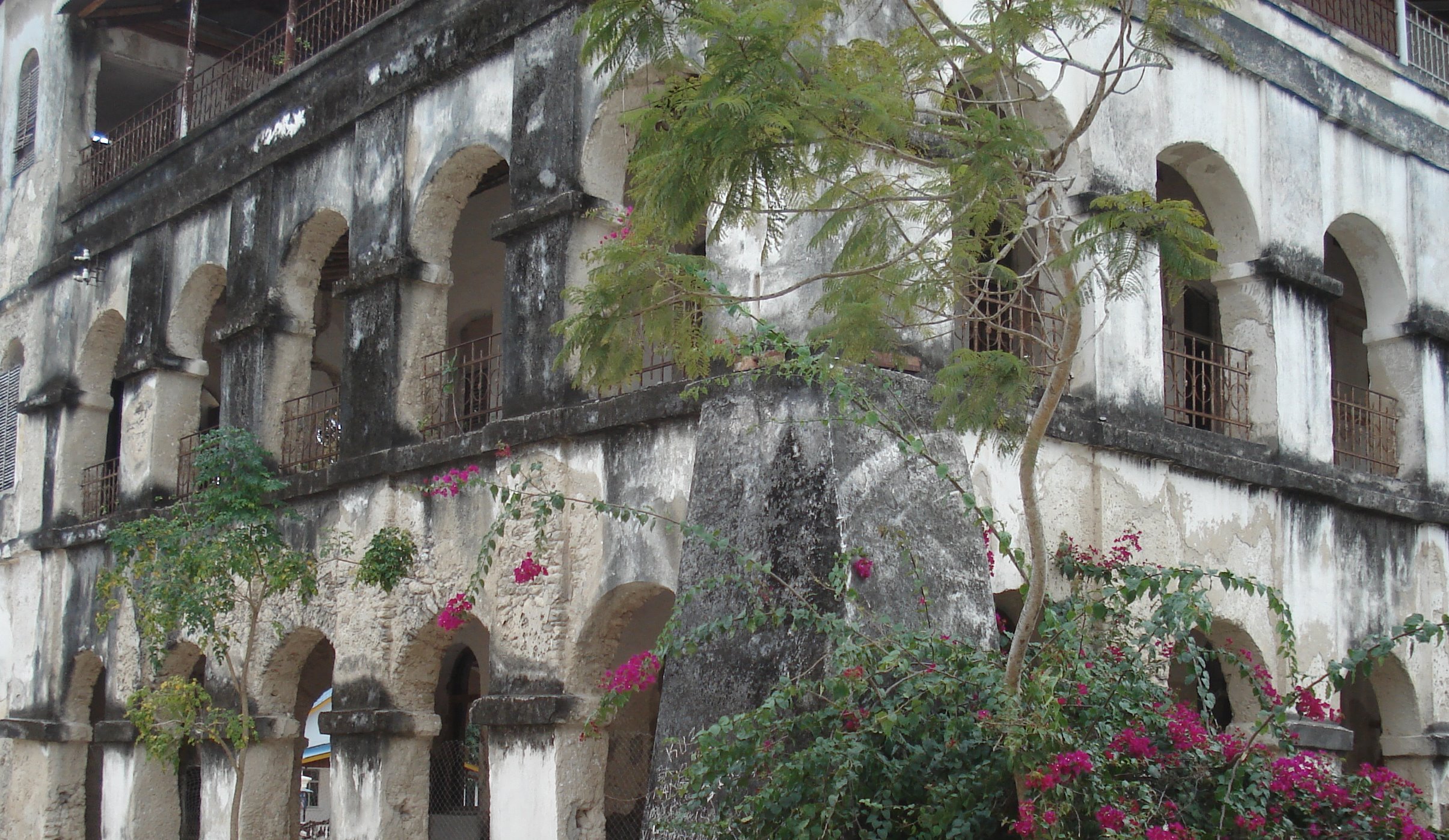
Stand at the portal of the old German headquarters in Bagamoyo and you are standing where Burton, Speke, and Stanley began their journeys into the African interior. The carved wooden doorway frames a view of dusty streets and aging colonial buildings that were, for a few decades in the late 19th century, the most important gateway on the East African coast. Bagamoyo was the capital of German East Africa from 1886 until 1891, when the Germans moved their operations south to Dar es Salaam. The town has been in slow decline ever since -- but that decline has preserved something. Walk through the streets in daylight and you will find entrance portals with intricate Arabic carvings, German administrative buildings slowly losing their walls to weather and neglect, and a quiet that belies what was once one of the busiest trading towns between the Great Lakes and the sea.
The Architecture of Two Empires
Bagamoyo wears its colonial history on its facades. Arabic influence shows in the elaborately carved wooden door frames of merchant houses -- geometric patterns and floral motifs that echo the more famous examples in Zanzibar's Stone Town, though here they are often half-obscured by vegetation or peeling plaster. German buildings stand in a different register entirely: heavier, more utilitarian, designed for administration rather than beauty. The old German headquarters, the boma from the 1890s, and scattered warehouses give the town an architectural layering you can read like geological strata. European construction sits atop Omani commercial architecture, which in turn was built over Swahili foundations that date back centuries. Most of these buildings are rarely maintained, and their slow disintegration is part of their appeal -- a reminder that empires pass but the coral stone endures, at least for a while.
A Pilgrimage of Sorts
North of town, the Catholic Holy Ghost Mission compound holds a particular weight for those who know the story of David Livingstone. When the explorer died in 1873 in present-day Zambia, his followers Chuma and Susi carried his body over 1,500 kilometres to the coast. Bagamoyo was where Livingstone's remains rested for the last time on African soil before being shipped to London, where he was buried in Westminster Abbey. The mission itself, established in 1868, predates Livingstone's death and has its own complicated history intertwined with the region's ivory and caravan trade. Today it operates a small museum. The compound is walkable from town and offers a quiet contrast to the bustle of the main streets, where motorcycle taxis and three-wheeled bajaji compete for passengers alongside vendors selling rice, ugali, and pilau from roadside stalls.
Getting There and Getting By
Bagamoyo sits 70 kilometres north of Dar es Salaam on a good tarmac road. There is no direct bus -- travellers take a daladala minibus from Makumbusho station to Bunju Sokoni terminal, then transfer to another for the final stretch, a journey of two and a half to three hours including the wait. From the north, a newly paved road connects to Tanga. The town is compact enough to walk in a few hours, though bicycle rentals and bajaji are available for longer distances. For the more adventurous, dhow boats cross to Zanzibar in four to eight hours, though the sea can be rough and the boats are basic. Accommodations range from budget guesthouses near the bus stop to beachfront resorts north of town. The Poa Poa restaurant is locally famous, and street food vendors serve chips mayai -- an omelette stuffed with french fries -- in the evenings.
Coastline Beyond the Town
Bagamoyo's beaches stretch north along the Indian Ocean, largely undeveloped and striking in their emptiness compared to the resort coasts further south. The water is warm, the sand is white, and during low tide the shallow flats extend far out, revealing tidal pools and the occasional fisherman hauling in a net. Several small resorts dot the coastline north of town, offering swimming pools and ocean access for day visitors. The Bagamoyo College of Arts, located near the Millennium Hotel, draws students and artists from across Tanzania and has helped sustain a small but lively creative scene -- paintings, carvings, and jewellery appear in locally owned shops throughout the village and on the beaches themselves, where artisans sometimes approach visitors directly. It is a town that rewards slow exploration, where the point is not any single monument but the accumulated texture of a place that has been trading, praying, and weathering storms for centuries.
From the Air
Located at approximately 6.43S, 38.90E on Tanzania's coast, 70 km north of Dar es Salaam. From altitude, Bagamoyo is a compact coastal settlement with white sand beaches extending northward along the Indian Ocean. Zanzibar is visible across the channel to the east. Nearest major airport is Julius Nyerere International Airport (HTDA) in Dar es Salaam. The road from Dar es Salaam is visible as a ribbon running north along the coast. Saadani National Park lies further north along the shoreline.