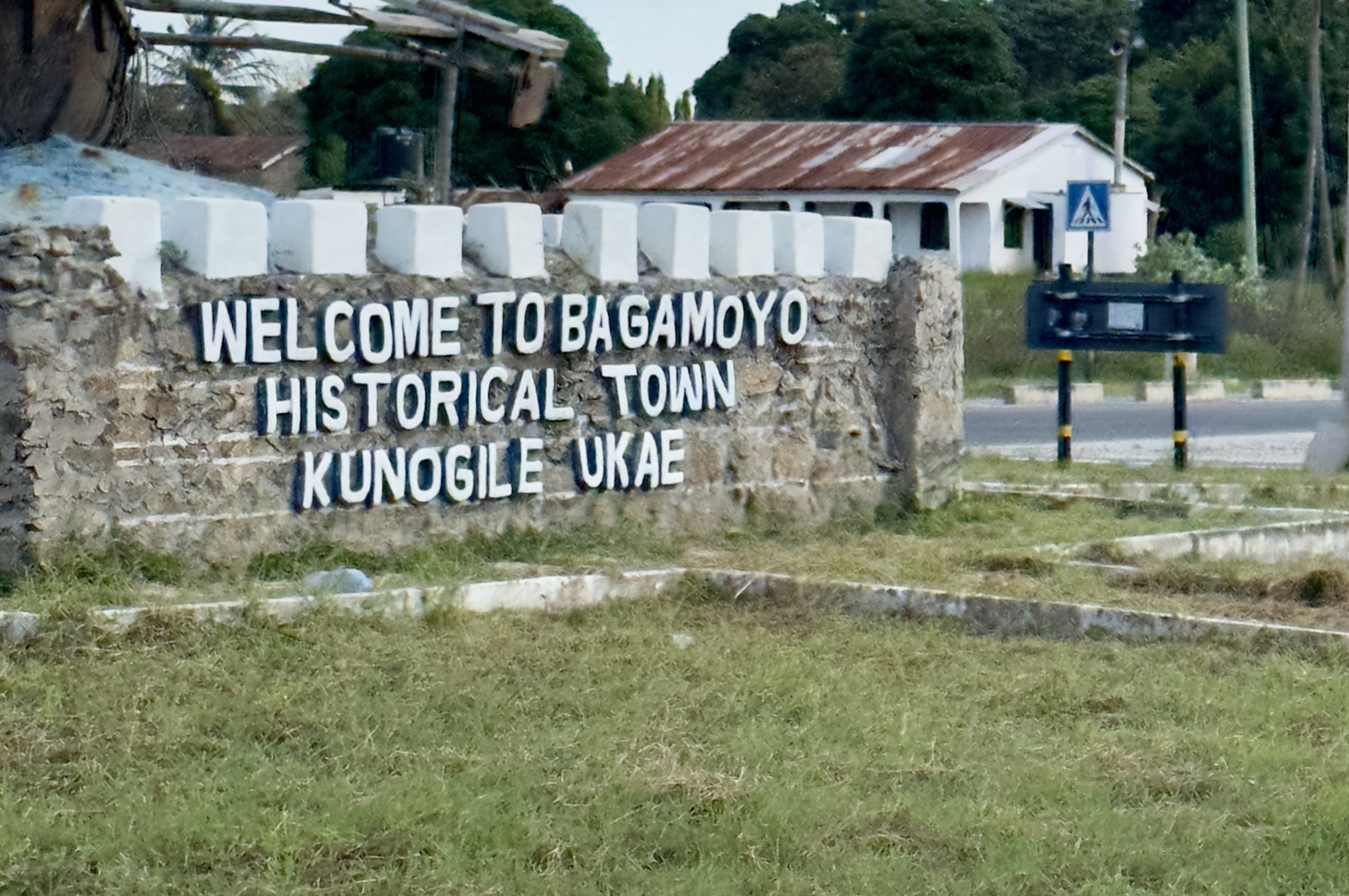
Bagamoyo Historic Town
The Nyamwezi porters had a song they chanted as they approached the coast: "Be happy, my soul, surrender all worry -- soon the place of your desires will be reached, the town of palms: Bagamoyo." They had been walking for months, carrying 70-pound ivory tusks across their shoulders from as far away as the Great Lakes region. Bagamoyo was where the burden ended. The town's name in Kiswahili translates to "take a load off your heart," and for the thousands of porters who arrived here each year, it was exactly that -- a place of rest, celebration, and the kind of pleasure that makes a man willing to do it all again next season.
From Fishing Village to Gateway of the Interior
Bagamoyo's origins are humble. In the 15th century, it was a small satellite settlement of Kaole, a few kilometres to the south, founded by the Zaramo people. The Shomvi, whose ancestors migrated from further north along the coast near Malindi in the mid-18th century, established what became the historic stone town. For decades it was a quiet fishing and farming community trading modest quantities of local goods, copal, and ivory for Indian cloth. Everything changed when Oman transformed Zanzibar into the dominant commerce hub of the western Indian Ocean in the early 1800s. Bagamoyo rose in tandem, becoming the most important trading town on the Mrima -- the coastal mainland of central East Africa. Each year, thousands of African porters arrived bearing ivory, gum copal, rubber, and cattle from the interior, then lingered for up to four months, exchanging goods for fabric, guns, and copper wire before heading home. The town's population was remarkably cosmopolitan: traders, financiers, farmers, fishermen, sailors, artisans, and porters from a dozen ethnic groups.
The Myth and the Reality of Slavery
Modern tourism marketing has cast Bagamoyo as a major hub of the East African slave trade. The evidence tells a more complicated story. Before 1850, Bagamoyo was too small to have supplied large numbers of enslaved people to the Indian Ocean trade system; that grim distinction belonged to Kilwa, much further south along the coast. Even after 1850, when Bagamoyo rose to economic prominence, British observers in Zanzibar never singled it out as a significant slaving port. A German government survey in the late 1890s found that roughly 15 percent of Bagamoyo's population were enslaved -- one of the smallest proportions among coastal towns. Dar es Salaam had twice as many enslaved people in 1891. Father Anton Horner, who founded the Catholic mission in Bagamoyo in 1868, identified Kilwa and Zanzibar as the epicentres of the slave trade but made no similar claims about Bagamoyo. Most freed people whom the missionaries aided had been purchased at the Zanzibar slave market or liberated by British naval patrols. Archaeological research at the caravanserai conducted in 2001-2002 under Professor Felix Chami of the University of Dar es Salaam found no evidence connecting the building to a slave market.
The Caravanserai and What It Really Was
If one building defines Bagamoyo, it is the caravanserai -- a large compound with a square courtyard surrounded by four rectangular wings of rooms and storage areas, with a two-story observation tower at its centre. It was built in 1890 by a Danish planter working for the German East Africa Company, not as a slave warehouse but as lodging for the massive porter caravans that descended on the town each year. German colonial tax records describe the compound flanked by ten long rectangular shelters, collectively housing up to 5,000 porters, each paying a half-rupee lodging charge. The Germans' motivation was administrative -- they wanted to organize the sprawling, unruly porter encampments scattered across town, not to regulate slaving. Today, the caravanserai serves as the local headquarters of the Tanzania Department of Antiquities, restored with funding from the Swedish International Development Agency. A signboard outside perpetuates the claim that 50,000 enslaved people passed through annually, but historians have documented how these numbers conflate porters with enslaved people in ways the archival evidence does not support.
Explorers, Missions, and Crumbling Stone
Bagamoyo's fame in the 19th century made it the jumping-off point for some of the most celebrated European expeditions into East Africa. Burton, Speke, and Henry Stanley all passed through here, using the town's well-established caravan routes to venture into what Europeans considered unknown territory. Stanley made three trips through Bagamoyo beginning in 1871. The Catholic Holy Ghost mission, established north of town, became associated with the memory of David Livingstone -- his body was brought here on its final journey from the interior before being shipped to London for burial at Westminster Abbey. Today, Bagamoyo's stone buildings -- the Old Fort dating to the German occupation, merchant houses with carved Arabic doorways, and places of worship -- stand in various states of weathered grandeur. Similar architectural forms appear in better-preserved condition at Stone Town in Zanzibar or Lamu in Kenya, both UNESCO World Heritage Sites. But Bagamoyo has something those places do not: the caravanserai, a monument not to horror but to the sheer physical endurance of the thousands of men who carried East Africa's trade on their shoulders.
From the Air
Located at approximately 6.44S, 38.90E on the Tanzanian coast, roughly 70 km north of Dar es Salaam. From altitude, Bagamoyo appears as a small coastal settlement with the Indian Ocean to the east and Zanzibar visible across the channel. The historic stone town is clustered near the waterfront. Nearest major airport is Julius Nyerere International Airport (HTDA) in Dar es Salaam. The ruins of Kaole are visible a few kilometres south along the coast. The Wami River delta lies to the north.