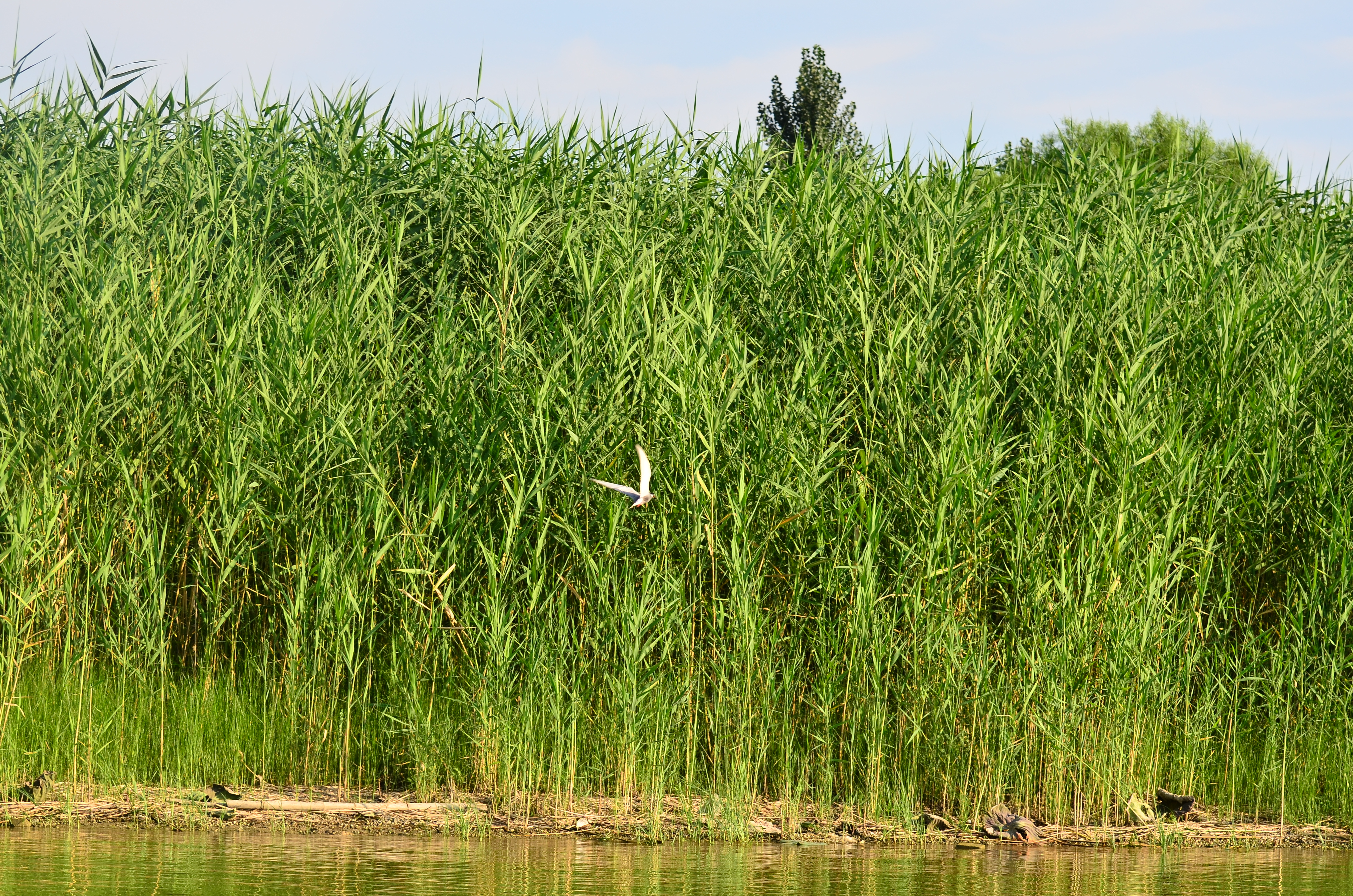
Baiyang Lake
Every Chinese schoolchild knows the story of Little Soldier Zhang Ga, the boy guerrilla who fought the Japanese among the reed beds and waterways of a vast lake in Hebei Province. Xu Guangyao's classic children's novel is set at Baiyang Lake, also known as Baiyangdian -- the largest freshwater body in northern China, located in what is now the Xiong'an New Area of Baoding. Called the "Kidney of North China" for its role in filtering and regulating the region's water systems, the lake covers a sprawling wetland where reeds grow taller than a person and lotus blooms carpet the surface in summer. It is a place where ecology, wartime resistance, and literature converge in a landscape that looks, from the air, like a green and silver labyrinth.
The Kidney of the North
Baiyang Lake gathers water from nine tributaries flowing down from the upper reaches of the Hebei river system. The resulting wetland is home to approximately 50 varieties of fish and multiple species of wild geese, ducks, and other birds. Reed beds stretch across the shallows, and lotus flowers cover the lake's surface during the growing season. For the communities around its shores, the lake has historically been a livelihood -- local residents harvest fish, reeds, and lotus from its waters and surrounding marshes. The lake earned its nickname as northern China's kidney because of its ecological function: filtering water, recharging groundwater, and moderating the local climate in a region where water is scarce and precious.
Guerrillas in the Reeds
During the War of Resistance against Japan (1937-1945), Baiyang Lake became a theater of guerrilla warfare. Local residents and communist fighters used the lake's dense reed beds, winding waterways, and scattered islands as natural cover against the Japanese occupation forces. The wetland terrain that made the lake beautiful also made it nearly impossible for conventional armies to control. Small boats could navigate channels invisible from shore. Fighters could disappear into reed beds that swallowed sound and sight. The resistance at Baiyang Lake became one of the most celebrated episodes of the war in popular memory, mythologized in films and literature that transformed the lake from a geographic feature into a national symbol of defiance.
A Boy Hero's Landscape
Xu Guangyao's novel Little Soldier Zhang Ga, one of the most beloved works of Chinese children's literature, is set entirely in and around Baiyang Lake during the years 1939 to 1943. The story follows a young boy who joins the communist guerrillas after the Japanese kill his grandmother, and it paints the lake's landscape in vivid detail -- the reeds, the water, the hidden camps, the dangerous passages. The novel and its film adaptations made Baiyang Lake famous across China, so that millions of people who have never visited the lake feel they know it intimately. For generations of Chinese readers, the lake is not just a body of water but a narrative space, the setting for stories about courage and resistance that have become part of the national consciousness.
Xiong'an and the Lake's Future
In 2017, the Chinese government announced the creation of the Xiong'an New Area, a major urban development project southwest of Beijing. Baiyang Lake is the most important natural asset within this new zone, and its ecological health has become a matter of national policy. The stakes are high, because the lake has been under severe stress since the 1980s. Drought, over-extraction of groundwater, and industrial wastewater pollution have combined to threaten its ecological functions. Islands on the lake now host tourist restaurants and hotels, but the fundamental challenge remains: can northern China's largest freshwater lake survive the pressures that modernity has placed on it? The Baoding city government committed 8 billion yuan to restoration efforts starting in 2006, and the Xiong'an development has brought renewed attention to the lake's water quality and flow. The reeds still grow tall, the lotus still blooms, but the kidney of North China needs care.
From the Air
Located at 38.85°N, 116.00°E in the Xiong'an New Area, Baoding, Hebei Province. Baiyang Lake is clearly visible from altitude as a large wetland area with distinctive reed beds and open water. Nearest major airports are Beijing Daxing International Airport (ZBAD), approximately 80 km to the northeast, and Shijiazhuang Zhengding International Airport (ZBSJ) to the southwest. The lake appears as a green-silver mosaic against the brown agricultural landscape of the North China Plain. Best viewed at 5,000-10,000 feet.