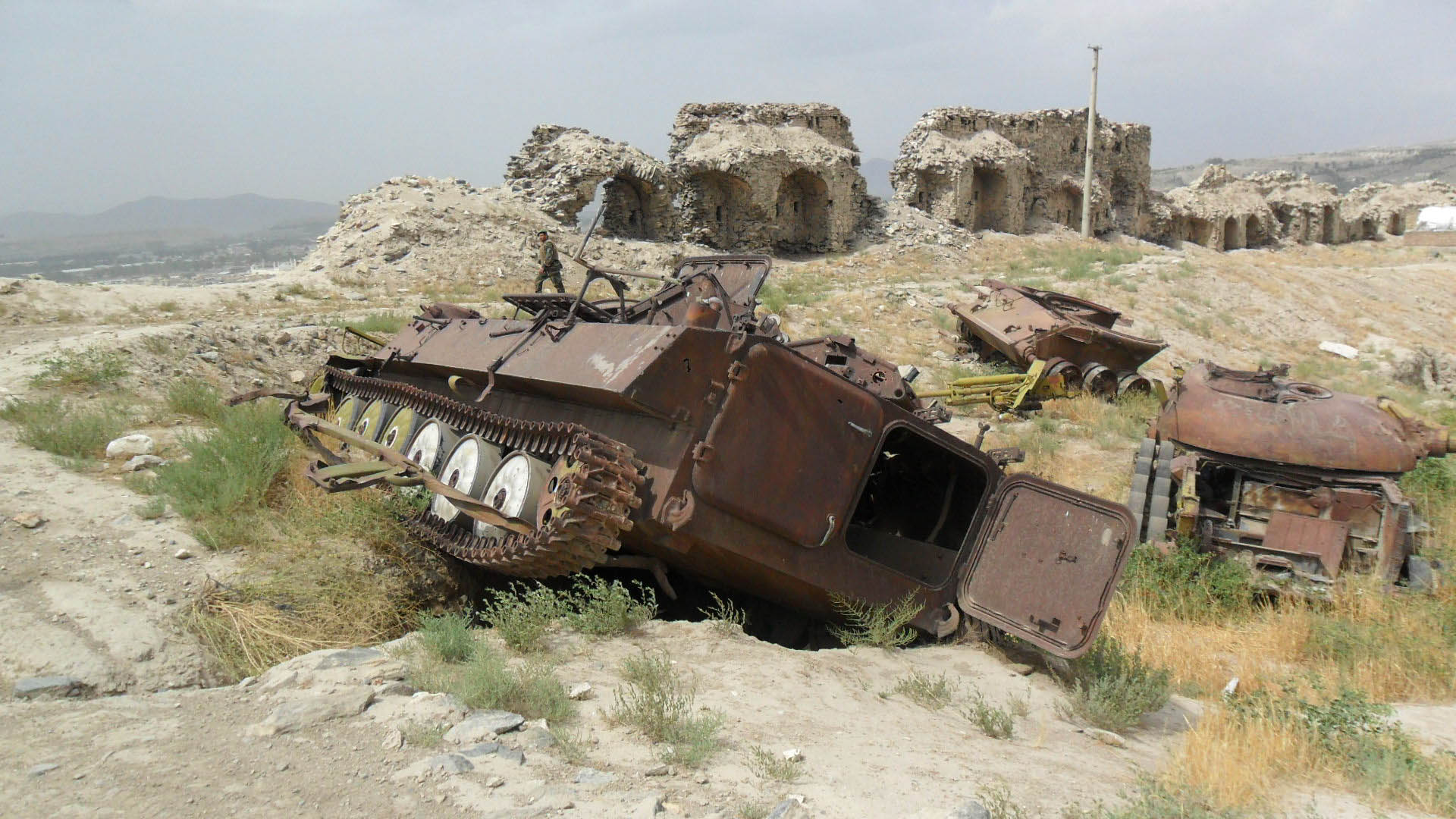
Bala Hissar, Kabul
The dungeon was called the Black Pit. The Siyah Chal, buried in the upper fortress of Kabul's Bala Hissar, held prisoners in darkness while, above them, emperors built palaces and planted gardens. That duality -- beauty and brutality sharing the same walls -- defined this fortress for more than a thousand years. Perched at the southern edge of old Kabul where the Kuh-e-Sher Darwazah mountain meets the city, the Bala Hissar anchored Afghan power from at least the 5th century AD until British forces demolished it in 1880. Its walls, 20 feet high and 12 feet thick, once swept from the fortress along the mountain ridge in a great curve down to the Kabul River.
Coins in the Dust
The origins of the Bala Hissar are older than any written record confirms. Archaeologists have recovered pre-Kushan pottery near the site, along with Indo-Greek and Achaemenid coins, placing human settlement in the area from at least the 6th century CE. The fortress itself appears to have served as a citadel from around the 5th century, though precise details remain elusive. What is clear is that Kabul's position -- at the crossroads of trade routes linking Central Asia, Persia, and the Indian subcontinent -- made some form of fortification here inevitable. The Bala Hissar was not so much built as accumulated, layer upon layer, by successive civilizations that recognized the strategic value of a high point overlooking the valley and its approaches.
Mughal Gardens, Durrani Prisons
The fortress's most significant architectural period began with the Mughals, who strengthened the outer walls and expanded the compound. Emperor Jahangir demolished older structures to build new palaces, audience halls, and a charbagh -- the formal quartered garden that was a hallmark of Mughal design. His son Shah Jahan, before becoming emperor, constructed personal quarters within the fortress so impressive that they won Jahangir's admiration. Shah Jahan later returned to reside in the Bala Hissar during his military campaigns in Central Asia. Aurangzeb, the next emperor, added a mosque. When the Mughals eventually lost Kabul, the fortress fell into neglect -- passing through Persian and Durrani hands -- until Timur Shah Durrani moved the empire's capital to Kabul in 1773. He occupied the fortress, rebuilt a palace, and converted the upper section into a state prison and arsenal. His successor, Shah Shuja Durrani, the last ruler of the Durrani Empire, further developed the complex. He held court here, the fortress serving as both his throne room and his kingdom's final stronghold.
The British Demolition
The Bala Hissar's destruction came during the Second Anglo-Afghan War of 1878-1880. British General Frederick Roberts ordered the leveling of the fortress after his forces occupied Kabul. The demolition was systematic -- Mughal palaces, Durrani additions, structures that represented centuries of architectural layering were reduced to rubble. Roberts's stated purpose was to eliminate the fortress as a military stronghold, but the cultural cost was immense. Very little of the Mughal or Durrani architectural contributions survived. The fortress that had served as Kabul's seat of power for over a millennium was rendered unusable, forcing the new Emir, Abdur Rahman Khan, to build an entirely new palace complex -- the Arg -- on a different site. In destroying the Bala Hissar, the British did not simply remove a military threat. They erased the physical continuity of Afghan governance stretching back to antiquity.
What the Ruins Remember
The Bala Hissar was originally divided into two distinct sections. The lower fortress contained stables, barracks, and three royal palaces -- the public and ceremonial face of power. The upper fortress housed the armory, the arsenal, and the Siyah Chal dungeon -- the instruments of power's enforcement. That architecture told a truth about how empires function: splendor and coercion occupy the same compound, separated by elevation but not by purpose. Today, the ruins sit at the foot of the Kuh-e-Sher Darwazah -- the "Lion's Gate" mountain -- overlooking a Kabul that has grown far beyond anything its ancient builders could have imagined. India has pledged approximately $1 million toward restoration, an acknowledgment that what remains at the site connects to a history far larger than Afghanistan alone. The coins of Greek kings and Persian emperors lie in the same soil as Mughal foundations, a testament to how many civilizations have staked their claim on this high ground above the Kabul valley.
From the Air
Located at 34.51N, 69.19E on the southern edge of old Kabul, at the base of the Kuh-e-Sher Darwazah mountain. The fortress ruins and the mountain ridge are visible from the air, with the old city walls tracing a line from the site along the ridgeline. Nearest airport is Kabul International Airport (OAKB), approximately 6 km to the north-northeast. Elevation roughly 1,820 meters (5,970 feet). The site sits above the Kabul River, and the contrast between the ancient ruins and surrounding modern urban development is apparent from altitude.