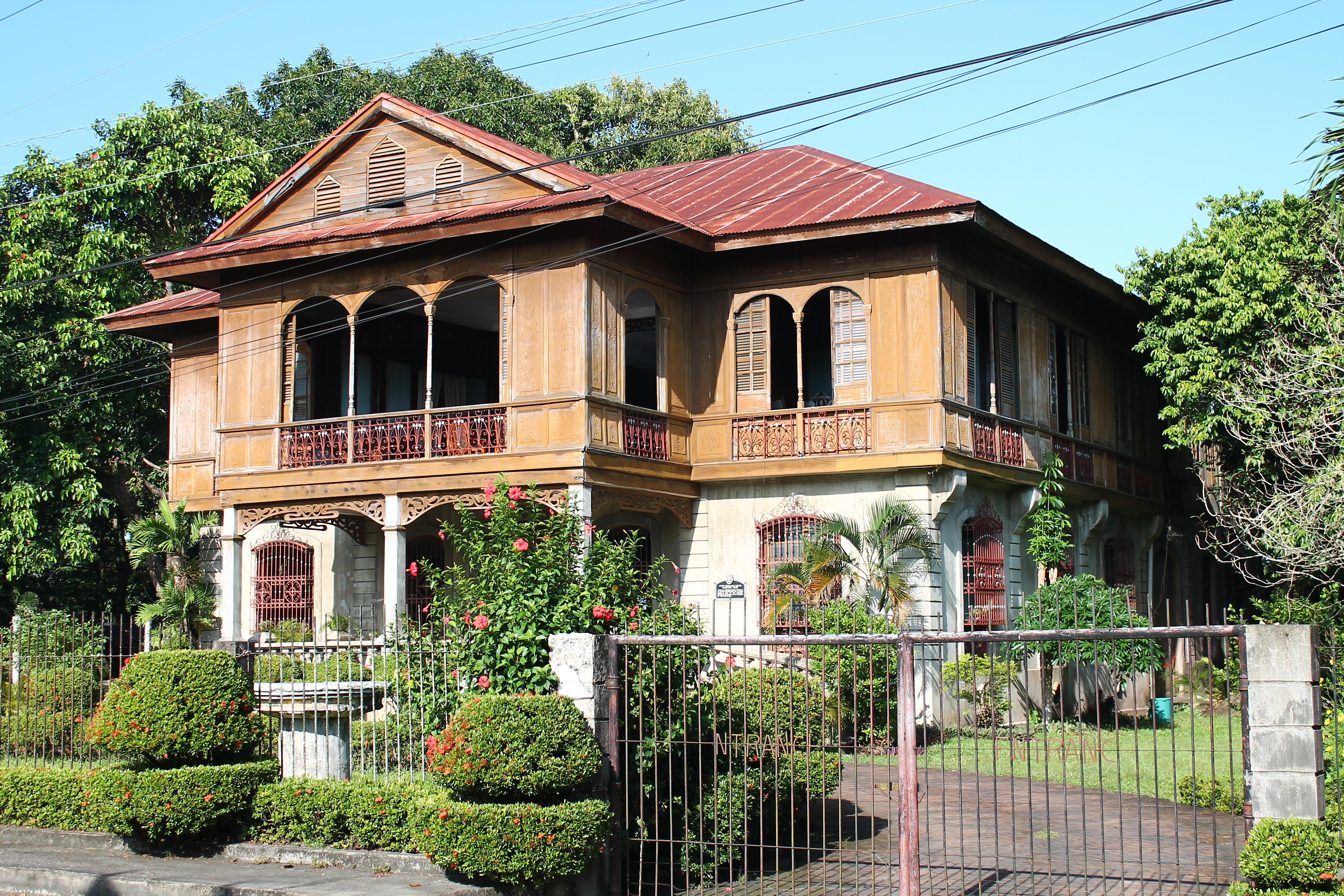
Balay Negrense
The floorboards are balayong, a hardwood so dense it sinks in water. Victor Fernandez Gaston chose it for both the foundation posts and the floors of his home in Silay City, and more than a century later those boards still hold. The house he built in 1897 was not the grandest on the island of Negros, but it became the most important: Balay Negrense, the first museum in the province of Negros Occidental, and the building that proved a single family home could anchor an entire community's memory.
The Sugar Baron's House
Victor Gaston was the son of Yves Leopold Germain Gaston, a Frenchman credited as the first to commercially produce cane sugar in Negros. Sugar built fortunes across the province in the late nineteenth century, and Victor's was no exception. He raised twelve children in this house from 1901 until his death in 1927, and the building reflects the confident wealth of the era. It is a bahay na bato, literally a house of stone, though this particular example substitutes concrete for the traditional stone lower story, a nod to American colonial influence. The upper story is wood, topped not with traditional clay tiles but with galvanized iron sheets, a material that became standard after the 1880 Luzon earthquakes prompted Manila authorities to discourage heavier roofing.
Abandonment and Rescue
After Victor's death, the house passed through family hands until the mid-1970s, when it was abandoned entirely. For more than a decade, the tropical climate did its patient work: moisture crept into the wood, vegetation pressed against the walls, and the interior furnishings deteriorated. The rescue came from within the family. Monsignor Guillermo Ma. Gaston, one of Victor's heirs, joined with concerned community members to form what became the Negros Cultural Foundation. In 1992 he donated the house to the Philippine Tourism Authority. With five million pesos in government assistance and donations from prominent Negrenses, the structure was repaired and furnished with period furniture and fixtures. The museum opened its doors on October 6, 1990, and was designated a heritage house by the National Historical Institute in 1994.
Architecture That Breathes
Step inside and look up: the ceiling stands four meters high, a deliberate choice for a climate where heat rises and stagnant air breeds discomfort. Below the large windows sit ventanillas, smaller sliding panels that can be opened independently to admit the breeze at floor level. The lower story is elevated a full meter above the ground by a crawlspace that allows air to circulate beneath the wooden foundations, preventing the dampness that would otherwise rot the balayong from below. Every architectural decision serves the same purpose: coexistence with the tropical environment. This is not a building that fights its climate. It negotiates with it, channeling wind and repelling moisture through design rather than technology.
What the Walls Remember
Today Balay Negrense stands as a time capsule of nineteenth-century provincial wealth. The period furnishings recreate the world of the sugar barons, from formal dining settings to the personal effects of daily life. But the museum's significance extends beyond its contents. In 2023, the house was temporarily closed for major restoration, with the Negros Cultural Foundation turning it over to the Negros Occidental provincial government for a five-year conservation program, a reminder that heritage preservation is never a finished project. The building demands ongoing care, and its story is one of cyclical attention and neglect, rescue and renewal. For Silay City, which calls itself the Paris of Negros for its concentration of heritage houses, Balay Negrense remains the anchor. It was the first to be saved, the first to be opened, and the proof that these old homes deserve to endure.
From the Air
Located at 10.80N, 122.97E in Silay City, Negros Occidental. The nearest airport is Bacolod-Silay International Airport (RPVB), just minutes away. From the air, Silay's heritage district is visible as a cluster of older structures along the main roads near the city center. The flat coastal terrain of western Negros provides clear sightlines. Best observed on approach to or departure from RPVB.