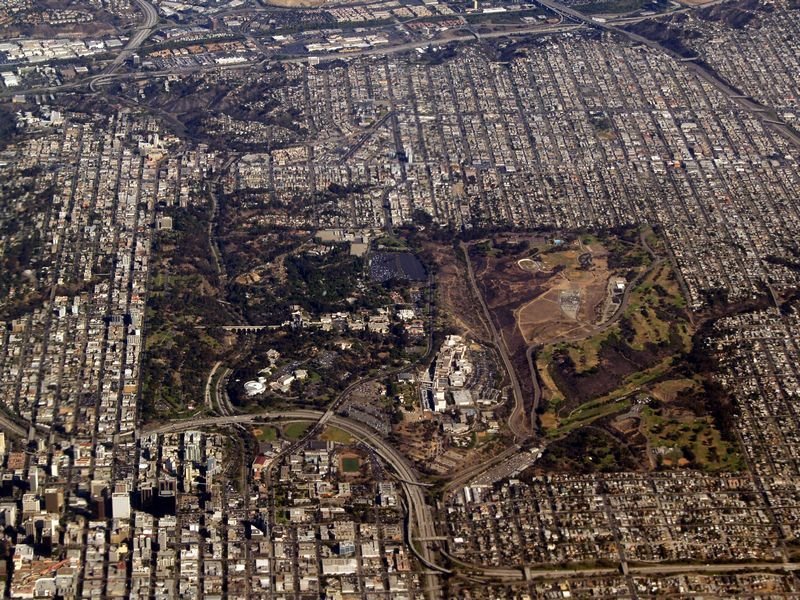
Balboa Park (San Diego)
Balboa Park is one of the largest urban cultural parks in the United States — 1,200 acres of museums, gardens, and performing arts spaces built on a mesa above downtown San Diego, shaped by a landscape architect who traded trees for a nursery lease and a city that twice used the park to introduce itself to the world.
Before the Park Existed
The mesa that would become Balboa Park was set aside in 1835, when the Pueblo de San Diego designated the land as public open space. For decades it stayed mostly bare — chaparral and scrub on a plateau above the harbor, used for grazing and little else. The Kumeyaay people who had lived in this landscape for generations called one of the canyons within it Hatam's Village, a name that acknowledges what existed here before the park was imagined.
The transformation of the mesa began in earnest in 1892, when a botanist named Kate Sessions negotiated an unusual lease with the city. She would be allowed to operate a nursery on 30 acres of the undeveloped park land. In exchange, she agreed to plant 100 trees a year inside the park and donate 300 more for planting across San Diego. Sessions brought in species from around the world — eucalyptus, palms, coral trees, and California natives — and over the following decades, the bare mesa began to take on the green and layered character that defines the park today. She became known as the Mother of Balboa Park.
The Year San Diego Showed the World
In 1915 and 1916, San Diego hosted the Panama-California Exposition — a world's fair organized to celebrate the opening of the Panama Canal and to advertise San Diego as the first American port on the canal route. The city poured resources into building the exposition grounds in Balboa Park, constructing the elaborate Spanish Colonial Revival buildings that still define the park's architectural character today.
The exposition buildings were intended to be temporary, but San Diego liked them too much to tear them down. The California Building, the Botanical Building, the ornate facades and towers that line the El Prado walkway — these became permanent fixtures. The park did it again in 1935 and 1936 with the California Pacific International Exposition, adding more architecture and more cultural institutions.
Those two expositions established the basic structure of what Balboa Park is now: a place where the architecture is both celebration and backdrop, where the buildings are as much attraction as what's inside them.
What's Inside
Balboa Park contains more than 16 museums along with gardens, performance venues, and the San Diego Zoo, which occupies the northern edge of the park and draws more visitors than any other attraction in the region.
The museums span an unusually wide range: natural history, art, photography, aerospace, science, human history, automobiles, miniatures. The San Diego Museum of Art and the Museum of Photographic Arts sit alongside the Museum of Man and the Reuben H. Fleet Science Center. The park has enough to occupy a week if you go slowly.
The open spaces between institutions are as important as the buildings. The gardens — the Botanical Building with its koi pond, the Desert Garden, the rose garden, the Japanese Friendship Garden — give the park a layered quality where formal horticulture and natural California landscape coexist. People come to walk, sit, read, and run as much as they come to visit museums.
A Park That Belongs to the City
Balboa Park was designated a National Historic Landmark in 1977. But its significance in San Diego is more everyday than that designation suggests. It is where the city goes on weekends, where high school students come for field trips, where families spread blankets and eat lunch in the shade. The park's position above downtown — visible from the harbor, from the freeways, from the surrounding neighborhoods — makes it a constant presence in the city's geography.
The park is also contested, as public spaces in cities often are. Questions about parking, development, commercialization, and access have been recurring topics of civic debate. The balance between preservation of historic resources and the practical demands of a heavily used public park is never fully resolved.
For all that, Balboa Park persists as something relatively rare: a large, genuinely public space in an American city that is used by a wide range of the population, free to enter, and shaped by more than a century of civic investment.
From the Air
Balboa Park sits on a mesa immediately northeast of downtown San Diego and just north of KSAN (San Diego International Airport). On approach to KSAN from the northeast, the park's distinctive architecture — the Cabrillo Bridge, the California Building tower, the green expanse of the park itself — is clearly visible to the right. The San Diego Zoo occupies the northern portion of the park. The park covers roughly 1,200 acres and is one of the most identifiable features of the city from the air.