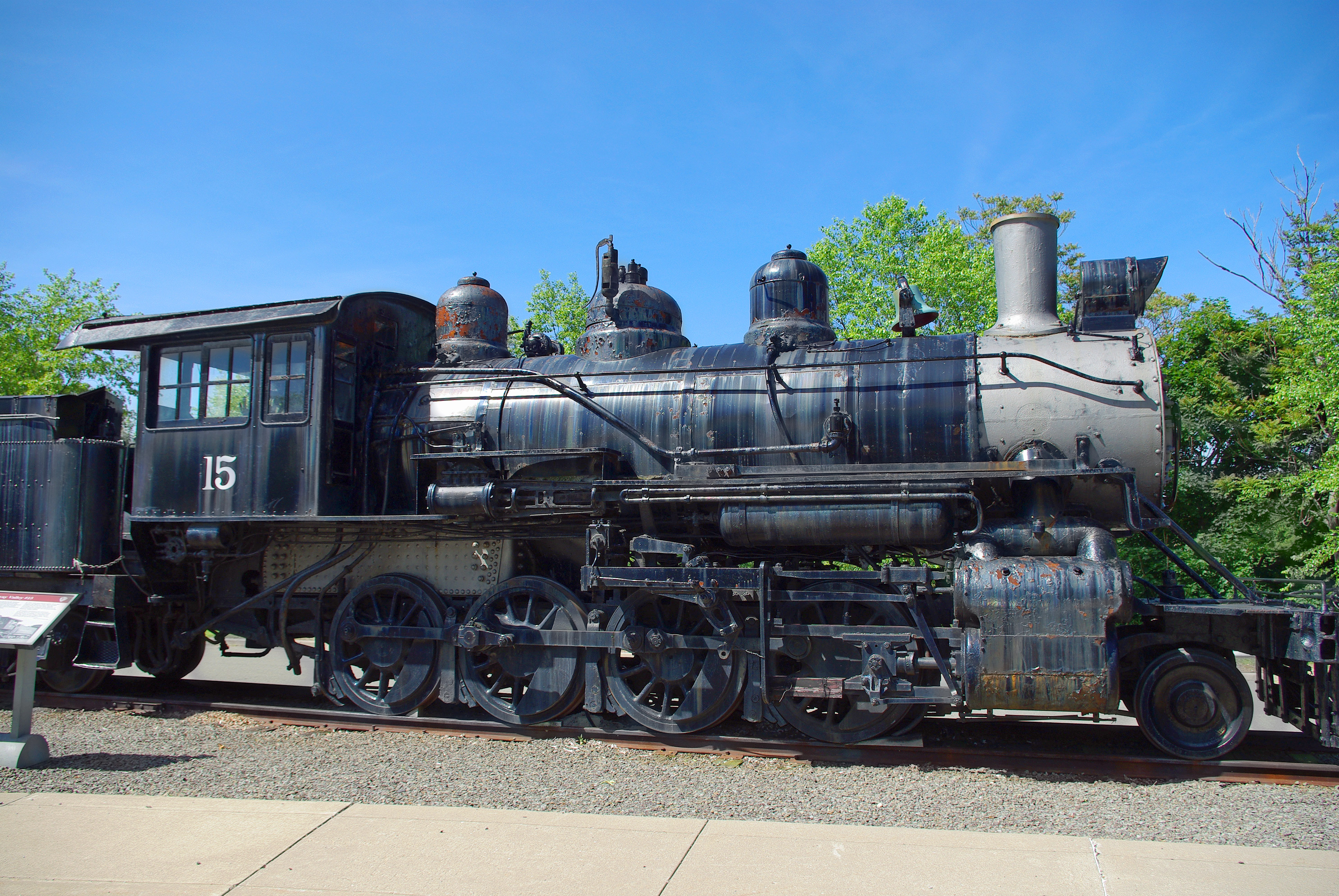
Baldwin Locomotive Works: The Engine That Built America
The cylinders were bored by a chisel fixed in a block of wood and turned by hand. That was how Matthias W. Baldwin, a Philadelphia jeweler and whitesmith with no formal training in locomotive design, built his first full-sized steam engine in 1832. He called it Old Ironsides. It weighed five tons, rode on wheels with wooden spokes and wrought iron tires, and took twenty minutes to raise enough steam to move. The Philadelphia, Germantown and Norristown Railroad put it into service anyway, and it ran for over twenty years. From that improbable beginning grew the Baldwin Locomotive Works, which would become the largest locomotive manufacturer on Earth, producing more than 70,000 engines before its final machine rolled out of the factory in 1951.
A Jeweler's Gamble on Iron and Steam
Baldwin's path to locomotives was wonderfully accidental. In 1825, he partnered with machinist David H. Mason to make bookbinders' tools and calico-printing cylinders. When Baldwin built a small stationary steam engine for his own workshop, it worked so well that other manufacturers begged him to build copies. That original engine powered departments of his factory for over sixty years and now sits in the Smithsonian Institution. In 1831, a miniature locomotive he built for the Philadelphia Museum drew such crowds that a real railroad placed an order. Baldwin studied the imported John Bull locomotive in a New Jersey warehouse, memorized its dimensions, and returned to Philadelphia to build his own version essentially from scratch. His workers had to be taught nearly every step. By 1857, the factory employed 600 men and was turning out 66 locomotives a year. Panics, depressions, and the Civil War repeatedly nearly destroyed the business, but Baldwin survived each blow, taking on partners, adapting designs, and finding new markets.
Eight Square Blocks of Thunder
At its peak, the Baldwin works sprawled across eight square city blocks of Philadelphia, from Broad to 18th Streets and Spring Garden to the Reading Railroad tracks past Noble Street. The din was extraordinary: hammers ringing on boilerplate, the shriek of metal lathes, the roar of furnaces that cast iron wheel hubs the size of barrels. By 1870, Baldwin had taken the lead over all competitors, producing twice as many engines as its nearest rival according to the U.S. Manufacturing Census. In 1905, domestic demand for locomotives hit its all-time peak, and Baldwin was riding the boom. But the cramped Philadelphia facility was straining at the seams. Beginning in 1906, Baldwin shifted production to a new site in Eddystone, Pennsylvania, with capacity for over 3,000 locomotives per year. The move from Broad Street was completed by the late 1920s, closing a chapter on nearly a century of Philadelphia manufacturing that had reshaped both the city and the American railroad.
Arsenal of Locomotion
Baldwin's reach extended far beyond American rails. During World War I, the company built 5,551 locomotives for the Allies, including designs for Russian, French, British, and American trench railways. It manufactured over 6.5 million artillery shells and nearly 2 million Enfield rifles through a subcontract with Remington Arms, turning the Eddystone plant into a full-fledged arsenal. After the war, European railroads desperate to replace engines destroyed in the conflict turned to Baldwin while their own factories were still retooling from munitions production. Baldwin locomotives hauled trains across six continents: narrow-gauge Mikados threaded through the Colorado Rockies on the Denver and Rio Grande Western, massive cab-forward articulateds powered Southern Pacific's mountain routes, and the legendary Yellowstone-type engines for the Duluth, Missabe and Iron Range Railway hauled 180-car ore trains so reliably that the railroad refused to replace them with diesels, running the last one until 1963.
The Steam Men Who Missed the Future
Baldwin's downfall was not sudden but willful. In 1930, board chairman Samuel Vauclain declared that steam technology would dominate railroading until at least 1980. His vice president and Director of Sales proclaimed in 1937 that American railroads would never be "dieselized." The company had actually been the first American locomotive builder to develop a road diesel, in 1925, through a partnership with Westinghouse, but the prototype failed and was scrapped. Rather than iterate, Baldwin doubled down on steam, pouring resources into exotic dead ends like the duplex-drive S1 for the Pennsylvania Railroad, which proved unmanageable and prone to wheel-slip. Steam turbine locomotives for the Chesapeake and Ohio were so unreliable they could not complete a single trip from Washington to Cincinnati without breaking down. Meanwhile, General Motors' Electro-Motive Corporation had spent the 1920s and 1930s quietly perfecting diesel technology. When World War II ended, EMC had a massive head start. Between 1940 and 1948, domestic steam locomotive sales collapsed from 30 percent of the market to just 2 percent.
Ghosts in the Machine Shop
Baldwin produced its last locomotive in 1951 and merged with Lima-Hamilton Corporation, but the combined company could not reverse the decline. The last Baldwin-Lima-Hamilton diesels shipped in 1956. By 1972, the successor corporation was liquidated for good. Today, Baldwin's legacy lives on in an extraordinary way: dozens of its locomotives still run. Four Baldwin engines circle the Magic Kingdom at Walt Disney World in Florida, originally built between 1916 and 1928 for a railroad in Mexico's Yucatan Peninsula. Santa Fe 3751, a 1927 Northern-type, hauls excursion trains in California. The narrow-gauge K-36 and K-37 Mikados still climb through the San Juan Mountains on the Durango and Silverton and the Cumbres and Toltec scenic railroads. And at the Franklin Institute in Philadelphia, just blocks from where Matthias Baldwin once bored cylinders with a hand-turned chisel, Baldwin 60000, the company's 1926 demonstration locomotive, stands as a monument to an era when one man's workshop grew to power the world's railroads.
From the Air
Baldwin Locomotive Works site (39.859N, 75.327W) is located in Eddystone, Pennsylvania, along the Delaware River southwest of Philadelphia. The original Broad Street Philadelphia facility (39.965N, 75.163W) occupied eight city blocks in the Spring Garden neighborhood. From the air, the Eddystone site is identifiable along the Delaware River waterfront near I-95. Nearby airports: KPHL (Philadelphia International, 10km S), KPNE (Northeast Philadelphia, 20km NE), KILG (New Castle, 15km SW). Best viewed at 2,000-4,000 feet AGL. The Franklin Institute, which displays Baldwin 60000, is visible on the Benjamin Franklin Parkway in central Philadelphia.